
How to Perform Periodic Maintenance on Fire Detection Systems?
How is periodic maintenance performed on fire detection systems, and how often should it be carried out? We examine the tests for smoke and heat detectors, fire alarm panels, batteries, call points, sirens, and fire scenarios, considering EN 54 standards, legal requirements, and a technical maintenance checklist.
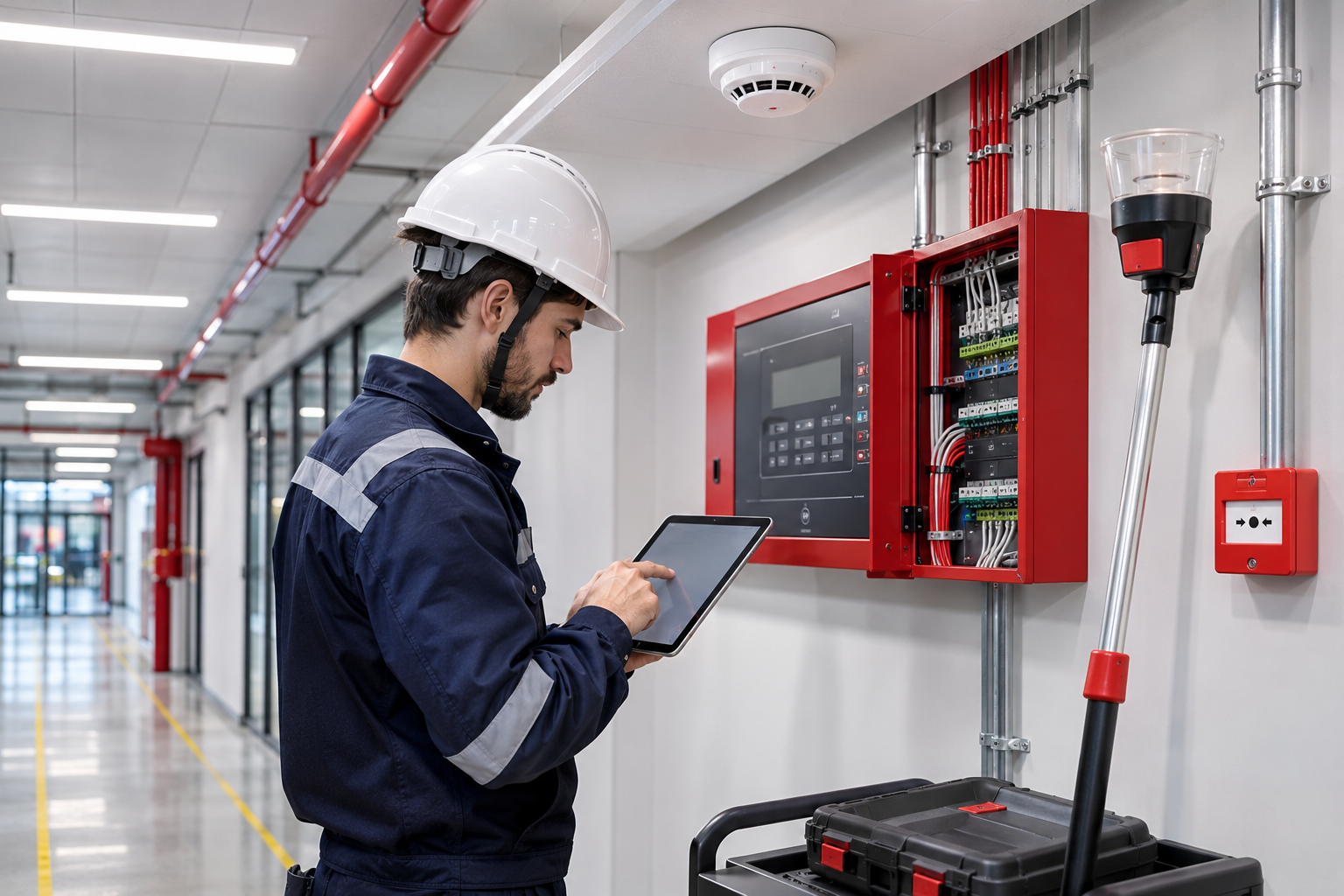
Fire detection and alarm systems are critical security infrastructures that enable early detection of fires and the generation of necessary warnings in buildings and industrial facilities.
However, the mere installation of a fire detection system does not guarantee that it will operate with the same reliability for years to come.
Over time, detector contamination, wear and tear on electronic components, reduced battery capacity, deterioration of cable connections, or changes in building usage can negatively impact fire detection performance.
For example, while the fire alarm panel may indicate normal operation, a specific smoke detector might not function with the expected sensitivity due to contamination or unsuitable environmental conditions.
Therefore, periodic maintenance of fire detection systems is not merely about repairing faulty devices, but regularly testing and verifying the functions the system must perform in the event of a fire.
So, how is periodic maintenance of a fire detection system performed, which devices should be tested, and how often should maintenance operations be carried out?
What is Periodic Maintenance for Fire Detection Systems?
Periodic maintenance of a fire detection system is the entirety of inspection, testing, cleaning, necessary adjustments, and technical verification procedures performed at predetermined intervals to support the system's reliable and continuous operation.
The primary goal of these activities is to assess whether the system can maintain its designed fire detection and warning functions.
Within the scope of periodic maintenance:
The operating status of the fire alarm panel is checked.
The physical and functional condition of detectors is examined.
Manual fire alarm call points are tested.
Warning devices such as sirens and flashers are checked.
Main power supply and backup energy systems are evaluated.
Cable, loop, and communication connections are inspected.
Fire scenarios and system integrations are verified.
Fault and event logs are analyzed.
Identified non-conformities are documented with a technical report.
The scope of tests to be applied in each maintenance operation should be determined according to the characteristics of the system used, manufacturer instructions, and relevant standards.
Why is Periodic Maintenance Necessary for Fire Detection Systems?
1. To Maintain Fire Detection Reliability
Smoke, heat, and flame detectors send signals to the fire panel by detecting specific physical indicators.
However, contamination of sensors, physical obstruction, or deterioration of suitable operating conditions can affect detection performance.
Periodic maintenance helps identify such issues.
2. To Reduce False Alarm Issues
Unnecessary alarms in fire alarm systems can cause serious operational problems.
Dust, vapor, insects, air currents, and improper device placement can generate false alarms in some detectors.
During maintenance work, the causes of false alarms can be evaluated, and necessary corrective actions can be planned.
However, it is not appropriate to indiscriminately reduce detector sensitivity to mitigate false alarms.
3. To Uncover Hidden Faults
While some faults can be directly reported by the panel, certain performance issues can only be identified through functional testing.
For example, a detector's electronic communication might be normal, but its sensing element could be contaminated or rendered ineffective due to an environmental obstruction.
4. To Verify Emergency Functions
Fire alarm systems do not consist solely of detectors and a panel.
In appropriate projects, a fire alarm may be linked to other systems such as audible warnings, door release, elevator control, or smoke control.
Therefore, the operation of necessary fire scenarios must also be verified.
5. To Meet Legal and Technical Obligations
In Turkey, Article 84 of the Regulation on Fire Protection of Buildings mandates that fire detection and alarm systems be subjected to periodic inspection, testing, and maintenance as required by relevant standards.
This obligation is a crucial part of keeping fire safety systems operational throughout the building's lifespan.
Which Equipment is Checked During Fire Detection System Maintenance?
Fire Alarm Control Panel
The fire alarm panel is the central control and indication unit of the system.
During maintenance:
The panel's normal operating status.
Active faults and disabled points.
Alarm and fault history.
Zone and address definitions.
Indication and control functions.
Time and date settings.
Communication connections.
Necessary backup and configuration records
should be checked.
In addressable fire systems, it is important that detector addresses and location information are consistent with the current architectural layout.
The absence of faults on the panel alone does not prove that all detectors are providing the required detection performance.
Smoke Detectors
Smoke detectors are used to detect smoke indications resulting from a fire.
Over time, dust accumulation, contamination, and environmental changes can affect the performance of these devices.
During maintenance:
The physical condition of the detector is examined.
Obstructions around the detector are checked.
A functional test is performed with appropriate test equipment.
It is verified that the correct detector is reported by the panel.
Contamination or sensitivity data is evaluated if supported by the manufacturer.
Necessary cleaning, servicing, or replacement procedures are determined.
Testing procedures for smoke detectors must be carried out using test devices and methods approved by the manufacturer.
The use of random sprays, actual smoke, or uncontrolled combustion methods can damage devices, cause contamination, or pose a safety risk.
Heat Detectors
Heat detectors may have sensing elements that evaluate temperature levels or the rate of temperature rise.
Testing of these detectors must be performed with temperature test equipment appropriate to the device's detection principle.
During maintenance, it is checked that the detector responds, the correct address or zone is displayed on the panel, and the device returns to its proper operating state after the test.
Single-use or specific special operating principle heat sensing elements should not be tested using the same method as reusable detectors.
Manual Fire Alarm Call Points
Manual fire alarm call points allow users to manually report a fire.
During maintenance:
The button is visible and accessible.
No physical obstructions are in front of it.
The test mechanism functions.
The correct location is reported on the alarm panel.
It is properly reset to normal status after the test
are checked.
Testing procedures should be performed with the key or appropriate test arrangements provided by the manufacturer.
Fire Sirens and Flashers
It is important that users can perceive the necessary warnings when a fire alarm occurs.
During maintenance, the operation of audible and visual warning devices is tested.
However, the device merely emitting sound does not guarantee that the required sound level and intelligibility are provided at every point.
If there have been changes in building layout or usage, the warning coverage should be re-evaluated.
Power Supplies and Batteries
Fire alarm systems must have appropriate backup power infrastructure capable of operating for specific durations in the event of a main power supply interruption.
During maintenance:
The physical condition of the batteries.
Battery connections.
Charging system.
Supply voltages.
Fault and capacity indicators.
Required backup capacity.
Battery test results compliant with the manufacturer
should be evaluated.
Measuring an appropriate voltage on the battery alone does not prove that it can provide the necessary backup operating time.
Capacity and performance under load should be evaluated according to relevant system requirements and manufacturer methods.
Cable, Loop, and Communication Connections
It is important to detect communication errors or cable damage in fire detection systems.
During maintenance, appropriately:
Connection points.
Physical condition of cables and terminals.
Loop or zone communication.
Isolator and necessary fault detection functions.
Inter-system communication connections
are checked.
Electrical measurements and connection interventions must be performed using methods compliant with manufacturer instructions, without damaging the fire panel and connected devices.
How is Maintenance Performed for Different Fire Detection Technologies?
The maintenance method for each detector technology is not the same.
| Detection technology | Key maintenance procedures | Technical considerations |
|---|---|---|
| Optical smoke detector | Physical inspection, contamination assessment, functional test | Use of appropriate test substance and method |
| Heat detector | Appropriate temperature test, address and alarm verification | Detection type and test limits |
| Beam smoke detector | Optical alignment, obstruction and functional check | Beam path and structural changes |
| Aspirating smoke detection system (ASD) | Air flow, filter, pipe network and detection test | Sample transport time, blockages and contamination |
| Flame detector | Optical surface, field of view and functional check with appropriate test device | UV/IR technology, visual obstructions, test safety |
| Linear heat detection | Detection line and appropriate system test | Sensor technology, resettability and test method |
| Manual fire call point | Mechanical and electrical functional test | Accessibility and correct panel reporting |
This table shows the general scope of maintenance. The service and test method for each product should be determined according to manufacturer documentation and applicable standards.
Maintenance for Beam Detectors
In beam-type smoke detectors, it is important that the beam path is uninterrupted and correctly aligned.
The addition of high shelving, modification of structural elements, or placement of new equipment can affect the beam path.
Therefore, maintenance should evaluate not only the electronic status of the detector but also its optical alignment and line of sight.
Maintenance for Aspirating Smoke Detection Systems
In ASD systems, sampling pipes, filters, and airflow conditions need to be evaluated.
Blockages in pipes or changes in airflow can affect the smoke's ability to reach the detection unit.
During appropriate tests, detection behavior and, if necessary, sample transport time should be evaluated.
Maintenance for Flame Detectors
For flame detectors, the cleanliness of the detection window, viewing angle, and application conditions are important.
Functional tests should be performed with special test equipment recommended by the manufacturer.
Uncontrolled testing using actual flames should not be performed, especially in hazardous industrial areas.
How Often Should a Fire Detection System Undergo Maintenance?
When determining the maintenance frequency for fire alarm systems, relevant standards, manufacturer requirements, the facility's purpose of use, and risk conditions should be evaluated together.
In Turkey, Article 84 of the Regulation on Fire Protection of Buildings regulates the obligation for periodic inspection, testing, and maintenance. However, it does not define a single fixed three-month or six-month period to be applied by everyone for all fire detection systems.
The CEN/TS 54-14 application guideline is an important reference for planning regular checks performed by the user and technical maintenance operations.
Example Maintenance and Inspection Program
| Inspection frequency | Example procedure | Responsibility |
|---|---|---|
| Daily | Checking panel status and new fault notifications | Authorized building personnel |
| Monthly | Review of event logs and necessary routine checks | According to operational maintenance plan |
| Quarterly | Detector accessibility, spatial changes, and defined checks | Operations and competent technical personnel |
| Six-monthly | Scheduled technical service, selected functional and integration tests | Competent maintenance team |
| Annually | Comprehensive system evaluation, device tests, and reporting | Competent maintenance team |
Important: This table is an example maintenance plan. It does not imply that the same periods are legally mandatory for all facilities in Turkey.
For example, the British standard BS 5839-1:2025 stipulates approximately six-monthly service visits by competent personnel in relevant building applications. However, this period in the British standard should not be directly interpreted as a legal obligation for every facility in Turkey.
As of 2026, there are also new version registrations for the CEN/TS 54-14 document in European national standards organizations. For projects, the applicable TSE equivalent in Turkey and relevant legislation should be taken as a basis.
How Should Fire Detection System Maintenance Be Performed?
Professional fire alarm maintenance work should be conducted through a planned and documented process.
1. Pre-Maintenance Preparation
First, the system's existing documentation should be reviewed.
Specifically:
Approved project and as-built drawings.
Detector list.
Zone and address information.
Fire scenario or cause-and-effect matrix.
Previous maintenance reports.
Fault and event history.
Manufacturer maintenance instructions.
should be evaluated.
2. Operations and Security Units Must Be Informed
Tests performed on the fire alarm system may affect sirens, alarm transmission systems, evacuation functions, or other connected equipment.
Therefore, before testing, relevant building managers, security personnel, and, if necessary, remote alarm monitoring units should be informed.
If a function needs to be temporarily disabled for testing, its scope, duration, and compensatory safety measures must be determined by authorized personnel.
3. Device and Functional Tests Must Be Performed
Detectors, call points, control panel, and associated warning devices should be evaluated using appropriate test methods.
Test results must be verified to match the address or zone information on the panel.
4. Fire Scenarios Must Be Tested
Defined functions between the fire panel and other systems must be verified with appropriate test procedures.
5. Faults and Non-Conformities Must Be Identified
Problems identified during maintenance should be recorded, and faults affecting safety should be evaluated according to their severity.
6. System Must Be Restored to Normal Operation
After testing procedures are completed, it must be verified that all temporary test settings and disabled functions have been safely restored to normal operating status.
This stage is one of the most critical steps in maintenance.
After the test is completed, it is necessary to verify that the relevant alarm and control functions are re-enabled, as well as the system appearing normal on the panel.
Why is Testing Fire Scenarios Important?
Fire detection systems in some buildings operate in conjunction with other security and building control systems.
For example, when a fire alarm occurs, according to the project:
Relevant audible and visual warnings can be activated.
Emergency announcement scenarios can be initiated.
Specific door and turnstile functions can be controlled.
Elevators can be directed according to defined fire scenarios.
Commands can be sent to smoke control systems.
Certain ventilation equipment can be controlled.
Necessary actions can be initiated via appropriate fire suppression system interfaces.
However, not all of these operations are present in every fire alarm system.
Tests should be conducted in accordance with the approved project and cause-and-effect matrix.
Especially in applications related to automatic suppression systems, necessary safety procedures must be applied during testing to prevent accidental initiation of suppression.
Interventions to other connected systems should be carried out in coordination with relevant expert personnel.
False Alarm Analysis in Fire Detection Systems
During periodic maintenance, it is important to review the history of unwanted alarms.
Frequent false alarms can result from the following causes:
Detector contamination.
Presence of dust or vapor in the environment.
Incorrect detector technology selection.
Improper detector placement.
Airflow and ventilation changes.
Electrical or communication problems.
Changes in building usage.
When evaluating false alarm sources, problems arising from device malfunction should be distinguished from those caused by application conditions.
For example, simply cleaning a detector that generates alarms due to continuous steam in a kitchen or production area may not be sufficient.
In this case, the detector technology and its location in the project may need to be re-evaluated.
However, since changing the device type can affect the approved fire detection design, necessary engineering evaluation and documentation must be performed.
Periodic Maintenance Report for Fire Detection Systems
Documenting performed maintenance operations with a technical report supports the reliable operation of the system.
A professional fire detection maintenance report may include the following information:
Building or facility information.
Maintenance date.
System brand and model.
Fire panel and loop information.
List of inspected detectors and devices.
Test methods used.
Functional test results.
Battery and power supply evaluations.
Fire scenario test results.
Identified faults and non-conformities.
Replaced equipment.
Uncompleted corrective actions.
System status after maintenance.
Approval information of technical personnel and facility authority.
It is particularly important to clearly state critical faults or untestable functions in the report.
The mere statement “System is operational” in the maintenance report does not sufficiently detail the scope of tests performed and the technical status of the system.
Common Mistakes in Fire Detection System Maintenance
The following are common maintenance mistakes to avoid in fire alarm systems:
Only checking whether the fire alarm panel is in normal status.
Not performing functional tests on detectors.
Not investigating the source of false alarm issues.
Considering battery voltage measurement and capacity testing as the same.
Not checking manual call points and warning devices.
Not testing fire scenarios and integrations.
Not re-enabling functions disabled during testing.
Ignoring the impact of changes in building usage on detection design.
Incomplete maintenance records.
Reporting identified faults as compliant without rectification.
To prevent these errors, systematic checklists, competent technical personnel, and verifiable maintenance reports are important.
Fire Detection System Periodic Maintenance Checklist
Is the fire alarm panel status checked?
Are active fault and disable notifications reviewed?
Are detector accessibility and physical condition evaluated?
Are smoke detectors tested with the appropriate method?
Are tests for heat and other special detectors performed?
Are manual call points checked?
Is the operation of sirens and flashers verified?
Are the battery, charging, and backup energy system evaluated?
Is cable and loop communication checked?
Are panel address and zone information verified?
Are fire scenarios tested to the required extent?
Are false alarm history and fault records reviewed?
Are all necessary functions re-enabled after the test?
Are non-conformities and corrective actions reported?
Are maintenance results delivered to the facility authority?
This checklist is prepared for general technical evaluation purposes. It does not supersede other requirements found in relevant standards, manufacturer documentation, or project-specific maintenance plans.
Frequently Asked Questions
Is periodic maintenance of a fire detection system mandatory?
Yes. Under Article 84 of the Regulation on Fire Protection of Buildings in Turkey, relevant fire detection and alarm systems must be subjected to periodic inspection, testing, and maintenance as required by standards.
How often should a fire alarm system undergo maintenance?
It is not appropriate to provide a single general period for every facility. Maintenance frequency should be determined according to relevant standards, applicable legislation, manufacturer instructions, and facility risks. Daily user checks and planned technical service performed by expert personnel should be evaluated separately.
Should fire detectors be tested during every maintenance?
The scope and frequency of detector testing are determined according to the relevant maintenance program. It is important that necessary tests across the system are completed within specified periods and results are recorded.
Is maintenance required if the fire alarm panel shows no faults?
Yes. The absence of faults on the panel alone does not prove that all detectors and fire scenarios are operating with expected performance.
How are smoke detectors cleaned?
The cleaning method depends on the detector's manufacturer instructions. Inappropriate chemicals, compressed air, or mechanical interventions can damage the device. Some detectors may require servicing or replacement.
Is battery inspection performed during fire alarm system maintenance?
Yes. Evaluation of batteries and backup power infrastructure is among the important maintenance procedures. However, voltage measurement alone is not definitive proof that the battery provides the required capacity.
Why is a fire detection system maintenance report important?
A maintenance report helps document which devices were inspected, which tests were performed, which faults were identified, and which corrective actions were implemented.
Who should perform maintenance on the fire detection system?
Technical maintenance and functional tests should be performed by competent personnel familiar with the operating principles of the relevant system, manufacturer instructions, and applicable standards. Necessary certification and authorization requirements should also be checked.
Conclusion: Maintenance in Fire Detection Systems is a Fundamental Part of Life Safety
Fire detection systems undertake critical tasks in the early detection of fires and the generation of necessary warnings.
However, the reliability of these systems cannot be evaluated solely by the performance provided during the initial installation and commissioning phase.
Over time, contamination, mechanical damage, electronic faults, power issues, and changes in building usage can affect the system's functions.
A successful fire detection system maintenance program should consist of regular inspections, appropriate detector tests, power and communication verification, fire scenario tests, and technical reporting.
Especially in factories, shopping malls, hospitals, hotels, schools, and other heavily used buildings, it is important that maintenance work is planned by competent personnel, taking into account the actual risks of the system.
The primary purpose of periodic maintenance in fire detection systems is to ensure that the system not only appears to be working but reliably performs its critical safety functions in the event of a fire.
References
T.C. Ministry of Justice – Regulation on Fire Protection of Buildings
T.C. Ministry of Environment, Urbanization and Climate Change – Fire Regulation Implementation Guide
GüvenlikOnline – How to Determine the Right Fire Detection Solution for Factories?
GüvenlikOnline – The Era of Smart Detection in Industrial Fire Safety