
What Is EN 54? A Guide to Fire Detection Standards and Certification
EN 54 is a family of European standards that defines technical requirements for control panels, detectors, sirens, power supplies, and other components used in fire detection and alarm systems. We examine the EN 54 parts, the legal requirements in Türkiye under TS EN 54, certification processes, CE marking, and how compliance with standards is verified in fire alarm systems.
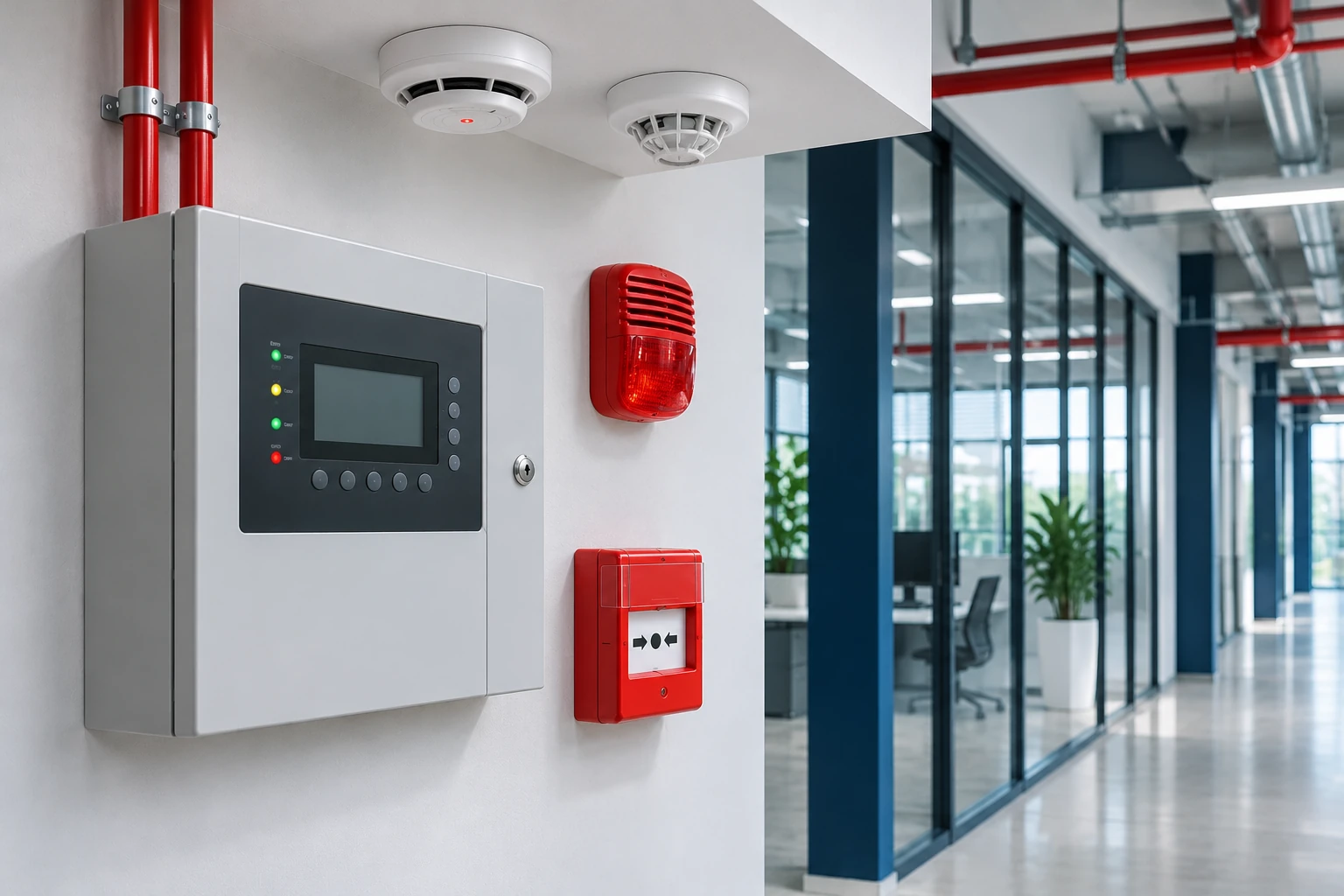
EN 54 is a family of European standards developed to assess the reliability, performance and technical compliance of components in fire detection and alarm systems. It sets technical requirements for various product groups, from fire alarm control panels and smoke and heat detectors to manual call points, sounders, power supplies and wireless communication components.
For the design, installation and operation of fire detection and warning systems in Türkiye, TS EN 54 standards are an important legal and technical reference. Article 74 of the Regulation on the Protection of Buildings from Fire explicitly governs the compliance of fire detection systems and their components with TS EN 54.
However, EN 54 is not a single certificate or standard applicable to all fire alarm equipment. It consists of separate parts for different product types. Moreover, a fire alarm panel's compliance with EN 54 does not mean that the entire system built around that panel automatically complies with the standards.
It is therefore important to understand the scope of EN 54 standards, the differences between product certification and system compliance, and the technical requirements to consider during installation.
What Is the EN 54 Standard?
EN 54, whose English name is Fire Detection and Fire Alarm Systems, is a series of European standards for fire detection and fire alarm systems.
The standards are prepared by the relevant technical committees within the European Committee for Standardization (CEN) and published through national standards bodies.
The main objectives of the EN 54 standards are:
To specify performance requirements for fire detection and alarm equipment.
To ensure that products are evaluated under defined test conditions.
To define functional requirements for fire and fault conditions.
To contribute to the assessment of compatibility among different system components.
To support the reliable design and operation of fire safety systems.
Not all EN 54 standards cover the same subject.
For example, EN 54-2 concerns fire alarm control panels, while EN 54-7 covers point smoke detectors and EN 54-25 addresses fire alarm components that use radio links.
When assessing compliance with EN 54, it is necessary to determine which part and edition of the standard the product was tested against, and for what intended use.
What Is the Difference Between EN 54 and TS EN 54?
EN 54 is the name of the family of standards published in Europe.
TS EN 54 refers to the version of the relevant European standard adopted as a national standard by the Turkish Standards Institution (TSE).
The basic terms can be explained as follows:
EN: Denotes a European standard.
TS: Refers to a Turkish Standard.
TS EN: Indicates that a European standard has been adopted as a national standard in Türkiye.
CEN/TS: Refers to a technical specification published by CEN. This type of document does not fall into the same publication category as a conventional European standard.
For example, the Turkish standard adopted as the equivalent of EN 54-7 is designated TS EN 54-7.
However, not all parts of EN 54 have the same publication date or edition. Furthermore, publication of a new edition of a standard in Europe does not mean it comes into force in Türkiye on the same date.
The current TS equivalent of the standards to be used in specifications and project documents should therefore be checked with TSE.
What Parts Make Up the EN 54 Standards?
The EN 54 family consists of numerous parts covering different components of fire detection and alarm systems.
The table below summarizes the main parts of the standards most frequently encountered in industry.
Standard | Scope |
|---|---|
EN 54-1 | Introduction to fire detection and alarm systems |
EN 54-2 | Fire alarm control and indicating equipment |
EN 54-3 | Audible fire alarm devices |
EN 54-4 | Power supply equipment |
EN 54-5 | Point heat detectors |
EN 54-7 | Point smoke detectors |
EN 54-10 | Point flame detectors |
EN 54-11 | Manual call points |
EN 54-12 | Optical beam smoke detectors |
EN 54-13 | Compatibility and connectability of system components |
CEN/TS 54-14 | Guidelines for design, installation, commissioning, use and maintenance |
EN 54-16 | Audible alarm control and indicating equipment |
EN 54-17 | Short-circuit isolators |
EN 54-18 | Input/output devices |
EN 54-20 | Aspirating smoke detectors |
EN 54-21 | Alarm and fault transmission equipment |
EN 54-22 | Resettable line-type heat detectors |
EN 54-23 | Visual alarm devices |
EN 54-24 | Loudspeakers for voice alarm systems |
EN 54-25 | Components using radio links |
EN 54-29 | Multisensor point detectors with smoke and heat sensors |
This table does not include every publication in the EN 54 family. Some standards are applied together with amendment and corrigendum documents. The applicable edition and scope should be verified against the records of the relevant standards body.
EN 54-2: Fire Alarm Control Panels
EN 54-2 specifies the technical requirements for control and indicating equipment, the central component of fire detection systems.
A fire alarm control panel processes information from detectors, manual call points and other field devices to manage fire, fault and system status conditions.
The main functions assessed under EN 54-2 include:
Indication of fire alarm conditions.
Monitoring and reporting fault conditions.
Control and indicating functions.
Access levels for specific functions.
Management of system conditions under defined circumstances.
Functional and environmental tests specified by the standard.
A control panel's compliance with EN 54-2 does not mean that it can communicate with every detector or integrate directly with every building automation system.
These issues should also be assessed under system compatibility and integration requirements.
EN 54-4: Power Supplies in Fire Alarm Systems
EN 54-4 addresses the requirements for power supply equipment used in fire detection and alarm systems.
Fire alarm systems should be designed to continue performing the required safety functions even when mains power is interrupted.
For this reason, the mains supply, backup energy source, battery charging and fault-monitoring functions are important in power supply design.
Why Is EN 54-4 Compliance Important?
The fire alarm panel should not depend solely on mains power to operate.
The following loads should be taken into account when calculating backup power capacity:
The control panel's standby current.
The consumption of detectors and input/output modules.
The current drawn by sounders and beacons during an alarm.
Communication and other auxiliary components.
The standby and alarm operating durations required by the project.
EN 54-4 compliance alone does not demonstrate that the battery used with a panel has sufficient capacity for every project.
Battery capacity should be calculated according to the actual system load and applicable design requirements.
EN 54-5: Heat Detectors
EN 54-5 covers the performance requirements and test methods for point heat detectors.
Heat detectors can detect fires based on specified temperature conditions or the way temperature changes.
The standard defines different temperature classes and response characteristics.
For example, A1, A2, B and other classes are used to assess a detector's temperature performance.
However, a detector's classification in a particular temperature class does not mean it can be used in every space.
Ambient temperature, expected fire development, installation height and application conditions should be assessed together.
EN 54-7: Smoke Detectors
EN 54-7 specifies requirements for point smoke detectors operating by light scattering, light obscuration or ionization.
These detectors are used to detect indications of smoke produced during a fire.
The standard includes provisions for assessing detectors' responses to specified test fires, operating conditions and performance requirements.
Can an EN 54-7-certified detector be used in every environment?
No.
A smoke detector's compliance with the standard does not show that it is suitable for every environment where there is heavy dust, steam, contamination or strong airflow.
For example, using smoke detectors in some manufacturing facilities may cause nuisance alarms.
Detector selection should take account of the expected fire type as well as environmental conditions.
For detailed information about the advantages and limitations of different detector technologies, see GüvenlikOnline's How to Choose a Fire Detection System for Factories? guide.
EN 54-10: Flame Detectors
EN 54-10 covers the performance and test requirements for point flame detectors.
Flame detectors are designed to detect specific optical radiation characteristics emitted by flames.
Products using UV, IR and different spectral detection methods are available.
These detectors may be considered particularly for industrial processes with a relevant fire risk.
However, a flame detector's detection performance depends on line of sight, the fire source, distance and environmental conditions.
Compliance with EN 54-10 does not mean that every flame will be detected from the same distance or that the detector is immune to every source of false alarms.
EN 54-11: Manual Call Points
EN 54-11 specifies requirements for manual call points.
These devices enable people who discover a fire to activate the alarm system manually.
The standard is used to assess the structural and functional characteristics of manual call points.
The placement of call points should be determined not only by the product standard, but also by the building's fire plan, escape routes and applicable design rules.
EN 54-12 and EN 54-20: Special Smoke Detection Technologies
In addition to standard smoke detectors, other detection technologies are available for different applications.
EN 54-12: Optical Beam Smoke Detectors
EN 54-12 covers requirements for line-type smoke detectors that use an optical beam.
Also known as beam detectors, these may be considered for large open spaces and high-ceiling areas in suitable applications.
However, the installation and performance of beam detectors can be affected by structural movement, obstructions in the beam path and environmental conditions.
EN 54-20: Aspirating Smoke Detectors
EN 54-20 covers product requirements for systems that detect smoke by drawing air samples through pipes.
These systems may be used for early smoke detection in suitable applications.
Under EN 54-20, aspirating detectors have sensitivity classes A, B and C.
When assessing these classes, the relevant sampling pipe network and validated design configuration should be considered, not just the detector.
EN 54-13: Compatibility in Fire Alarm Systems
EN 54-13 is an important standard for assessing the compatibility and connectability of components that make up a fire detection and alarm system.
The standard helps assess whether components used together in a system operate compatibly under defined conditions.
One of the consolidated editions published in Europe is EN 54-13:2017+A1:2019 is identified as.
EN 54-13: Why Is It Important?
A fire alarm control panel and a smoke detector may each meet the relevant EN 54 product standards.
However, this does not mean the two products can be connected directly to each other.
Particularly in addressable fire detection systems, features such as the communications protocol, device identification, fault management and alarm transmission must be assessed together.
For example:
A fire alarm control panel compliant with EN 54-2,
a smoke detector compliant with EN 54-7,
and an input-output module compliant with EN 54-18
must have their technical compatibility verified before they are used in the same system, even if each meets the required product specifications on its own.
The fact that devices individually comply with EN 54 does not automatically guarantee that they can be used together.
System designs should therefore be checked against manufacturer-approved compatibility lists, protocol requirements and relevant system assessment documents.
EN 54-14: Design, Installation and Maintenance of Fire Detection Systems
One of the key application references in the EN 54 family is a guide to the planning, design, installation, commissioning, use and maintenance of fire detection and alarm systems.
The relevant document in Europe CEN/TS 54-14 is published under the title.
Unlike a product certificate for a detector or control panel, this document concerns the system's life cycle.
Its main scope includes:
Defining system requirements and fire-safety objectives.
Planning detection zones and device locations.
Assessing detector types and detection methods.
Installation and cabling design.
Commissioning and verification of the system.
Handover processes for users and operators.
Managing use, maintenance and system changes.
2026 Edition of CEN/TS 54-14
The 2026 edition, which updates the CEN/TS 54-14:2018 document, has been published in the records of national standards bodies in Europe.
For example, Portugal's national standards body, IPQ, lists the 2026 edition as the current document.
The new edition also includes updates concerning video-based detection, carbon monoxide detection and the assessment of different detector technologies.
However, publication of the 2026 edition in Europe does not mean that the TS equivalent in force in Türkiye automatically changes.
For projects to be prepared in Türkiye, the TSE's current national adoption record and the regulations in force should be checked.
EN 54-25: Wireless Fire Detection Systems
EN 54-25 addresses performance requirements for components that use radio-frequency links in fire detection and alarm systems.
In wireless fire detection systems, it is not enough for the detector merely to detect smoke or heat. Alarm information must also be transmitted reliably to the control panel.
The following issues are therefore important in wireless systems:
Continuity of radio communications.
Monitoring of communications links.
Signal interference and disruption conditions.
Monitoring of the power supply and battery status.
Transmission of alarm and fault information.
Compatibility of wireless devices with the system.
In Europe, EN 54-25:2008 and its related amendment documents are among the references for this product group.
Is an EN 54-25 Certificate Enough on Its Own?
For a wireless smoke detector, compliance with EN 54-25 alone is not sufficient.
The detector's compliance with the relevant product standard for its detection function, and with the applicable EN 54-25 requirements for its radio communications feature, must be assessed.
For example, EN 54-7 and EN 54-25 may both be relevant to a wireless optical smoke detector.
Product certification alone does not mean that all installation requirements for wireless systems have been met.
EN 54-29: Multi-Criteria Fire Detectors
EN 54-29 covers point-type multi-criteria fire detectors that combine smoke and heat sensors in a single detection device.
These detectors can enable multiple signs of fire to be assessed together.
However, not all multi-criteria detectors use the same detection technology or alarm algorithm.
The smoke-and-heat combinations covered by EN 54-29 should not automatically be considered to fall into the same class as other multi-sensor detectors that also include a carbon monoxide sensor.
For example, EN 54-31 addresses detectors that use smoke and carbon monoxide sensors together and may optionally include a heat sensor.
To explore the industrial applications of these technologies, readers can refer to GüvenlikOnline's Smart Fire Detection: Artificial Intelligence and New Technologies article.
What Is an EN 54 Certificate?
The term EN 54 certificate is widely used to indicate that a fire alarm product has been assessed against the specified requirements of the relevant EN 54 standard.
However, there is no single general certificate valid for all EN 54 parts.
For example, a certificate of conformity issued for a product should specify the product model, the relevant part of the standard, edition information, the scope of assessment and the issuing body.
The nature of a product document may vary according to the applicable regulations and conformity-assessment scheme.
How Do You Check an EN 54 Certificate?
When purchasing a fire alarm product or including one in a technical specification, check the following information:
Product identity: Does the brand and model stated on the certificate match the product being purchased?
Standard scope: Which part of EN 54 was used for the assessment?
Standard edition: Are the year, amendment and correction details of the relevant standard specified?
Issuing body: Is the body authorized to carry out the relevant conformity assessment?
Document validity: Can the document's current status and scope be verified?
Hardware and software: Is the certificate restricted to a particular product or software version?
Intended use: Is the product's declared intended use compatible with the project?
System compatibility: Has the product been verified for use with other panels and field components?
A test report, an EN 54 claim in a manufacturer's catalogue and a certificate issued following an independent conformity assessment are not the same types of document.
For this reason, logos of certificates shown only in product marketing should not be relied on, particularly for mandatory fire-safety systems.
What Is the Difference Between EN 54 and a CE Certificate?
Although EN 54 and CE marking may be related, they are not the same concept.
EN 54 is a family of standards defining technical requirements for fire detection and alarm equipment.
CE marking, is an indication that a product complies with the applicable requirements under relevant European Union legislation.
In the construction products sector, the European Union Construction Products legislation governs the requirements for declarations of performance and CE marking for products covered by harmonised technical specifications.
Transitional provisions apply to the 2011 and 2024 European Union Construction Products Regulation measures. Accordingly, the declaration and assessment requirements applicable when a product is placed on the market should be determined in accordance with the relevant regulation.
Are EN 54, CE and TSE the Same Thing?
Concept | Meaning |
|---|---|
EN 54 | A family of technical standards for fire detection systems |
TS EN 54 | The edition of the relevant European standard adopted as a Turkish standard |
CE marking | A conformity mark under applicable EU harmonisation legislation |
Declaration of performance | Declared performance information for a construction product under the relevant legislation |
Product certificate | A certificate of conformity relating to a specific product and assessment scope |
The presence of a CE mark alone does not show that a product meets every part of EN 54 or is compatible with the system in which it will be installed.
Likewise, a product's compliance with the relevant EN 54 standard does not prove that the building-wide fire alarm system has been designed in accordance with regulations.
Is the EN 54 Standard Mandatory in Türkiye?
One of the main regulations concerning fire detection and warning systems in Türkiye is the Regulation on the Protection of Buildings from Fire. The
Article 74 of the Regulation defines a fire warning system as an integrated system comprising fire detection, alarm, control and communication functions.
The same article sets out requirements concerning compliance of the fire detection system and its components with TS EN 54.
The Regulation also requires cables and communication lines to remote monitoring centres to be monitored for faults such as open circuits, short circuits and earth leakage.
However, the Regulation does not require the same number of detectors or the same fire detection architecture in every building.
Fire detection and warning requirements should be assessed in light of the building's purpose, size and height, and the relevant provisions of the Regulation.
Does EN 54 Compliance Guarantee the Building's Fire Safety?
No.
Compliance of a product with EN 54 is only one part of the necessary fire-safety requirements.
A building's fire safety should be considered together with the following:
Fire risk analysis.
Fire detection and warning system design.
Correct selection and placement of detectors.
Escape and evacuation arrangements.
Fire compartmentation.
Smoke control and, where necessary, suppression systems.
Emergency management.
Periodic testing, maintenance and inspections.
For a broader assessment of these issues, readers can consult the content titled Fire Safety in Industrial Facilities . This
Can Fire Alarm Products That Do Not Comply with EN 54 Be Used?
The answer depends on the type of product, its intended use and the applicable regulations.
For a project in Türkiye where fire detection is required under the Regulation, the relevant TS EN 54 requirements should be taken into account.
However, it cannot be said that every electronic device is subject to the same EN 54 standard.
For example, the EN 14604 standard defines a separate product scope for standalone residential smoke alarm devices.
Similarly, different product and application standards may apply to thermal cameras used for fire detection, video analytics systems and special-purpose detection devices.
The fact that a product detects an event related to fire does not mean it can be used in place of a central fire detection system that complies with regulations.
The Difference Between EN 54 Compliance and System Design
One of the most common mistakes in fire-safety projects is to assume that a system made up of certified equipment is automatically compliant.
In fact, product compliance and compliance of the installed system are different areas of assessment.
For example:
The control panel may meet the relevant EN 54-2 requirements.
The power supply may have been assessed under EN 54-4.
The smoke detectors may comply with EN 54-7.
The wireless devices may have been assessed under EN 54-25.
Even so, the system may have incorrectly positioned detectors, insufficient battery capacity, incompatible device connections or an unsuitable alarm scenario.
For the system to be designed correctly, product standards, component compatibility and application guides should be assessed together.
Checklist for Selecting a Fire Alarm System Compliant with the EN 54 Standard
When purchasing, designing, or commissioning a fire detection system, it is recommended that the following checks be carried out:
- Has the fire alarm control panel’s compliance with the relevant EN 54-2 requirements been verified?
- Have the power supply and backup power requirements been assessed?
- Have the relevant EN 54 standards for the detectors been identified?
- Do the brand and model details on the certificates match the products?
- Have the current status and scope of the certificates been checked?
- Has system compatibility between the panel and field devices been verified?
- Have EN 54-25 requirements for wireless systems been assessed?
- Are detector placement and alarm zones in accordance with the design?
- Have loop current, cable distance, and battery capacity been calculated?
- Are fire and fault circuits monitored?
- Have the relevant standard requirements for sirens and beacons been assessed?
- Have fire scenarios and integration with other systems been tested?
- Have commissioning and system handover records been prepared?
- Have periodic maintenance and testing procedures been defined?
This list is a basic technical assessment tool. The final compliance decision should be based on the applicable standards, current regulations, manufacturer documentation, and project conditions.
Frequently Asked Questions About the EN 54 Standard
What does EN 54 stand for?
EN stands for European Standard . EN 54 is the numbered designation of the family of European standards for fire detection and fire alarm systems.
Is EN 54 certification mandatory?
In Türkiye, compliance with TS EN 54 for fire detection and alarm systems is governed by regulation. However, the required conformity documents and assessment methods may vary depending on the product type and applicable legislation. There is no single, uniform EN 54 certificate for all products.
What is the difference between EN 54-2 and EN 54-4?
EN 54-2 covers fire alarm control and indicating equipment, while EN 54-4 covers power supply equipment.
What is the difference between EN 54-7 and EN 54-5?
EN 54-7 concerns point smoke detectors, while EN 54-5 concerns point heat detectors.
Why is EN 54-13 important?
EN 54-13 concerns the assessment of the compatibility and connectability of components in fire detection and alarm systems. The fact that different products are certified separately does not guarantee that they will work together.
Is EN 54-14 a product certification?
No. CEN/TS 54-14 is a technical guideline for the planning, design, installation, commissioning, operation, and maintenance of systems. It does not serve the same purpose as a product certificate issued for a smoke detector.
Are wireless fire detectors covered by EN 54?
Yes. Fire alarm components that use radio links are assessed under EN 54-25. Other relevant parts of EN 54 may also apply to the detector’s sensing function.
Are EN 54 and EN 14604 the same?
No. EN 14604 covers standalone smoke alarm devices for homes and similar residential applications. EN 54, by contrast, consists of separate technical standards for different components of fire detection and alarm systems.
Do EN 54-certified devices require maintenance?
Yes. Product compliance does not mean that the system requires no maintenance during its service life. Detectors, control panels, power supplies, connections, and alarm scenarios must be checked regularly.
Why Are EN 54 Standards Important?
EN 54 standards provide a common reference for the technical assessment of fire detection and alarm systems.
They help define performance requirements for a range of products, from control panels and detectors to power supplies and wireless communication components.
However, fire safety is not just a matter of using certified products.
A reliable fire detection system is achieved by combining appropriate product selection, verified component compatibility, sound engineering design, standards-compliant installation, and regular maintenance.
Therefore, when assessing EN 54 compliance, consideration should be given not only to the product certificate but also to the system as a whole and the relevant regulatory requirements.