
What is the EGM Gözcü Project? How Do Artificial Intelligence and Face Recognition Systems Work?
What is the EGM Gözcü Project, how does it work, and for what purposes is it used? We examine the General Directorate of Security's (EGM) face recognition cameras for identifying wanted persons, AI-supported image analysis, database comparison, and automatic alert systems. We explain the project's development from official sources, its 2026 applications, technical limitations, and personal data security dimension.
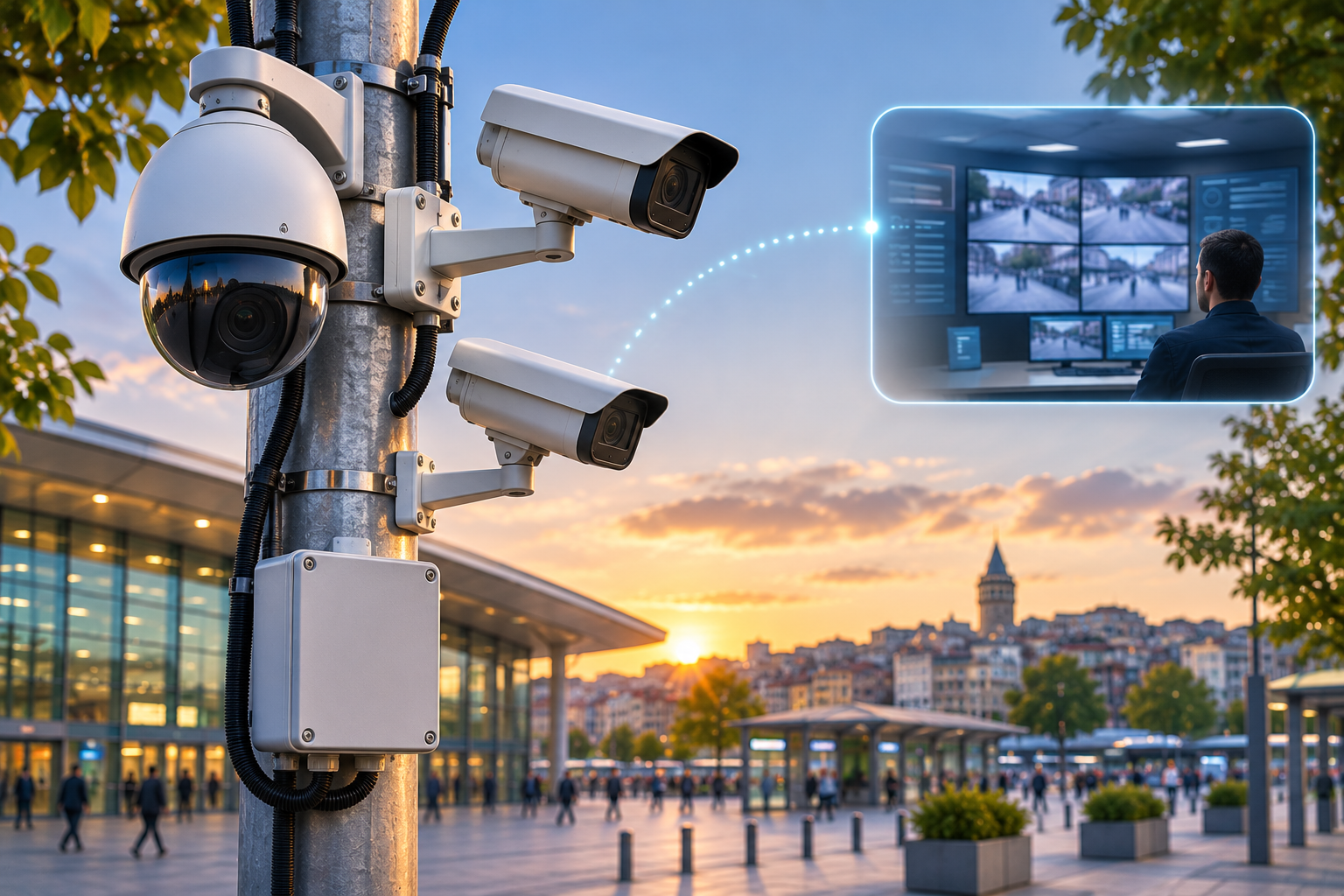
Security camera systems have been used as an important component of urban security for many years. However, with the development of artificial intelligence and image processing technologies, the function of cameras has gone beyond merely recording images.
Today, some smart video surveillance systems can detect specific objects or human faces in camera footage, compare the obtained data with defined reference records, and transmit automatic alerts to security units when a match is probable.
In Turkey, one of the applications of this technology in the field of public security is the Gözcü Project, carried out within the General Directorate of Security (EGM).
The Gözcü Project is an initiative that aims to contribute to the identification of wanted persons, the informing of security units, and the more effective execution of law enforcement activities, by utilizing face detection and recognition technologies.
The project, included in the official work plans of the Ministry of Interior, covers the installation of face detection cameras in various public areas and the development of the relevant analysis infrastructure.
Applications reported in the press in 2026 indicate that cameras used within the scope of the Gözcü Tracking Project support the work of security teams by generating automatic alerts related to wanted persons.
So, what is the EGM Gözcü Project, how does it work, in which areas is it used, and how do AI-supported face recognition systems contribute to security units?
What is the EGM Gözcü Project?
The Gözcü Project is a security technology project related to face recognition, image analysis, and associated information systems used by the General Directorate of Security to support its fight against crime and criminals.
According to publicly disclosed information, the project aims to compare face images obtained from cameras placed at appropriate points with reference photos in the police database and send notifications to security teams for potential matches.
This approach differs from traditional CCTV systems.
While a standard security camera can display and record a specific area, a system with face recognition infrastructure can, under appropriate technical and legal conditions, compare the facial features of individuals in the image with reference records.
The primary purpose of the Gözcü Project is to support law enforcement efforts for the detection of wanted persons by analyzing camera footage.
However, an automatically generated match by the system does not mean that the person's identity has been definitively determined or that direct legal action can be taken against them. It is important that notifications are evaluated by the relevant security personnel.
How Does the Gözcü Project Work?
The general operational approach of the face recognition systems used in the Gözcü Project can be evaluated through publicly disclosed application examples.
A news report from Anadolu Agency dated May 12, 2026, from Erzurum, stated that face recognition cameras compare real-time images with photos of wanted persons in the police database and send automatic notifications to security teams in case of a match.
Based on this information, the publicly disclosed workflow of the system can be summarized as follows:
1. Image Acquisition from Camera
Security cameras placed at designated points acquire images within their field of view.
In systems for face detection, image quality, camera position, face viewing angle, and lighting conditions are important.
2. Human Face Detection
Image processing software attempts to identify the region containing a human face within the acquired image.
This process is technically referred to as Face Detection.
Face detection is not the same process as identifying a person's identity.
3. Analysis of Facial Features
In general face recognition technologies, numerical features that can be used for comparison are extracted from the detected face image.
These features can be compared with features in reference images using appropriate algorithms.
However, the exact architecture, model type, and matching parameters of the algorithm used by the Gözcü Project cannot be verified in detail from publicly available sources.
4. Comparison with Reference Database
Publicly disclosed 2026 applications state that camera images are compared with photos of wanted persons in the police database.
The aim here is to identify image matches that may be related to wanted persons.
Sufficient details about the full scope of the database used, its storage policy, and all technical connections are not available in publicly accessible sources.
5. Automatic Alert Generation
The system can send alerts to relevant security units when specified matching conditions are met.
The alert helps field teams evaluate the suspicious match.
6. Evaluation by Security Units
Following the notification, security teams evaluate the relevant information and field conditions and carry out necessary checks.
The task of the face recognition system is to support the evaluation of law enforcement personnel. The matching result generated by the algorithm should not be considered as definitive identity verification on its own.
This workflow explains general biometric recognition principles along with publicly disclosed application information. It is not a definitive technical schema for Gözcü's undisclosed internal system architecture.
When Did the Gözcü Project Start? What Do Official Sources Say?
The development of the Gözcü Project can be tracked through the activity reports of the General Directorate of Security and the work plans of the Ministry of Interior.
2022–2023: Software and Analysis Modules
The EGM's 2023 Administrative Activity Report states that various modules were put into operation within the scope of the Analysis Center Project.
The report indicates that in 2022, Kartal Göz, API-PNR, and Train modules were added to the Gözcü Project.
Additionally, information regarding Hospital, Bus, and in 2023, vehicle change and Blacklist modules is available; the total number of modules in the Analysis Center Project is stated to have reached 25.
However, the 25 modules mentioned in the report should not be interpreted as solely belonging to the Gözcü face recognition system. This number refers to the total of the broader Analysis Center Project.
2024: Expansion Target in Bus Terminals and Airports
The Ministry of Interior's 2024 Work Plan includes concrete targets for the expansion of the Gözcü Project.
The plan states that within the scope of face recognition studies carried out with the Presidency of Defense Industries, the goal is to use face detection cameras in a total of 33 bus terminals and 1 airport.
The document provides examples such as Istanbul Esenler Bus Terminal, Mersin Bus Terminal, and Antalya Bus Terminal, as well as airport areas.
This work aims to develop face detection infrastructure at vehicle entry points and pedestrian passenger crossing points.
There is an important distinction here: The figure of 33 bus terminals and 1 airport explained in the document is the expansion target for 2024. It does not alone prove that all points were established on the same date or that all are currently active.
2026: Field Applications
News reports published in Erzurum and Muğla in 2026 indicate that the Gözcü Project is being used to generate automatic alerts regarding wanted persons.
Specifically, it was reported that the Erzurum Provincial Police Department was conducting operations to detect wanted persons through face recognition cameras within the scope of the Gözcü Tracking Project.
These reports support that the project is not merely a planning-stage endeavor but has operational use in specific locations.
In Which Areas is the Gözcü Project Used?
Official plans and published field reports indicate that the project focuses particularly on specific public security points.
Bus Terminals and Passenger Crossing Points
Bus terminals are transportation facilities where a large number of people enter and exit.
The 2024 work plan aimed to use face detection cameras at vehicle and pedestrian crossing points in bus terminals.
Airport Transit Areas
Official plans also included airport face detection applications.
However, it cannot be generalized that the same system is installed in every airport or that all passengers are processed with the same application.
Designated Camera Points in Cities
In 2026, it was publicly reported that face recognition cameras were used at various urban points within the scope of the Gözcü Tracking Project in Erzurum.
Other Security Applications
The analysis modules developed within the project are intended to help security units evaluate different data sources.
However, assumptions should not be made about the exact technical capabilities of undisclosed modules or the scope of their application in all cities.
What is the Difference Between the Gözcü Project and KGYS?
The City Security Management System (KGYS) refers to a broader viewing, recording, monitoring, and management infrastructure used for urban security.
Gözcü, on the other hand, stands out with its analysis functions such as face recognition and the detection of wanted persons, according to publicly disclosed information.
| Comparison | KGYS | Gözcü Project |
|---|---|---|
| Primary focus | City-wide security viewing and management | Detection of wanted persons and related analysis processes |
| Camera usage | Extensive video surveillance infrastructure | Camera applications suitable for face detection and recognition |
| Data analysis | Various security analyses connected to the system | Publicly disclosed face comparison and automatic alert functions |
| Operational purpose | Event monitoring and supporting law enforcement activities | Supporting field operations with suspicious match notifications |
| Technical scope | Multi-component urban security platform | Specific analysis modules and related integrations |
The comparison shows general functions supported by publicly available sources. It is not an official integration diagram defining all software, hardware, and data connections of both systems.
The technical integration points and data interfaces between KGYS and Gözcü need to be verified specifically for the project.
What is the Difference Between the Gözcü Project and Traditional CCTV?
Standard CCTV systems are primarily used for viewing and recording.
Face recognition systems, however, can enable the use of images for specific biometric comparison processes.
Traditional CCTV
Generates images.
Can provide live monitoring.
Can create recordings.
Supports incident review by an operator.
Smart CCTV with Face Recognition Support
Can perform face detection within an image.
Can extract appropriate facial features.
Can perform comparisons with reference images.
Can generate automatic notifications under specified conditions.
Can facilitate the operator's review of potential matches.
However, not every IP camera has face recognition capability.
Similarly, the presence of human detection or face detection features on a camera does not mean the device can perform automatic identity recognition.
What is the Difference Between Face Detection and Face Recognition?
These two concepts are often confused in the security industry.
Face Detection: Attempts to determine whether a human face is present in an image and its location.
Face Recognition: Attempts to evaluate whether a face image belongs to the same person by comparing it with specific reference images.
Face Verification: Evaluates whether a specific person's declared identity matches their face image, usually through a one-to-one comparison.
Face Identification: Searches for possible matches of a face within a database, usually among multiple records.
The publicly disclosed wanted person comparison applications of the Gözcü Project are related to the face identification approach.
However, the exact matching algorithms and performance values used by the system cannot be verified from public documents.
Why is Camera Selection Important in AI-Supported Face Recognition Systems?
The performance of face recognition systems does not depend solely on the software algorithm.
The quality of the image obtained from the camera is also important.
Camera Angle
The angle of the face relative to the camera affects the facial detail that can be captured.
Some distinguishing features may not be sufficiently captured in faces viewed from too high or too much from the side.
Lighting
Insufficient lighting, backlighting, and overexposure can degrade the quality of the face image.
Lens and Target Distance
The camera lens and target distance affect the pixel area occupied by the face in the image.
However, a specific PPM value alone cannot guarantee face recognition accuracy.
Motion Blur
Inappropriate exposure times can lead to blur in face images of walking or fast-moving individuals.
Camera Installation and Maintenance
Changes in the camera's field of view, lens contamination, or deterioration of optical settings can affect image quality.
Face recognition performance should not be determined solely by looking at camera resolution.
Image capture conditions, the algorithm used, and real-world field tests should be evaluated together.
How Accurate is Face Recognition in the Gözcü Project?
I could not verify independent and comprehensive accuracy test results for the face recognition system used in the Gözcü Project from publicly available sources.
Therefore, it is not appropriate to give a definitive percentage for the system.
In general, there are key performance indicators that should be evaluated in face recognition technologies.
False Positive Match
The system may identify two different individuals as being related to the same person.
This situation is called a false positive match.
False Negative Match
The system may fail to match the same person who has reference records.
This is a false negative match.
Image Quality and Threshold Values
The quality of the face image and the decision thresholds used for matching can affect error rates.
Changing the threshold can lead to different results between false alarms and missed matches.
The U.S. National Institute of Standards and Technology (NIST) evaluates face recognition algorithms within its Face Recognition Technology Evaluation studies.
NIST research shows that the success rates of algorithms can vary in relation to image quality, application type, and demographic variables.
However, the test results performed by NIST on algorithms from different manufacturers cannot be used as a direct measured performance of the Gözcü Project.
AI-supported face matching should not, on its own, replace definitive identity verification or independent law enforcement evaluation.
How Should the Gözcü Project Be Evaluated in Terms of Personal Data and Privacy?
Face recognition systems are one of the most sensitive applications of public security technologies.
This is because biometric data processed for the unique identification of an individual falls under special categories of personal data within the scope of Law No. 6698 on the Protection of Personal Data (KVKK).
However, data processing procedures related to public security and law enforcement activities may be subject to different legal regulations than standard commercial face recognition applications.
Article 28 of the KVKK
Article 28 of Law No. 6698 regulates exceptions regarding the processing of personal data in preventive, protective, and intelligence activities carried out by public institutions authorized by law for specific purposes such as public security and public order.
Nevertheless, the fact that an institution operates in the field of public security does not mean that all data processing activities unconditionally fall under this exception.
The purpose of processing, the relevant legal authority, the nature of the application, and other legal safeguards must be evaluated separately.
Technical Security and Auditability
In systems using biometric image analysis, the following points are important:
Only authorized persons can access the data.
Accesses and queries are recorded as required.
The risk of false matches is managed.
Data integrity and communication security are protected.
Data retention and destruction policies are determined in accordance with relevant legislation.
Automatic matching results are supported by human evaluation.
The purpose of use and authorization limits of the system are maintained.
Definitive statements should not be made about the Gözcü Project's undisclosed data retention periods, all query authorities, and internal security architecture.
What is the Importance of the Gözcü Project for Public Security?
The publicly disclosed primary function of the Gözcü Project is to provide image analysis for the identification of wanted persons as operational support to security teams.
This approach, under certain conditions, can:
Reduce the need for operators to individually review a large number of images.
Help detect potential matches more quickly.
Support information sharing among security units.
Generate alerts regarding wanted persons being seen at specific camera points.
Contribute to the field evaluations of security teams.
However, the actual realization of these advantages depends on system accuracy, false alarm management, operational procedures, and effective human oversight.
The value of artificial intelligence in public security applications is not merely to generate automatic decisions, but to provide reliable information to relevant personnel in a timely manner.
What Applications Related to the Gözcü Project Were Announced in 2026?
In 2026, field examples related to the Gözcü Tracking Project in different provinces were reported in the press.
Detection of Wanted Persons with Face Recognition in Erzurum
According to an Anadolu Agency report dated May 12, 2026, a wanted person was detected by face recognition cameras used within the scope of the Gözcü Tracking Project in Erzurum and apprehended as a result of the security teams' work.
The report explained that the system compares real-time camera images with reference photos in the police database and sends automatic notifications when there is a match.
Another report published in Erzurum in May 2026 also stated that a murder suspect, who had been wanted for 10 years, was apprehended after alerts generated by face recognition cameras.
Application in Muğla Marmaris
News reports from February 2026 stated that after an alert for a wanted person came from a camera used within the Gözcü Project in Marmaris, police teams conducted field work and apprehended a person with an arrest warrant.
These examples demonstrate how face recognition systems can be used in law enforcement activities.
However, individual arrest reports do not indicate the accuracy rate of the system in all areas of use or the total number of installations across Turkey.
Frequently Asked Questions About the Gözcü Project
What is the EGM Gözcü Project?
The Gözcü Project is a security project in which the General Directorate of Security utilizes face detection, recognition, and related image analysis technologies to support its fight against crime and criminals.
Does the Gözcü Project use artificial intelligence?
The project uses technologies for face recognition and image analysis. These technologies can generally be implemented using artificial intelligence and machine learning methods. However, the technical architecture of all algorithms used has not been publicly disclosed.
What is the purpose of the Gözcü Project?
According to official work plans, the main purpose is to develop the analysis and detection capacity needed by security units in the fight against crime and criminals.
How do Gözcü cameras recognize people?
In publicly disclosed applications, real-time face images are compared with photos of wanted persons in the police database; in case of a potential match, an automatic alert is sent to the relevant security teams.
In which provinces is the Gözcü Project used?
There are examples of operational use reported in the press in Erzurum and Muğla in 2026. The Ministry of Interior's 2024 work plan also included expansion targets for bus terminals and one airport. A complete list of all active installation points cannot be determined from these sources.
What is the face recognition accuracy rate of the Gözcü Project?
There is no independently verified system-wide accuracy rate available in publicly accessible sources. Therefore, it is not appropriate to give a specific percentage.
Are Gözcü and KGYS the same system?
They are not the same concept. KGYS refers to a broader urban security viewing and management infrastructure. Gözcü, on the other hand, stands out with face recognition and related analysis functions. The scope of technical integration should be evaluated specifically for the project.
Can face recognition systems match the wrong person?
Yes. In general, false positive and false negative matches can occur in face recognition algorithms. Therefore, it is important to evaluate automatic notifications with necessary checks.
Has the Gözcü Project been completed nationwide in Turkey?
The examined public documents confirm expansion targets and operational applications in some provinces. However, a current and comprehensive official inventory showing the completion of nationwide installations has not been verified.
Conclusion: The Gözcü Project is One of the Applications of Smart Video Analysis in Public Security
The EGM Gözcü Project is one of the projects demonstrating how traditional security camera systems can be transformed into more comprehensive security applications with AI-supported image analysis and face recognition technologies.
The work plans of the Ministry of Interior outline the goals for the project's development and expansion into different areas. Field reports published in 2026 show the system's operational use for the detection of wanted persons.
However, the success of such technologies cannot be measured solely by the number of cameras or the sophistication of algorithms.
Image quality, actual recognition accuracy, management of false matches, secure data processing, and evaluation by authorized personnel are all important together.
The fundamental value of AI-supported face recognition systems in public security is not to replace human decision-making indefinitely; it is to provide rapid and evaluable information to security units.
The Gözcü Project is one of the important examples in Turkey of the transformation of CCTV systems from infrastructures that merely record images to systems that analyze images and provide information for security activities.
Sources
T.C. Ministry of Interior – 2024 Work Plan, Gözcü Project and Face Recognition Expansion Targets
Anadolu Agency – Detection of Wanted Person with Face Recognition Cameras in Erzurum, May 12, 2026
Haberler / İHA – Apprehension of Wanted Person in Marmaris within Gözcü Project, February 19, 2026
NIST – Face Recognition Technology Evaluation, 1 Identification
Personal Data Protection Authority – Public Security and Article 28 of Law No. 6698