
School Security: What Measures Should Be Taken?
School security is not limited to camera systems and security personnel. Student entry-exit control, visitor management, perimeter security, fire detection, emergency plans, and cybersecurity must be considered together. We examine the physical, electronic, and administrative security measures that should be taken in educational institutions within the framework of current legislation and technical criteria.
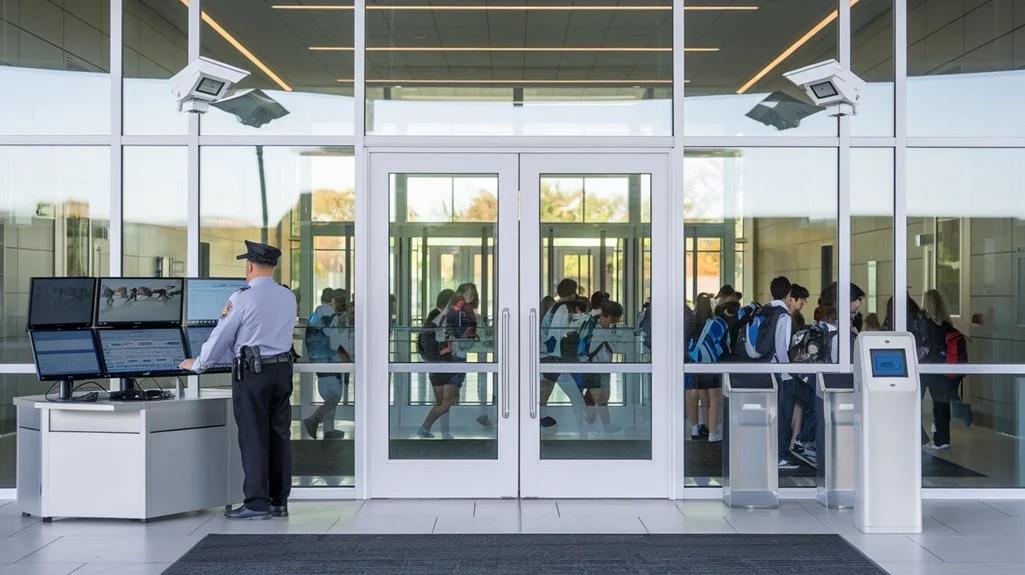
Security in schools is one of the fundamental priorities for creating an educational environment where students, teachers, and educational staff feel safe. However, a secure school cannot be achieved solely with a security guard at the entrance gate or cameras placed around the building.
The control of school entry-exit points, visitor management, perimeter security, fire detection, disaster preparedness, student handover procedures, and cybersecurity applications must be planned together.
Especially in educational institutions with a large student population, preventive security measures, electronic security systems, and correct management procedures should be implemented in an integrated manner.
So, what security measures should be taken in schools? Which security systems should be used, and what should school administrations pay attention to?
1. School Security Should Start with Risk Analysis
The first stage of an effective school security plan is to identify the risks specific to the educational institution.
The security needs of a kindergarten are not the same as those of a high school with thousands of students or an educational institution with a large campus.
The following areas should be examined in the risk assessment:
The school's location and environmental risks.
Number of students, age groups, and special needs.
Garden gates, building entrances, and alternative access points.
Density during student entry-exit hours.
Waiting areas for school buses and student drop-off/pick-up areas.
Fire, earthquake, and other emergency scenarios.
Coverage of camera systems and lighting conditions.
Distribution of duties for school personnel and intervention procedures.
Security projects prepared by merely determining the number of cameras or turnstiles without conducting a risk analysis can lead to significant vulnerabilities being overlooked.
In the statements of the Ministry of National Education regarding the 2026–2027 academic year, the assessment of risks around schools, control of entry-exit, and safe evacuation measures are highlighted.
2. School Entry and Exit Points Must Be Controlled
One of the most critical points of school security is the areas where students and visitors enter and exit the campus.
Security planning at these points should aim to both prevent unauthorized entries and ensure the orderly and safe movement of students.
Card Access and Electronic Access Control Systems
Depending on the school's risk profile, staff cards, controlled doors, visitor pass mechanisms, and appropriate access control systems can be evaluated.
These systems can:
Manage authorized personnel's access to specific areas.
Support the recording of staff and visitor movements.
Protect administration offices, technical rooms, and areas requiring special access.
Help identify unauthorized access attempts.
However, the use of turnstiles or electronic locks should not unnecessarily complicate students' daily movement or hinder emergency evacuation.
Especially for younger age groups, it is important to supplement electronic access control systems with supervision by authorized personnel.
Visitor Management
There should be a defined admission procedure for parents, suppliers, and other visitors coming to the school.
The MEB (Ministry of National Education) circular for the 2026–2027 academic year stipulates that parent meetings should be planned through the School Appointment System and school entries should be controlled.
In this context, school administrations should implement procedures to ensure that visitor identities and purposes of visit are verified by authorized personnel, visits are properly recorded, and uncontrolled movement within the school is prevented.
3. How Should School Security Cameras Be Positioned?
Security camera systems are one of the important components of physical security infrastructure in schools.
However, a successful CCTV project cannot be created merely by choosing high-resolution cameras.
Camera positions should be determined according to the risk level of the area to be protected, viewing geometry, lighting conditions, and personal data protection requirements.
Areas where cameras can be used in schools
Considering security objectives and legal compliance, the following points can be prioritized:
School garden entrances and building doors.
Visitor reception and information areas.
Sections of the school perimeter necessary for security.
Parking lots and entry-exit areas for school buses.
Corridors and common passage areas deemed necessary.
Entrances to technical rooms and areas requiring special access.
The viewing angle should only cover the necessary security areas.
Camera resolution and lens selection
Depending on the area where the camera will be installed, the field of view, target distance, and required image detail should be evaluated.
For example, general monitoring of a large schoolyard and detailed examination of an incident at a building entrance may create different imaging needs.
Therefore, in camera selection, lens, mounting height, night image quality, and recording system capacity are as important as resolution.
Personal data and student privacy
When installing camera systems in schools, Law No. 6698 on the Protection of Personal Data (KVKK) and relevant education legislation must be taken into account.
In the Personal Data Protection Board's decision dated August 24, 2023, numbered 2023/1461, it was evaluated that an educational institution's recording of images for security purposes may be lawful under certain conditions; however, additional audio recording cannot be automatically deemed legitimate for the same reason.
Therefore:
Camera use must be based on a clear, specific, and legitimate purpose.
Students, parents, employees, and visitors must be adequately informed.
Cameras should not be used in areas where privacy is high, such as restrooms and changing rooms.
The necessity of cameras for classrooms and other student areas should be evaluated separately.
Only authorized personnel should have access to image recordings.
Recording durations should be determined in accordance with relevant legislation and data retention principles.
Audio recording should not be considered a natural part of routine camera use.
Technologies used for student safety must not violate students' privacy and personal data rights.
4. School Perimeter and Garden Security Must Be Ensured
School security is not limited to measures inside the building.
Garden walls, perimeter gates, parking lots, school bus waiting areas, and pedestrian traffic around the school should also be included in security planning.
Important measures for perimeter security
Checking the physical integrity of garden walls and fences.
Identifying points vulnerable to unauthorized entry.
Properly controlling entrance gates.
Improving poorly lit security points.
Addressing camera blind spots based on risk analysis.
Separating student and vehicle traffic as much as possible.
Keeping routes clear for emergency vehicle access.
Perimeter security cameras and alarm systems can support physical security measures at necessary points.
However, installing the same number of cameras or the same type of security equipment around every school is not a correct engineering approach.
5. Fire Detection and Emergency Evacuation Systems in Schools
Fire safety in schools is critically important for the life safety of students and staff.
Fire detection systems should be designed in accordance with building characteristics, intended use, relevant legislation, and fire risks.
Gereksinimlere göre değerlendirilebilecek bileşenler arasında şunlar bulunur:
Automatic smoke and heat detectors.
Fire alarm control panels.
Manual fire alarm call points.
Audible and visual alarm devices.
Emergency lighting and directional systems.
Emergency public address and evacuation solutions suitable for the project.
Since laboratories, workshops, kitchens, technical rooms, and storage areas may carry different risks, the same detection technology may not be suitable for every section.
Fire exits and evacuation routes
Emergency exit doors, evacuation corridors, and stairwells must be kept continuously accessible.
Card access systems or electromagnetic locks must not impede necessary escape functions during a fire.
Fire detection, safe evacuation, and other emergency control functions should be evaluated in line with the Regulation on Fire Protection of Buildings.
As important as the role of electronic security systems in this process is providing age-appropriate evacuation training to students and conducting regular drills.
6. School Emergency Plans Must Be Prepared for Earthquake and Disaster Safety
Educational institutions in Turkey need to prepare for various disaster scenarios, especially earthquakes.
Disaster safety is not limited to building resilience alone.
School administrations should address structural safety and non-structural risks in line with the assessments of authorized experts.
In this context:
Cabinets, shelves, and equipment that could tip over should be properly secured.
Emergency exit routes should be determined.
Safe assembly areas should be defined.
Evacuation plans appropriate for age groups and special needs should be created.
Student headcount and handover processes to parents should be planned.
Emergency communication alternatives should be determined.
Personnel, students, and relevant officials should be trained through drills.
In AFAD's school disaster awareness efforts, pre-disaster preparedness, correct behavior patterns, assembly areas, and evacuation drills are also among the important topics.
7. Student Handover and School Bus Security
A significant part of student safety must be ensured during school entry and exit hours.
Especially at preschool and primary school levels, there must be a clear procedure for handing over students to authorized persons.
This procedure should cover topics such as authorized persons for pickup, verification of change requests, communication processes to follow in unexpected situations, and keeping necessary records.
Measures to be taken in school buses
Checking the compliance of school buses and drivers with relevant legislation.
Assigning necessary guide personnel.
Safely arranging student boarding and alighting areas.
Checking the safety equipment of vehicles.
Monitoring student lists and handover processes by authorized personnel.
Using vehicle tracking systems in accordance with legislation, if necessary.
The traffic density created by school buses in the schoolyard or in front of the entrance gate should also be evaluated within the scope of risk analysis.
8. School Security Personnel and Intervention Procedures
Electronic security systems are not technologies that replace the human factor.
The duties and responsibilities of school security guards, administrators, and relevant personnel must be clearly defined.
Security guards can play a role in access control, visitor guidance, reporting security incidents, and coordinating with authorized units within the limits of their duties and authorities.
Especially in emergencies, who will make which decision, which personnel will be notified, and which institutions will be contacted must be predefined.
The MEB's cooperation protocol on the safety of children's education processes includes duty documents for school principals, school law enforcement officers, security personnel, and relevant coordination units.
A school's security level should be evaluated not only by the equipment it possesses but also by how prepared it is for a risky event.
9. Peer Bullying and Psychological Safety Should Not Be Neglected
The concept of security in schools is broader than preventing physical threats.
Peer bullying, exclusion, threats, violence, and harmful behaviors occurring in the digital environment should also be addressed as part of a safe school environment.
For this purpose:
Notification mechanisms where students can safely report issues should be established.
Guidance and psychological counseling services should be accessible.
Teachers and relevant personnel should be trained to recognize risk indicators.
Incidents should be evaluated with due regard for confidentiality and the child's best interest.
Coordination with families and, when necessary, with authorized institutions should be ensured.
Camera and video analytics cannot replace psychological safety or counseling efforts.
10. Cybersecurity and Student Data Must Be Protected
In modern schools, security systems are becoming increasingly network-connected.
IP cameras, recording devices, access control systems, wireless networks, and school management software should also be evaluated from a cybersecurity perspective.
Priority technical measures include:
Changing default device passwords.
Strong authentication and authorization.
Proper segregation of camera and security networks.
Managing software and device updates.
Preventing unauthorized remote access.
Ensuring the physical security of recording devices.
Backing up critical configurations.
Protecting student and parent information against unnecessary access.
If facial recognition, biometric access, or AI applications that automatically classify student behavior are being considered, their necessity, legal basis, and impact on children's rights should be evaluated separately.
Such technologies should not be preferred merely because they are more advanced.
Comparison of Security Systems Usable in Schools
| Security solution | Primary use purpose | Points to consider |
|---|---|---|
| CCTV and IP camera | Monitoring necessary security areas, incident investigation | Blind spots, recording security, KVKK |
| Card access | Authorized personnel access to specific areas | Access permissions, emergency exit security |
| Visitor management | Preventing unauthorized visits | Appointment and identity verification procedures |
| Perimeter security | Managing risks around the garden and building | Physical barriers, lighting, and personnel |
| Fire detection | Detecting fire indicators and warning | Legislation, detector selection, functional tests |
| Emergency public address and warning | Evacuation and emergency information | Intelligibility, coverage, backup power |
| Centralized security monitoring | Event and status tracking of authorized systems | Integration, fault management, cybersecurity |
This table is a general selection framework. Whether each system is necessary should be determined based on the school's risk assessment and applicable legislation.
To learn more about the basic components of electronic security systems, GüvenlikOnline's article titled Electronic Security Systems can be reviewed.
Technical Checklist for School Security
Does the school have an up-to-date security risk analysis?
Are garden and building entrances controlled?
Are visitor admission and student handover procedures defined?
Have camera system coverage and recording security been checked?
Are KVKK and privacy requirements met in camera use?
Are fire alarm and emergency warning systems maintained?
Are evacuation routes clear and safe?
Are drills conducted for earthquake and other disaster scenarios?
Are school buses and student drop-off/pick-up areas inspected?
Do teachers and staff know the security procedures?
Are notification mechanisms for peer bullying and digital security in place?
Are cybersecurity checks performed on security systems?
This checklist helps evaluate the school's current security status. It does not replace official risk assessments or relevant legal audits.
Frequently Asked Questions
What security measures should be taken in schools?
In schools, risk analysis, controlled entry-exit, visitor management, perimeter security, fire and disaster preparedness, student handover procedures, and cybersecurity applications should be planned first. Electronic systems should be considered as tools supporting these measures.
Is it mandatory to use security cameras in schools?
Camera system requirements may vary depending on the type of school, relevant education legislation, and applicable regulations. Areas where cameras will be used and recording processes should be evaluated together with legal and technical requirements.
Can security cameras in schools record audio?
The ability to record images for security purposes does not automatically make additional audio recording lawful. This distinction was particularly emphasized in the KVKK's decision numbered 2023/1461 regarding educational institutions.
Should turnstiles or card access be used at school entrances?
These systems can be evaluated according to the school's needs. However, students' ages, accessibility, daily passage density, and emergency evacuation safety should be considered.
What is the most important element in school security?
The most important element is integrated security management that is appropriate for risks and regularly verified. Technology, trained personnel, clear procedures, and efforts towards children's physical and psychological safety must be carried out together.
Conclusion: A Safe School is Created with an Integrated Security Approach
Security in schools is not a process that can be completed merely by installing camera systems or controlling entrance gates.
To ensure the safety of students, physical security, electronic systems, disaster preparedness, student handover procedures, cybersecurity, and staff training must be addressed together.
The correct school security approach is based on identifying risks in advance, implementing appropriate measures, and regularly verifying these measures.
Security technologies are an important part of this approach. However, for a sustainable security environment, proper organization, clear responsibilities, and a management approach that respects children's rights are required alongside technology.