
High-Severity Security Vulnerability in Johnson Controls C•CURE 9000 and victor Systems
Johnson Controls announced CVE-2026-106019, a security vulnerability affecting C•CURE 9000 access control and victor video management systems. The vulnerability, with a CVSS 4.0 score of 8.8, can lead to sensitive credentials being recorded in installation logs.
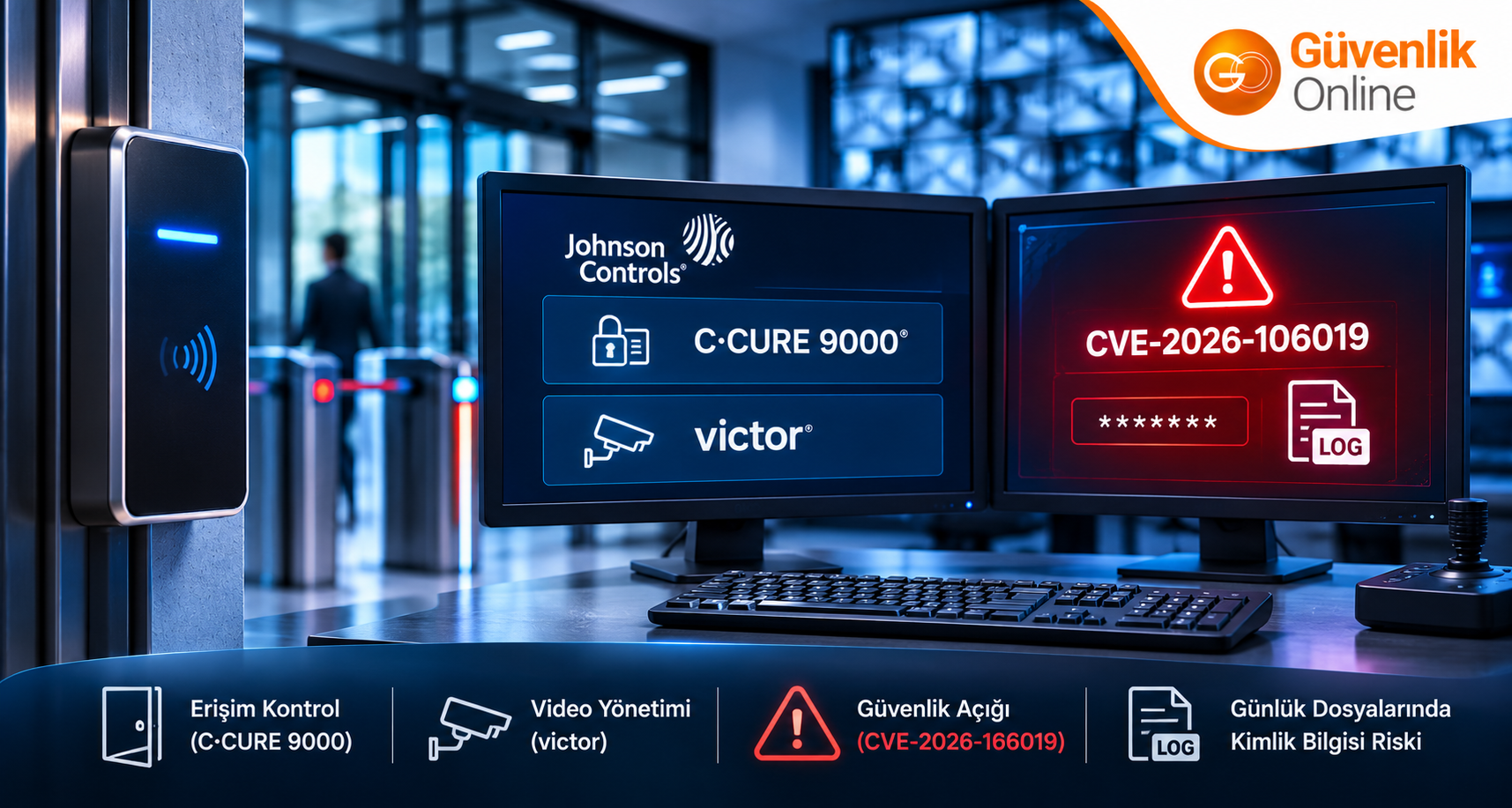
Johnson Controls has issued a new cybersecurity alert affecting its physical security management platforms.
Security advisory JCI-PSA-2026-45, dated November 5, 2026, reveals an issue related to the protection of sensitive credentials in Software House C•CURE 9000 and American Dynamics victor products.
The vulnerability was added to public vulnerability databases on November 6 with the record CVE-2026-106019.
The issue concerns the potential recording of sensitive credentials in log files during certain installation processes. Unauthorized individuals accessing these logs could potentially use the exposed information to gain access to other systems.
There is no verified information regarding the vulnerability being exploited in actual attacks.
Which Systems Are Affected by the Vulnerability?
Johnson Controls' C•CURE 9000 platform is used for the centralized management of physical access control and security events in enterprise facilities.
victor, on the other hand, is a video management system (VMS) that enables the management of video surveillance infrastructures.
The manufacturer's official CVE record lists C•CURE 9000 and victor systems among the affected products. Detailed technical analyses specify the following installation packages:
| Product | Affected package | Patched package |
|---|---|---|
| C•CURE 9000 3.20 | 3.20.597 | 3.20.607 or higher |
| victor 8.0 | 8.0.597 | 8.0.607 or higher |
These detailed package numbers are included in Breachroad's technical review based on the manufacturer's advisory. Organizations should check Johnson Controls' latest security advisory before updating.
If problematic installation files were downloaded previously, it is possible that these files may still exist in internal software archives or integrators' backups.
How Does CVE-2026-106019 Technically Work?
The vulnerability is categorized under CWE-532 — Sensitive Information in Log Files.
This category refers to security risks arising when applications record sensitive information in log files.
Under normal circumstances, log files are created to monitor system errors, installation processes, and application activities.
However, if these logs contain passwords or authentication information, they can become a significant security risk in the event of unauthorized access.
The issue identified in Johnson Controls products stems from sensitive credentials potentially being written to specific installation logs.
The vulnerability's CVSS 4.0 score was announced as 8.8 (High).
This score does not imply that systems can be compromised over the internet without any authentication. The official assessment indicates that specific access conditions must be met for an attack to occur.
The primary risk is the unauthorized reading of recorded credentials and their subsequent misuse.
What Risks Are Present in Log Files?
Breachroad's technical analysis specifies one of the locations that should be examined as follows:
C:\ProgramData\JCI\InstallerTemp\
Installation logs such as UnifiedInstallDashboard.log may be found in this location.
In enterprise environments, log files may not only be stored on local servers.
Centralized log management systems, backup infrastructures, and technical support archives can also contain copies of historical log records.
Therefore, system administrators may not only need to check the current software version.
Files remaining from previous installation processes and their access permissions also need to be evaluated.
What Measures Should Johnson Controls Users Take?
In line with the manufacturer's security advisory and technical analyses, the first step is to identify the installation packages and current versions of the affected products.
Organizations using affected packages must obtain updated and patched installation files from the manufacturer's official distribution channels.
However, transitioning to a new installation package does not automatically clear sensitive information from previously created log files.
Therefore, system administrators are advised to consider the following actions:
Check whether affected installation packages have been used.
Review installation logs for sensitive credentials.
Identify local and centralized copies of relevant logs.
Renew account passwords and other authentication information that may have been exposed.
Restrict access permissions to log files.
Coordinate updates and account changes with authorized technical teams.
Service accounts in physical security systems can be linked to various software and hardware components.
Therefore, unplanned password changes or system updates can affect the operation of existing integrations.
It is important to back up configurations before updating and to carry out changes during controlled maintenance processes.
Why Is This Important for Security Integrators in Turkey?
In corporate security projects in Turkey, access control, video surveillance, and centralized security management software can be used together.
Management servers in these systems establish important connections between physical security devices and the corporate information technology infrastructure.
The vulnerability announced by Johnson Controls indicates that installation and maintenance processes should also be included in cybersecurity audits.
There is no verified data on how many C•CURE 9000 or victor installations in Turkey are affected.
However, it may be beneficial for organizations using these products to check installation packages and historical log records through their authorized integrators.
This assessment should not be viewed as a security approach limited solely to Johnson Controls products.
Management software for IP cameras, NVRs, VMS, and access control platforms can also contain sensitive system accounts and operational records.
Therefore, in security audits, not only device software but also installation tools, administrator privileges, and record retention processes need to be examined.
The Importance of Cybersecurity in Physical Security Infrastructures Is Growing
CVE-2026-106019 demonstrates that risks in physical security systems are not limited to network connections or the devices themselves.
Installation packages, service accounts, and log files are also important components of the security architecture.
Therefore, organizations need to evaluate update management, access authorization, and sensitive data protection policies together.
Protecting the security infrastructure is possible not only by updating cameras and access control devices but also by keeping the software and accounts that manage these systems secure.
Resources
Johnson Controls — November 5, 2026
JCI-PSA-2026-45 security advisory
https://www.johnsoncontrols.com/trust-center/cybersecurity/security-advisories
CVE Program — November 6, 2026
CVE-2026-106019 official vulnerability record
https://www.cve.org/CVERecord?id=CVE-2026-106019
Breachroad — November 6, 2026
Technical analysis of C•CURE 9000 and victor vulnerability
https://www.breachroad.com/en/blog/ccure-9000-victor-cve-2026-106019-credentials-in-logs/