
CISA and FBI Warn of Cyber Attacks on Cold Chain Systems
Five U.S. federal agencies warned against cyberattacks targeting industrial refrigeration and cold chain systems. Compromising internet-exposed temperature control devices can lead to product losses and physical security risks.
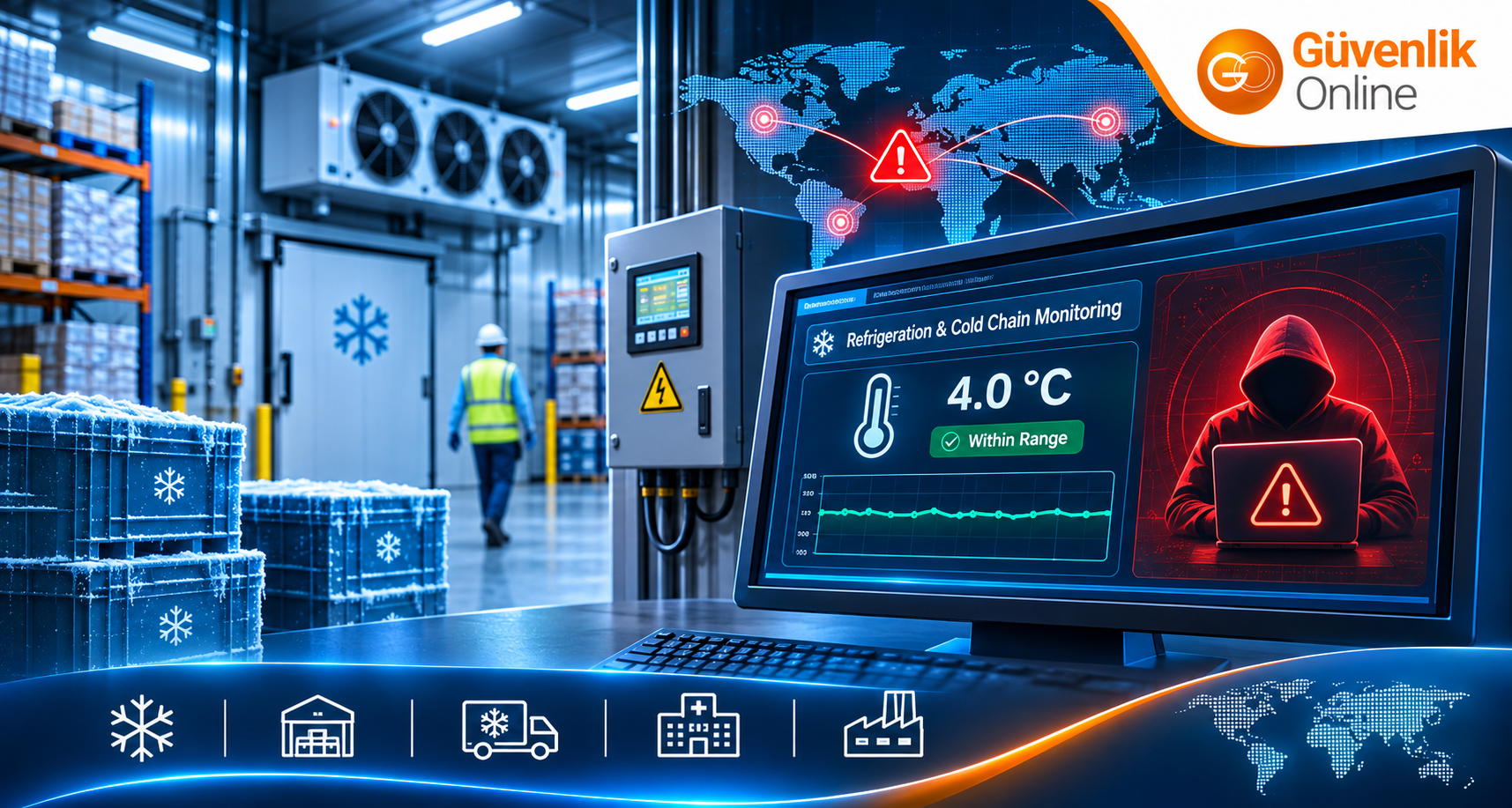
Five U.S. federal agencies have issued a joint security alert warning against cyberattacks targeting industrial refrigeration and cold chain monitoring systems. The compromise of internet-exposed temperature control devices can lead to physical consequences ranging from product losses to equipment damage.
The U.S. Cybersecurity and Infrastructure Security Agency (CISA) and the Federal Bureau of Investigation (FBI) issued a joint security document on November 5, 2026, regarding cyber activities targeting industrial refrigeration systems.
The alert, which also included contributions from the U.S. Department of Health and Human Services (HHS), the Department of Agriculture (USDA), and the Department of Transportation (DOT), reveals that attacks have been observed globally.
According to the agencies, the threat particularly concerns retail food businesses, cold storage facilities, healthcare organizations, chemical plants, and refrigerated transportation services.
A striking aspect of the warning is that cyberattacks can affect not only information systems but also the operating conditions of physical equipment.
Attackers Target Temperature Control Systems
Industrial refrigeration systems utilize electronic control devices that ensure products are stored within specified temperature ranges.
These devices perform tasks such as temperature measurement, compressor operation, defrost cycle management, and energy optimization. Many modern systems also include remote monitoring and management features.
However, control devices that are directly accessible via the internet or lack security updates can create potential entry points for attackers.
According to CISA and its partner agencies, attackers can exploit various methods such as bypassing authentication, vulnerabilities that allow unauthorized code execution, and insecure device configurations.
As a result of a successful attack, the refrigeration temperature can be remotely altered, or the system can be forced to operate in continuous heating and defrost cycles.
This situation can lead to spoilage of stored products, reduced equipment lifespan, and, under certain conditions, a fire hazard.
The agencies also highlight the risk of temperature data not being viewable by the operator. This situation, defined as denial-of-view, means that the operator cannot monitor the actual status of the system while the physical process continues.
The advisory did not publish a comprehensive list of affected products targeting a specific manufacturer, device model, or CVE number.
Incidents in Europe Demonstrate the Physical Consequences of the Threat
The federal agencies' warning follows a series of refrigeration system security incidents in Europe.
On November 2, 2026, the SuperValu supermarket chain in Ireland confirmed that a specific refrigeration system model used in 13 of its stores was affected by a cyber incident.
After its monitoring systems detected the issue, the business proactively removed some chilled and frozen products from sale. Musgrave Group, owner of SuperValu, announced on the same day that the problem had been resolved and stores had returned to normal operations.
During the same period, incidents affecting refrigeration systems were also reported in retail businesses in Belgium, Sweden, and other European countries.
In France, refrigeration equipment at three facilities linked to the national blood service was targeted. According to the FBI's statement, employees intervened in time thanks to alarm systems, and no blood products were lost in the incident.
These cases demonstrate that security deficiencies in industrial control devices can lead not only to digital service disruptions but also to the disruption of physical operations.
Investigations into the technical connections between the incidents and the identities of the attackers are ongoing. It has not been confirmed that all incidents in different countries were carried out by the same group.
What Security Measures Does CISA Recommend?
The joint security document offers actionable measures for facility operators and technical teams.
The first priority is to determine whether control devices are directly exposed to the internet.
The agencies recommend that refrigeration control panels and operational technology (OT) devices should not be directly accessible via the internet whenever possible.
If remote access is essential, connections should be managed through up-to-date firewalls or appropriate secure access solutions.
The second important issue is network segmentation. Running OT devices, such as refrigeration systems, on a separate VLAN from corporate information technology networks can help reduce the risk of unauthorized access propagation.
Additionally, changing manufacturer default passwords, using strong authentication methods, and implementing multi-factor authentication on supported devices are recommended.
CISA also urges keeping device firmware up to date, preparing a replacement plan for equipment no longer supported by manufacturers, and ensuring that only authorized devices and IP addresses can access control systems.
One of the most important recommendations of the security document regarding physical processes is to define safe temperature limits and generate alarms if these limits are exceeded.
Thus, not only network traffic but also the actual operating conditions of the equipment become part of security monitoring.
Why Is This Important for Security Integrators in Turkey?
Cold storage facilities, food production plants, pharmaceutical warehouses, hospitals, and logistics centers in Turkey also utilize remotely monitored industrial automation systems.
These systems are often found within the same facility infrastructure as different technologies such as building automation, fire detection, video surveillance, and central alarm management.
Therefore, when evaluating the cybersecurity of a facility, examining only computers or servers may not be sufficient.
IP cameras, network-connected alarm panels, access control systems, and industrial control devices should also be included in the security scope of the connected infrastructure.
However, the direct target of CISA's November 5 alert is not IP cameras, but industrial refrigeration and temperature control systems. The conclusion drawn for camera and access control equipment is that similar network security principles should also be considered for these devices.
Another important issue for security integrators is the reliability of alarm mechanisms.
For example, if the central software monitoring temperature values becomes inaccessible, critical threshold violations could be communicated to relevant personnel through independent or redundant notification methods.
This approach can increase operational resilience, especially in facilities requiring pharmaceutical storage, food safety, and continuous operation.
The Line Between Physical Security and Cybersecurity Is Narrowing
Attacks on industrial refrigeration systems reveal that the security of connected physical systems is not solely dependent on devices performing their functions.
It is as important for a control device to measure the correct temperature as it is for this value not to be altered by unauthorized individuals.
Similarly, the operator receiving alarms in a timely manner, the ability to maintain device security updates, and the system being able to restart securely after an attack are all parts of a holistic security approach.
The alert issued by CISA and the FBI does not directly impose new legal obligations for industrial facilities in Turkey.
However, it serves as a concrete international warning regarding the need for regular inventory, updating, and monitoring of internet-connected physical security and automation systems.
Especially in businesses dependent on critical temperature conditions, the joint consideration of cybersecurity and physical process security gains importance.
Sources
1. CISA, FBI, HHS, USDA, and DOT - November 5, 2026
US Government Partners Urge Hardening Industrial Refrigeration and Cold Chain Monitoring Systems.
Official security document - FBI IC3 (PDF)
2. FBI - November 2026
The FBI and Partners Urge Hardening Industrial Refrigeration and Cold Chain Monitoring Systems.
FBI official statement and video transcript
3. Reuters - November 5, 2026
US warns of ongoing cyber threat to industrial refrigeration systems.
4. American Hospital Association - November 5, 2026
Agencies urge immediate review of internet-connected refrigeration and cold chain systems.
5. RTÉ News - November 2, 2026
Issues with refrigeration systems at 13 SuperValu stores after hack now resolved.