
HID Acquires inepro ID: Authentication Portfolio Expands
HID has expanded its RFID and Bluetooth-based authentication portfolio by acquiring Dutch company inepro ID. The acquisition covers secure printing, smart lockers, and shared workplace devices.
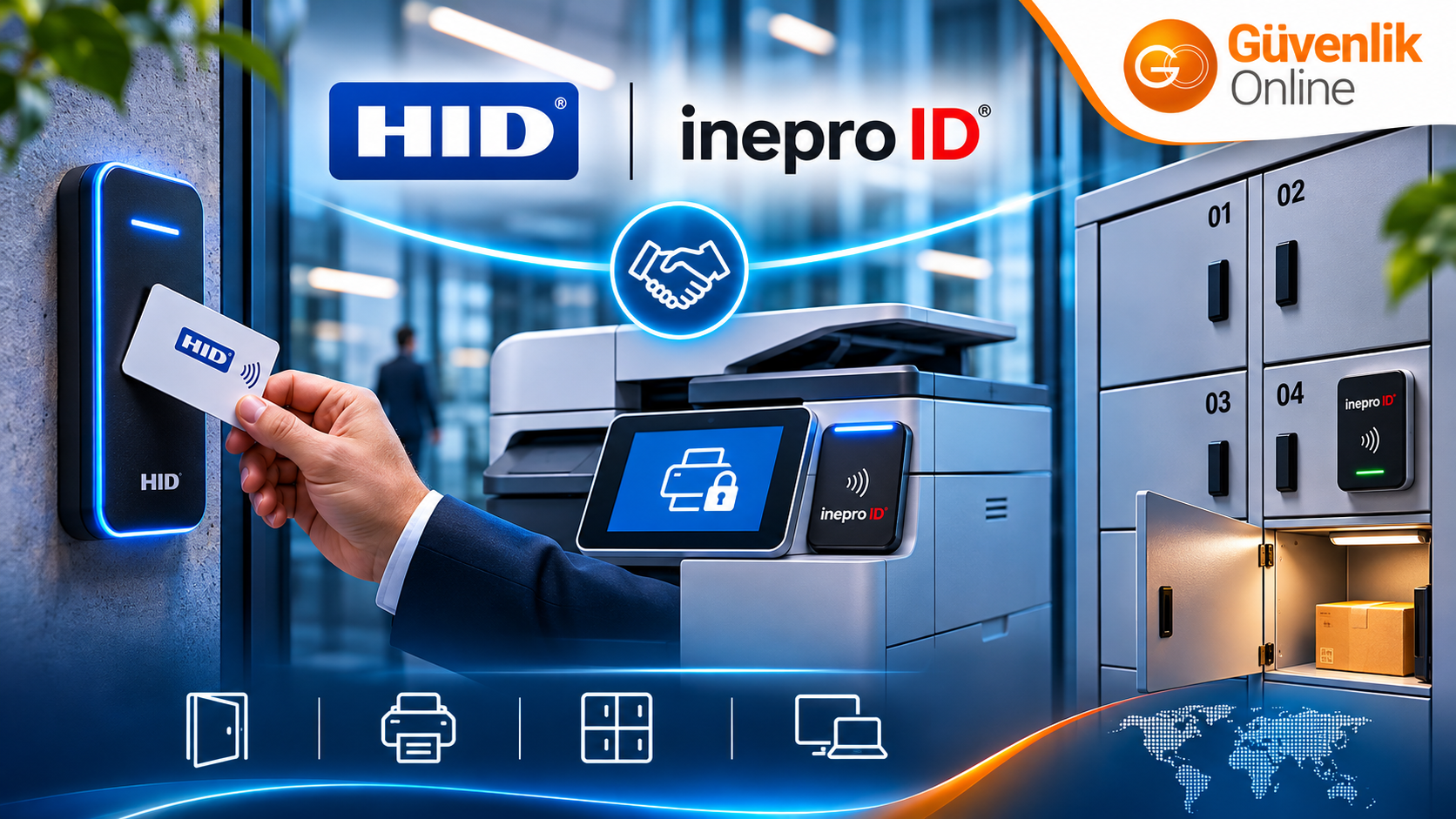
HID, a developer of identity and access management technologies, announced on November 3, 2026, that it has acquired inepro ID, part of the Netherlands-based inepro Group.
The transaction is considered a significant step towards more integrated management of authentication technologies used in shared workplace devices alongside traditional door access systems.
HID, one of the ASSA ABLOY Group brands, has added inepro ID's RFID and Bluetooth Low Energy (BLE) readers, software, and professional services to its portfolio with the acquisition.
What Technologies Does inepro ID Develop?
Established in the 1990s, inepro ID operates in the field of contactless authentication technologies. The company's solutions are primarily used in the European market, with a presence also in North and Latin America.
Application areas for the products include secure cloud printing, document flow control, smart locker management, micro-payment systems, and user activity logging.
One of the key product families joining the HID portfolio with the acquisition is the Spider readers.
The Spider family includes embedded readers that can be integrated into printers and lockers, as well as desktop and portable readers for use at workstations, digital signage, and payment terminals.
HID's statement indicates that the products feature an architecture designed to support various credential technologies. However, this does not mean that every card or mobile ID will work with any device without additional configuration.
Actual compatibility depends on the reader used, the identity technology, and system integration.
Why is Secure Printing Part of Access Control?
Protecting doors with electronic access control in an organization does not mean that all information and devices inside are at the same security level.
For example, if a sensitive document sent to a shared office printer is printed before the user arrives at the device, unauthorized individuals could access the document.
To mitigate this risk, secure printing systems can link the printing process with authentication.
In a properly configured system, a user can release their print jobs by presenting their card or another supported credential to the reader.
A similar approach can be used for accessing shared lockers or specific workplace devices.
A common feature of these technologies is their ability to associate the use of a physical resource with a defined identity and authorization process.
How Will HID's OMNIKEY Portfolio Expand?
According to HID's statement, inepro ID has joined the company's Identification Technologies (IDT) business area and is positioned alongside the existing OMNIKEY authentication portfolio.
The OMNIKEY product family is known for its reader solutions that support card and authentication technologies across various use cases.
inepro ID's inclusion brings new products and expertise to HID, particularly in secure printing and authentication for shared devices.
However, the company has not announced that all existing OMNIKEY and Spider devices have been fully unified on a single platform.
It would not be accurate to interpret the acquisition announcement as a completed technical integration or a new common access standard covering every device.
What Could Change for Security Integrators?
The most significant aspect of this development for security system integrators is the potential to expand the scope of access control projects.
A traditional project might consist of electronic door locks, card readers, control panels, and central management software.
However, if employees within the same organization also need their access to printers, lockers, and shared equipment managed, then the compatible operation of different authentication systems becomes relevant.
The merger of HID and inepro ID's product portfolios could create broader solution options for such projects.
Topics integrators should evaluate include compatibility with existing card infrastructure, reader protocols, centralized management of access rights, user lifecycle, and operational costs.
Especially in large corporate structures, consistently updating access permissions across different systems when an employee starts, changes roles, or leaves the organization is crucial.
Cybersecurity and Data Protection Dimension
The expansion of authentication systems to more devices brings new security responsibilities, as well as the potential for easier management.
A reader supporting RFID or BLE alone does not indicate that the system is secure. The security of the identity technology used, communication protection, key management, device firmware, and authorization policies must also be evaluated.
Furthermore, when printing operations, locker accesses, and user activities are logged, it becomes important for what purposes these logs are kept, who can access them, and for how long they are stored.
In applications within Turkey, personal data processing procedures must also be evaluated under KVKK obligations.
These points do not imply that a verified security vulnerability exists in the acquired products. They stand out as general security requirements that should be considered during the design and procurement phases of connected authentication infrastructures.
Significance for the Security Sector in Turkey
In Turkey, corporate security systems are not limited to managing building entrances.
In structures such as hospitals, universities, factories, offices, and logistics centers, the need for authentication can extend to various devices and services.
Therefore, when making access control investments, it is becoming increasingly meaningful to evaluate not only door readers but also other authentication points throughout the organization.
HID's acquisition does not include a specific product launch or pricing announcement for the Turkish market. Therefore, separate verification is required for the availability and integration options of new products in Turkey.
What to Expect After the Acquisition?
HID states that it will continue to support inepro ID customers and partners.
The company's statement focuses on expanding secure printing and authentication solutions by leveraging the technological expertise of both parties.
However, the financial terms of the acquisition and a detailed technical roadmap for how the product portfolios will be integrated in the future were not shared in the announcement.
The broader significance of this development lies in the trend towards considering physical access control and digital authentication within common security strategies, rather than as independent systems.