
What is IK10? Impact Resistance and Vandal Protection Classes in Security Cameras
What is IK10, and what does it mean for security cameras? We examine the 20 joule impact resistance in the IEC 62262 standard, the differences between IK08, IK09, IK10, and IK11, vandal-proof camera features, the differences from IP66/IP67 protection, and the criteria for selecting the right camera.
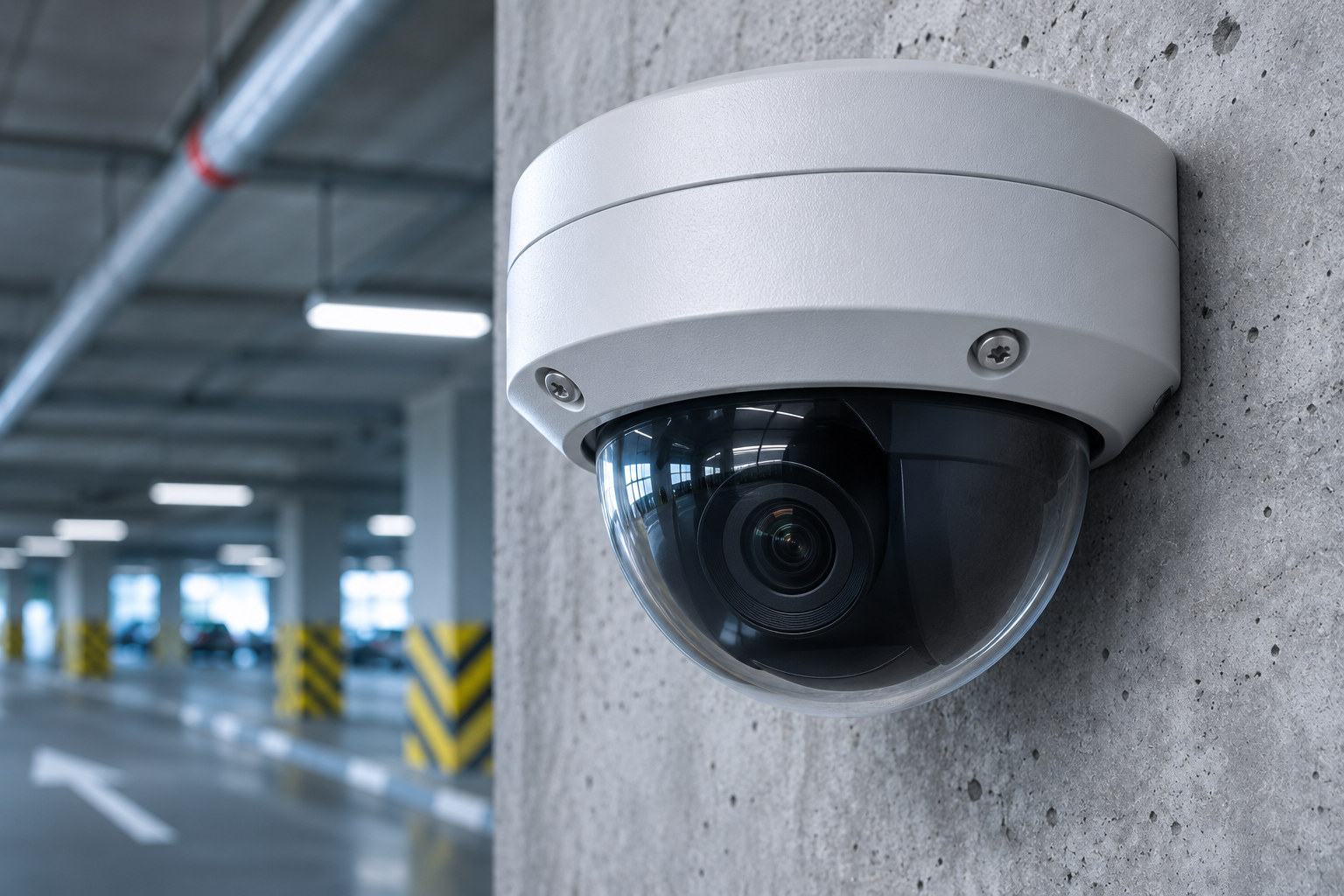
Security cameras can face various physical risks depending on their installation environment. Especially cameras used in parking lots, metro stations, schools, sports facilities, factories, and public areas may be exposed to impacts, collisions, or deliberate physical interventions.
For this reason, in professional CCTV projects, not only camera resolution, night vision, and image quality, but also the mechanical durability of the device should be evaluated.
One of the important standards used to define the protection level of security cameras against external impacts is the IK protection classification determined under IEC 62262.
In this classification, the commonly encountered IK10 refers to the evaluation of the camera housing against 20 joules of impact energy under specified test conditions.
However, a camera with IK10 protection class should not be considered unbreakable, indestructible, or resistant to all types of physical attacks.
So, what is IK10, what does 20 joules of impact mean, what is the difference between IK08 and IK10, and what should be considered when choosing a vandal-resistant security camera?
What is IK10?
IK10 is a level of the international IK classification that expresses the degree of protection provided by enclosures for electrical and electronic equipment against external mechanical impacts.
IK10 refers to the test requirements specified for 20 joules of impact energy.
IK codes are defined under the IEC 62262 standard.
The full name of the standard is Degrees of Protection Provided by Enclosures for Electrical Equipment Against External Mechanical Impacts (IK Code).
In Turkish, it can be explained as the degree of protection provided by enclosures for electrical equipment against external mechanical impacts.
IK classification is not only used for security cameras. It can also be used for electrical panels, lighting fixtures, electronic control devices, and other suitable equipment enclosures.
In the security camera industry, the IK10 value is frequently encountered in the technical specifications of dome and other durable camera models, especially those used in environments prone to physical intervention.
What Does IK10 20 Joule Impact Resistance Mean?
Joule (J) is a unit of energy.
20 joules, defined in the IK10 class, refers to the energy level of the specified mechanical impact test.
This energy approximately corresponds to the impact energy generated by dropping a mass of 5 kilograms from a height of 40 centimeters.
The basic potential energy formula is:
E = m × g × h
Here:
E: Energy (joule)
m: Mass (kilogram)
g: Gravitational acceleration (approximately 9.81 m/s²)
h: Drop height (meter)
Example calculation:
5 × 9,81 × 0,40 = 19,62 joule
This value is approximately 20 joules.
However, this calculation only explains the physical magnitude of the impact energy.
The actual IK10 test is performed according to the conditions specified in the standard, such as the characteristics of the impact element, the method of application, test points, the mounting condition of the device, and acceptance criteria.
20 joules of impact resistance does not mean that the camera will not be damaged by any intervention carried out with any object.
What Are IK Protection Classes?
The IEC 62262 standard classifies different impact energies with IK codes.
With an amendment published in 2021, the IK11 level was also added to the system.
IK Impact Resistance Table
| IK class | Impact energy |
|---|---|
| IK00 | No impact protection specified under the standard |
| IK01 | 0.14 joule |
| IK02 | 0.20 joule |
| IK03 | 0.35 joule |
| IK04 | 0.50 joule |
| IK05 | 0.70 joule |
| IK06 | 1 joule |
| IK07 | 2 joules |
| IK08 | 5 joules |
| IK09 | 10 joules |
| IK10 | 20 joules |
| IK11 | 50 joules |
The table shows the impact energy classification in IEC 62262:2002+A1:2021. It does not solely represent the device's resistance to all physical attacks or its service life.
What is IK08?
IK08 is the protection level associated with 5 joules of impact energy.
It can be considered for certain indoor applications or in locations where the risk of physical intervention is relatively limited.
However, it should not be assumed that IK08 is sufficient for every indoor environment.
What is IK09?
IK09 is the protection level associated with 10 joules of impact energy.
It is tested with a higher impact energy compared to IK08.
What is IK10?
IK10 refers to 20 joules of impact energy.
It is frequently considered for public areas and camera points where there is a risk of physical intervention.
What is IK11?
IK11 is the class associated with 50 joules of impact energy.
It was defined with the 2021 amendment to the IEC 62262 standard.
It can be used especially in special enclosures or protective grilles designed for very harsh outdoor conditions.
However, the existence of IK11 does not mean that this level is necessary for all professional CCTV projects.
Differences Between IK08, IK09, IK10, and IK11
| Protection level | Test impact energy | Technical evaluation |
|---|---|---|
| IK08 | 5 J | Relatively low mechanical impact energy |
| IK09 | 10 J | Higher impact level than IK08 |
| IK10 | 20 J | Common class for vandal-resistant CCTV models |
| IK11 | 50 J | Special enclosures requiring high impact protection |
The correct IK level should be chosen according to the risks of the installation area.
For example, using the highest protection class may not always be necessary for a camera point that is difficult to access and has a low probability of physical intervention.
Conversely, more durable enclosures may be preferred in public areas where the camera is easily accessible.
How is the IK10 Test Performed?
IK10 tests are carried out under controlled laboratory conditions using methods defined by relevant standards.
IEC 62262 defines IK classes and mechanical impact protection levels.
IEC 60068-2-75 describes standardized hammer test methods that can be used in impact tests.
The current consolidated version of this standard is IEC 60068-2-75:2014+A1:2025.
What is Evaluated During the Test?
According to the relevant product and test conditions:
The enclosure to be tested is prepared under specified mounting conditions.
Appropriate impact test equipment is used.
Impacts are applied at the defined energy level.
The relevant surfaces and critical points of the product are evaluated.
After the test, it is checked whether the enclosure meets the acceptance criteria.
The geometry of the impact element used in the tests, the number of impacts, their position, and the acceptance criteria after the test are important.
Should the Camera Continue to Operate After the Test?
This question should be carefully considered.
The primary purpose of the IEC 62262 classification is to specify the protection provided by the enclosure against external mechanical impacts.
Acceptance criteria after the test depend on the relevant product standard and evaluation conditions.
The 2021 amendment also stipulated that if no other acceptance criteria are specified, any damage to the enclosure should not impair the defined IP protection degree.
However, a camera meeting the IK10 test is not an unlimited guarantee that the image sensor, lens, recording function, and all electronic components will operate flawlessly under all conditions after an impact.
Therefore, in critical security projects, the scope of the test report and the manufacturer's product-specific declaration of conformity should be examined.
What is the Difference Between IK10 and Vandal Proof?
In the security camera industry, the terms Vandal Proof, Vandal Resistant, and IK10 Camera are frequently used together.
However, the technical meanings of these terms are not the same.
IK10 is a specific impact protection level in the IEC 62262 standard.
Vandal Resistant is a more general product description emphasizing the product's durability against deliberate physical interventions.
The term Vandal Proof can be used in marketing language; however, it does not mean that the camera cannot be destroyed in any way.
For example, the housing of a camera tested to IK10 class may be resistant to certain impacts. Nevertheless, other types of physical interventions, damage to connection points, or obstruction of the camera's view can affect the system's functionality.
Therefore, technical procurement specifications should not rely solely on the term "Vandal Proof".
The product's actual IK class under IEC 62262 and test documents should be verified.
What is the Difference Between IK10 and IP66 and IP67?
One of the common mistakes when choosing a security camera is to assume that IK and IP protection classes serve the same function.
However, the two classifications address different environmental effects.
IK Protection Class
The IK class defines the level of protection of the enclosure against external mechanical impacts.
The relevant standard is IEC 62262.
IP Protection Class
The IP class refers to the degrees of protection provided by the enclosure against access to hazardous parts, ingress of solid foreign objects, and water.
The relevant standard is IEC 60529.
For example:
IP66: Protection against dust and specified protection against powerful water jets.
IP67: Protection against dust and protection against temporary immersion in water under defined conditions.
IK10: Mechanical impact protection at a 20 joule impact energy level.
IK10 and IP Protection Comparison
| Feature | IK10 | IP66 | IP67 |
|---|---|---|---|
| Impact resistance | 20 joule test level | Not defined | Not defined |
| Dust protection | Not defined | Protection against dust | Protection against dust |
| Water protection | Not defined | Powerful water jets | Temporary immersion in water |
| Relevant standard | IEC 62262 | IEC 60529 | IEC 60529 |
An IP66 protected camera does not have to be IK10. An IK10 protected camera also does not automatically have an IP66 or IP67 rating.
Especially in outdoor applications, mechanical impact and environmental protection requirements should be evaluated together.
Furthermore, it should not be assumed that IP67 replaces the IP66 test in all cases. The required protection degrees should be examined according to the product's actual marking.
Where Are IK10 Security Cameras Used?
IK10 cameras can be considered in various environments where there is a risk of physical contact or deliberate intervention.
Parking Lots
In indoor and outdoor parking lots, vehicle movements, narrow passages, and user access can pose mechanical risks.
Cameras with appropriate IK protection can be evaluated in these environments.
Schools and Educational Institutions
In corridors, sports areas, and common use sections, cameras may be subject to impacts.
However, camera selection should also be evaluated in terms of privacy and legal compliance, in addition to physical security.
Metro, Train, and Public Transport Areas
In areas with high human density, an appropriate level of mechanical protection can be important.
Factories and Industrial Facilities
Durable camera housings may be preferred in areas with forklifts, equipment movement, mechanical vibration, and other physical risks.
However, the IK10 class does not guarantee resistance to all impact energies that industrial machinery may generate.
Stadiums and Sports Facilities
In crowded usage areas and at points where specific sports activities take place, impact resistance can be an important selection criterion.
Residential Complexes and Apartments
IK10 cameras can be used in building entrances, elevator lobbies, parking lots, and common areas depending on the risk of physical intervention.
Public Areas
In some areas where physical access to the camera housing is possible, high mechanical durability can provide an advantage.
What to Consider When Choosing an IK10 Camera?
In professional CCTV projects, the presence of an IK10 rating alone does not mean the correct camera selection.
1. Tested Product and Enclosure Components
It should be examined whether the entire camera, specific enclosure parts, or a structure created with a special accessory has the relevant IK class.
2. Dome and Optical Glass Material
Polycarbonate or other suitable materials can be used in vandal-resistant cameras.
However, the type of material alone does not determine the IK class.
Optical clarity, scratch behavior, and long-term environmental durability should also be evaluated.
3. Camera Body and Mechanical Fastening
Although the impact resistance of the enclosure is important, the mounting brackets and fasteners must have sufficient mechanical reliability.
4. Imaging Performance
Camera resolution, lens, target distance, low light, and night vision features should be suitable for the intended use.
The IK10 class is not an indicator of image quality.
5. IP Protection
For cameras to be used outdoors, water and dust protection should be evaluated separately.
6. Tamper Detection
Some IP cameras may offer software features for detecting image obstruction, redirection, or specific interventions.
However, these features depend on the product model and configuration.
7. Cable and Connection Security
Even if the camera housing is durable, exposed cables or connections can pose physical risks.
Therefore, the cable route, junction box, and mounting equipment should be considered as a whole.
8. Test Documents
It should be checked according to which standard, product model, and test scope the product's IK10 class is specified.
Common Mistakes in IK10 Camera Installation
A camera having an IK10 protection class does not eliminate risks arising from incorrect installation.
Inappropriate Mounting Bracket
The durability of the camera body does not mean that every wall or ceiling bracket used has the same durability.
Weak Mounting Surface
Mounting on a loose surface or with inappropriate anchors can cause damage to the camera connection during a physical impact.
Exposed Cables
Even if the camera housing is protected, exposed cables can create weak points that may affect the system's operation.
Incorrect Enclosure Closure
Failure to properly install dome covers, gaskets, and fasteners according to manufacturer instructions can negatively affect the device's mechanical or environmental protection.
Relying Solely on the IK10 Value
A camera being vandal-resistant does not mean it is placed at the correct viewing point.
Lens, DORI/PPM, viewing angle, and night image quality should also be verified.
For more detailed information on mounting and viewing criteria, GüvenlikOnline's technical guide titled What to Consider When Choosing a Security Camera? can be reviewed.
Can an IK10 Camera Break?
Yes. It is possible for a security camera in the IK10 class to be damaged under certain conditions.
IK10 defines the protection level of the enclosure against 20 joules of impact energy under specified test conditions.
This classification does not guarantee:
That the camera will remain intact in all impacts,
That it will withstand all types of deliberate attacks,
That optical surfaces will not be scratched,
That the camera's view cannot be obstructed,
That all mounting connections will not be damaged,
That the device is bulletproof or explosion-proof.
Especially in high-risk environments, physical accessibility, installation point, cable protection, and other necessary security measures should be evaluated together with the camera housing.
Technical Checklist for IK10 Camera Selection
Has the physical impact risk of the installation area been determined?
Is the IK10 protection class truly necessary?
Has the product's IEC 62262 compliance been verified?
Have the components covered by the IK class been examined?
Have the test report and manufacturer's technical documents been checked?
Are the camera body and optical housing suitable?
Have the mounting surface and fasteners been evaluated?
Has the protection of cables and connection points been planned?
Have necessary environmental protection classes like IP66/IP67 been verified?
Have the lens, resolution, and imaging target been determined?
Have night vision and IR reflection conditions been checked?
Have necessary tamper detection functions been evaluated?
Has camera maintenance and cleaning access been planned?
Have installation and commissioning tests been documented?
This list is for general technical evaluation. It does not replace manufacturer test documents and project-specific engineering review.
Frequently Asked Questions
What does IK10 mean?
IK10 is a protection class defined in the IEC 62262 standard, referring to a mechanical impact energy level of 20 joules.
How many joules of impact resistance does IK10 provide?
The IK10 class refers to the evaluation against 20 joules of impact energy under specified test conditions.
How many kilograms of impact can IK10 withstand?
IK10 is not directly defined in kilograms. It is defined by impact energy. Approximately 20 joules corresponds to a 5-kilogram mass dropped from 40 centimeters.
Is an IK10 camera unbreakable?
No. IK10 does not indicate that the camera is indestructible. It only refers to the mechanical impact protection level under specific standard test conditions.
What is the difference between IK10 and IK08?
IK08 corresponds to 5 joules, while IK10 corresponds to 20 joules of impact energy. IK10 is associated with four times higher test energy.
Is IK10 the highest impact resistance class?
No. The IK11 level, added to the IEC 62262 standard in 2021, refers to 50 joules of impact energy.
Are IK10 and IP66 the same thing?
No. IK10 refers to mechanical impact protection; IP66 refers to specified protection against dust and water ingress.
Is IK10 sufficient for outdoor environments?
Not by itself. In outdoor environments, in addition to mechanical impact protection, water, dust, temperature, corrosion, and mounting conditions should also be evaluated.
Is every dome camera IK10?
No. The dome shape alone does not indicate impact resistance. The product's actual IK class should be checked from its technical documentation.
Where are IK10 cameras used?
They can be considered in parking lots, schools, public transport areas, sports facilities, factories, common areas of residential complexes, and other locations where there is a risk of physical intervention.
Conclusion: IK10 is an Important Criterion for Mechanical Durability in Security Cameras
The IK10 protection class is one of the important technical indicators used to evaluate the durability of security cameras against external mechanical impacts.
According to the IEC 62262 standard, IK10 is associated with 20 joules of impact energy. In the current classification, IK11 refers to a level of 50 joules.
However, IK10 protection does not mean that the camera is unbreakable or can withstand all deliberate physical attacks.
In professional CCTV projects, the durability of the camera housing should be evaluated together with image quality, appropriate lens selection, mounting security, cabling, and environmental protection requirements.
Especially in areas with a risk of physical intervention, selecting products with the correct IK class can help increase the mechanical durability of security systems.
Correct security camera selection should consider not only high resolution and advanced software features but also the physical risks the device may encounter in its actual operating environment.