
Thermal Detection, Optical Verification in Bispectral Cameras: Where are the Limits?
Bispectral cameras, combining thermal and optical imaging in a single device, can perform threat detection and visual verification in the dark through the same system. Axis Communications' technical assessment dated November 11, 2026, reveals the application areas, advantages, and limitations of this technology in perimeter security, critical infrastructures, and industrial facilities.
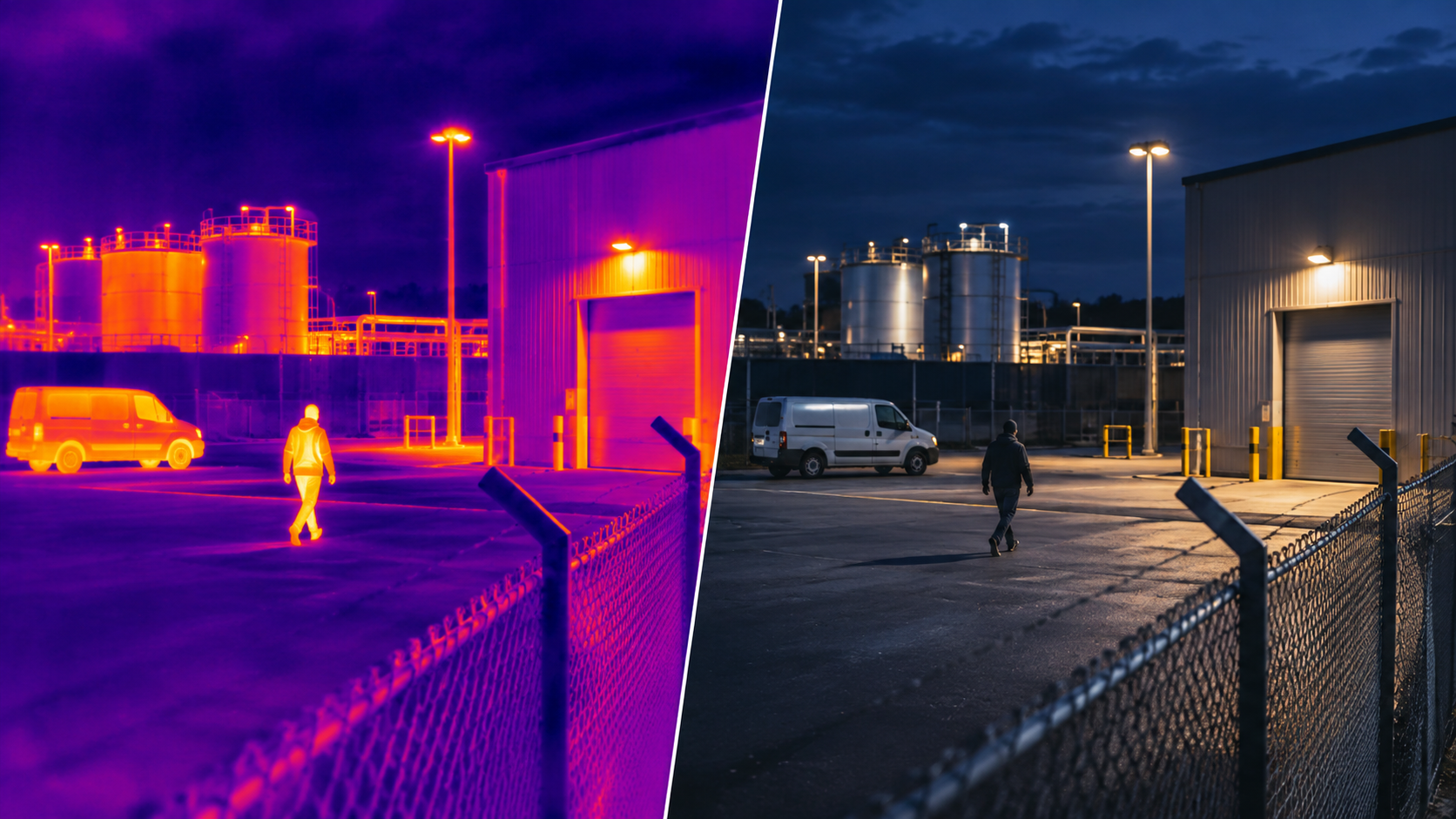
What Are Bispectral Cameras? Advantages of Thermal and Optical Imaging in Security
The performance of security cameras depends not only on image resolution but also on environmental conditions and the detection technology used. Especially in dark areas, dense shadows, and challenging weather conditions, the imaging capabilities of traditional optical cameras can be limited.
Developed to address this need, bispectral camera systems combine thermal imaging with a visible light sensor in a single device.
In its technical assessment published on November 11, 2026, Axis Communications addressed the operating principles, usage scenarios, and key considerations for system design of bispectral cameras.
The primary goal of the technology is to detect potential threats through thermal sensing while enabling a more detailed assessment of the event via optical imaging.
What is a Bispectral Camera and How Does It Work?
A bispectral camera is a security camera that houses two different image sensors, thermal and optical, in the same body.
The thermal sensor detects infrared energy emitted by objects, creating images based on temperature differences. For security purposes, thermal cameras typically use long-wave infrared (LWIR) technology in the 8–14 micrometer wavelength range.
This approach can help detect people, vehicles, and other heat sources even when no visible light is present in the environment.
The optical sensor, like traditional security cameras, generates images using visible light. Under sufficient lighting and appropriate distance conditions, details such as people's clothing, vehicles' visual characteristics, and scene specifics can be evaluated.
The presence of two sensors in the same system facilitates the verification of an alarm generated by thermal detection through the optical image.
However, the fields of view of the two sensors and the level of image alignment may vary depending on the camera model used.
The Difference Between Thermal Detection and Visual Verification
Thermal imaging can be a powerful tool for determining the presence of a person or vehicle. However, identifying a person solely based on a thermal image is often not possible.
For instance, a person moving around a dark facility can be detected by the thermal sensor. Subsequently, the optical camera can assist in a detailed examination of the event, provided there is sufficient lighting.
In some bispectral PTZ models, a thermal alarm can trigger the optical camera to pan to the relevant point or perform a zoom.
This structure ensures that operators receive not only a motion detection alert but also the image associated with the event.
However, thermal imaging has its limitations. Heavy rain and fog can reduce detection range. Detection can become more difficult in conditions where the temperatures of the target and the environment are similar.
Furthermore, thermal cameras cannot directly see through walls or ordinary glass.
Use in Perimeter Security and Critical Infrastructures
One of the significant application areas for bispectral cameras is extensive perimeter security.
In airports, power plants, ports, correctional facilities, and industrial sites, continuous monitoring of perimeter boundaries may be required.
Providing sufficient lighting in such areas may not always be feasible.
Thermal sensors, under appropriate lens and detection range conditions, help detect human or vehicle movements in the dark.
The optical sensor can be used to investigate the source of an alarm and obtain visual details when conditions permit.
Video analytics features that support human and vehicle classification can help reduce some unnecessary alarms caused by animal movements or environmental factors.
However, this performance depends on the camera's analytical capabilities and field conditions.
Temperature Monitoring and Early Warning in Industrial Facilities
Bispectral imaging is not used solely for perimeter security.
Systems equipped with appropriate radiometric sensors can also be evaluated for monitoring the surface temperatures of electrical panels, transformers, motors, and industrial equipment.
Generating early warnings when defined temperature thresholds are exceeded can help maintenance teams assess potential issues.
However, there is an important technical distinction here.
Not every thermal camera can numerically measure temperature. While standard thermal security cameras mostly display temperature differences, calibrated radiometric models are required for reliable temperature measurement.
This distinction is also emphasized in Axis's statement dated November 11. The manufacturer states that as of the publication date, there is no radiometric model in its bispectral product portfolio.
Therefore, when preparing an industrial temperature monitoring project, merely having a bispectral device is not a sufficient selection criterion.
Use in Early Detection of Fire Risks
The combined use of radiometric imaging and appropriate analytical features can help in the early detection of overheated areas or hot spots that could escalate into fires in certain applications.
This approach can be particularly valuable in waste storage areas, facilities with flammable materials, and open-field applications.
Optical imaging can contribute to examining smoke, flames, or other visual indicators at the scene following a thermal alert.
However, bispectral security cameras do not directly replace certified fire detection and alarm systems.
For systems to be used for fire safety purposes, the product's measurement capabilities, analytical features, and relevant regulatory requirements must be evaluated separately.
Can Bispectral Cameras Reduce Installation Costs?
Housing two sensors in a single body can reduce infrastructure and installation requirements in some projects.
Installing thermal and optical cameras separately may require two different mounting points, cabling, and maintenance procedures.
A bispectral device, in suitable models, can provide these functions via a single mounting point and a common network connection.
However, a single-body structure is not advantageous for every project. The sensors sharing the same location can limit flexibility in applications requiring imaging from different directions.
In the total cost assessment, in addition to the device price, installation, network infrastructure, energy consumption, VMS licenses, and maintenance requirements should also be considered.
Real-World Application: Windsor Port Authority
One of the application examples shared by Axis is the Windsor Port Authority in Canada monitoring vessel traffic on the Detroit River.
The port's existing radar system could detect vessel positions but could not provide detailed visual assessment of targets.
To meet this need, the radar infrastructure was integrated with Axis bispectral PTZ cameras.
When the radar identifies a target, the camera can be directed to the relevant location.
Thermal imaging supports the detection of boats at night and in low-light conditions, while the optical channel provides more detailed images under suitable conditions.
This example demonstrates how combining different security technologies can enhance operational awareness.
However, independent numerical success rates regarding the application's performance are not presented in the manufacturer's assessment.
Technical Assessment for Security Projects in Turkey
In Turkey, organized industrial zones, energy facilities, ports, logistics centers, and businesses with large open areas represent potential application areas for bispectral imaging technologies.
Especially in facilities with low lighting and long perimeters, the combined use of thermal detection and optical verification can provide operational advantages.
However, when selecting a system, one should not focus solely on the maximum detection range.
Detection, recognition, and identification distances differ from each other. These distances vary depending on the lens used, sensor resolution, environmental conditions, and target characteristics.
Furthermore, the video analytics functions supported by the chosen camera, its compatibility with the existing VMS infrastructure, and recording management requirements should be evaluated.
The main advantage of bispectral cameras is that they make thermal detection and optical imaging parts of the same security process.
In properly designed systems, this approach can help security teams assess the source of an alarm more quickly and support the continuity of perimeter security in challenging conditions.
Source
Axis Communications - November 11, 2026
Bispectral cameras: Dual sensors, one all-in-one camera.
https://newsroom.axis.com/blog/bispectral-camera
This content has been originally prepared for GüvenlikOnline based on Axis Communications' technical assessment. Product capabilities are based on manufacturer statements and are not presented as independent field test results.