
The Era of Smart Detection in Industrial Fire Safety
Smart detection technologies in industrial fire safety are moving beyond traditional alarm systems, offering early warning, multi-criteria analysis, and centralized monitoring capabilities. We examine how AI-powered video analytics, thermal cameras, advanced smoke detectors, and integrated alarm systems can contribute to managing fire risks in factories.
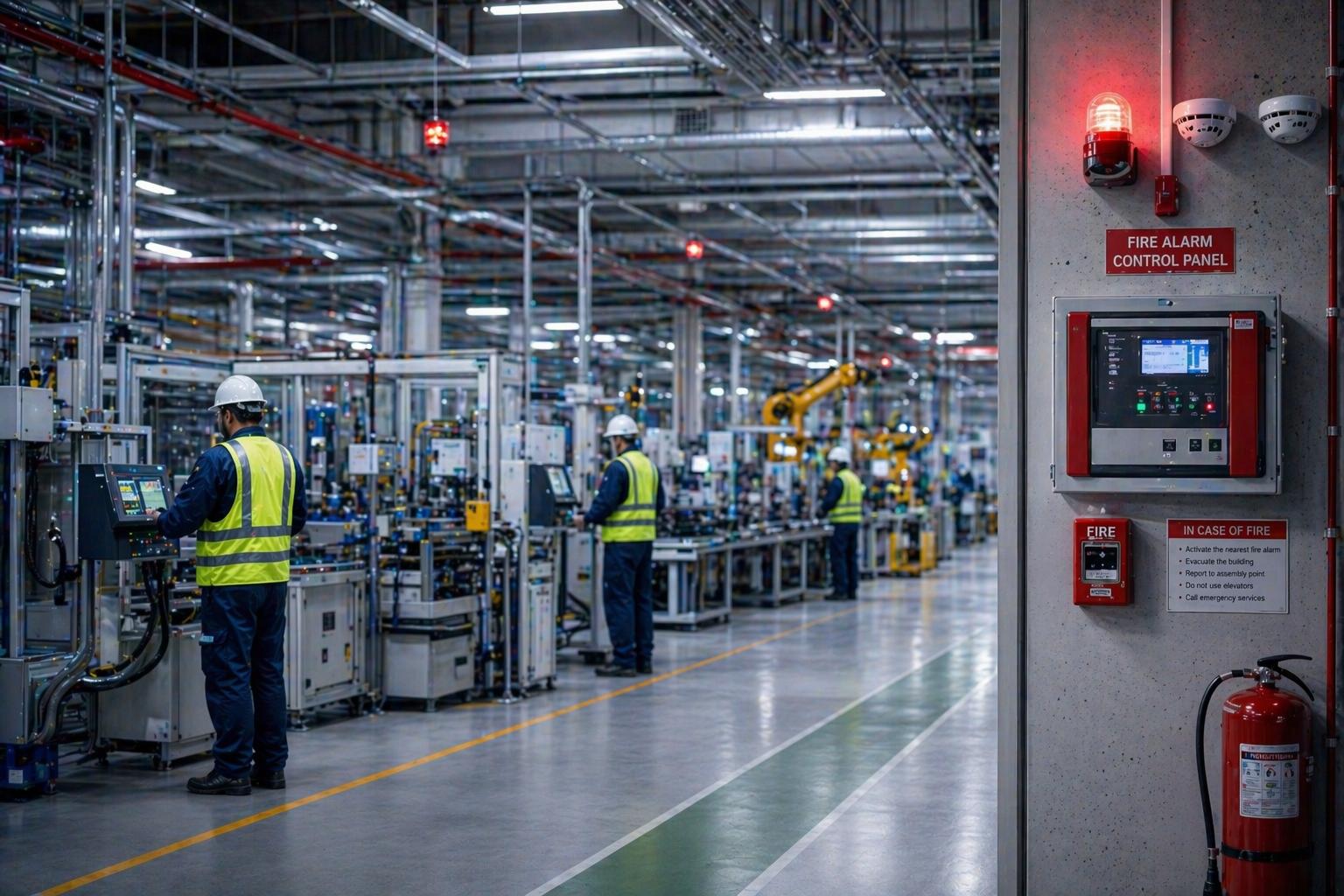
Fire safety in industrial facilities is entering a new era with evolving detection technologies. While traditional smoke and heat detectors remain fundamental components of fire safety, multi-criteria sensors, advanced video analytics, thermal monitoring, and centralized management systems enable a more comprehensive assessment of fire indicators.
Especially in continuously operating factories, early fire detection is as crucial as reducing false alarms and accurately interpreting events. A false alarm can halt production, while delayed detection of a real fire can lead to much more severe consequences.
The primary goal of the smart fire detection approach is not merely to generate an alarm, but to reliably assess fire indicators, transmit accurate information to relevant systems, and support the timely implementation of necessary safety scenarios.
What is Smart Fire Detection?
Smart fire detection refers to technologies that enable the evaluation of data from various detection methods through appropriate algorithms, device electronics, or central control systems.
While a traditional detector generates an alarm by sensing a specific physical change, advanced systems can evaluate multiple parameters concurrently.
These parameters may include:
Characteristics of smoke particles in the environment.
Temperature level and rate of temperature change.
Specific spectral characteristics of flames.
Indications of smoke or flame in images.
Unusual temperature changes on equipment surfaces.
Detector contamination, fault, and operational statuses.
However, not every smart detector measures all of these parameters. The sensors used and evaluation methods depend on the product's technical specifications.
The important point here is that smart detection does not necessarily imply the use of artificial intelligence. Multi-criteria sensor evaluation, advanced signal processing, and system status monitoring are also parts of this approach.
Prominent Technologies in Industrial Fire Detection
1. Multi-Criteria Fire Detectors (Multi-Sensor)
Multi-criteria fire detectors combine multiple detection methods within the same device.
For example, a detector using both smoke and heat sensors can analyze fire indicators by evaluating the results of both measurements.
This approach can help differentiate real fire indicators from some misleading environmental effects under appropriate product and application conditions.
Especially in production environments, the likelihood of false alarms caused by temporary particle density or temperature changes can be reduced in some cases by evaluating sensors concurrently.
However, not all multi-criteria detectors use the same algorithms or performance characteristics.
The EN 54-29 standard defines the relevant performance and test requirements for point-type multi-criteria detectors combining smoke and heat sensors.
2. Aspirating Smoke Detection Systems
Aspirating Smoke Detection (ASD) systems perform smoke analysis by continuously drawing air samples from the protected area through a pipe network.
In appropriately designed systems, it may be possible to detect low smoke densities that occur in the early stages of fire development.
This feature can be particularly valuable in critical automation rooms, electrical control areas, and facilities where continuous production is essential.
Advanced systems can monitor device status and changes in airflow, providing maintenance teams with information regarding faults or performance.
However, early detection performance does not solely depend on detector sensitivity. Sampling points, pipe network design, air transport time, environmental contamination, and maintenance conditions must be evaluated collectively.
3. AI-Powered Video-Based Fire Detection
Video-based fire detection technologies analyze images captured by cameras for indications of smoke or flame.
In some systems, specific visual characteristics can be evaluated using image processing and machine learning methods.
This technology is particularly valuable for production facilities with large fields of view and specific industrial applications.
For instance, visible smoke indications in a high-ceiling production area can be detected through video analytics under appropriate camera placement and viewing conditions.
However, system performance can be affected by the following factors:
Lighting conditions and sudden light changes.
Camera's field of view and image quality.
Dust, steam, and visual effects generated during production processes.
Obstruction of the field of view by machinery or other objects.
Camera movement, vibrations, and image transmission issues.
AI software added to any CCTV camera does not automatically transform it into a standards-compliant fire detector.
ISO 7240-29:2024, concerning video fire detectors operating in the visible light spectrum, addresses the performance and test requirements of devices. ISO/TS 7240-30:2022 covers the design, installation, commissioning, and servicing conditions of video-based fire detection systems.
Appropriate video fire detection systems can be used as standalone systems or in conjunction with other fire alarm systems in some projects. However, for them to undertake mandatory fire detection functions in Turkey, compliance with relevant legislation and project requirements must be separately verified.
4. Abnormal Temperature Monitoring with Thermal Cameras
Thermal cameras analyze infrared energy emitted from objects to evaluate surface temperatures.
This technology can be particularly useful for monitoring unusual heating in electrical panels, motors, bearings, conveyor systems, and specific production equipment.
For example, an unexpected temperature rise in a conveyor bearing could indicate a fault that requires investigation by maintenance teams.
Under appropriate conditions, such monitoring can contribute to detecting some fire risks before ignition occurs.
However, thermal imaging also has technical limitations.
Surface emissivity, reflected heat sources, camera angle, measurement distance, and environmental conditions can affect the accuracy of temperature measurement.
Therefore, thermal monitoring systems should be evaluated according to relevant product and project conditions. It should not be assumed that a general-purpose thermal camera can directly replace a standard fire detection system.
5. Centralized Monitoring and Smart System Management
A crucial component of smart fire safety is the centralized monitoring of information from detection devices.
Addressable fire alarm systems and appropriate management software can enable detailed tracking of device status and event logs.
Depending on the features supported by the system, the following information can be monitored:
Address and location of the alarming device.
Detector and communication line faults.
Maintenance or contamination warnings received from the system.
Disabled devices and zones.
Alarm, fault, and user intervention records.
Status information from related systems.
This data can help organize maintenance processes and analyze recurring issues.
However, remote monitoring infrastructure should not undermine the reliability of mandatory fire alarm and emergency control functions.
Comparison of Traditional and Smart Fire Detection Approaches
The advantages of smart systems are not solely based on using more sensors or advanced software. What data the systems evaluate, how they react to this data, and how they operate under fault conditions are crucial.
Evaluation criterion | Basic detection approach | Advanced smart approach |
|---|---|---|
Detection data | Single physical indicator may be used | Multiple indicators can be evaluated concurrently |
False alarm management | Sensor type and basic signal processing | Multi-criteria evaluation and advanced algorithms |
Device monitoring | Depends on system architecture | More detailed status data in supported devices |
Event analysis | Alarm and zone information | Detailed address, event history, and trend analysis |
Maintenance management | Testing and periodic inspection | In addition to these, automatic status notifications |
This comparison illustrates general technology approaches. Advanced features are not exclusive to products marketed as 'smart'; they can also be found in traditional addressable systems. Actual performance depends on the product's verified specifications and system design.
How Can Smart Detection Systems Reduce False Alarms?
One significant cause of false alarms in industrial facilities is the confusion of normal production conditions with fire indicators.
Dust, steam, welding operations, and temperature changes can affect some detection technologies.
Multi-criteria detection systems can help distinguish some misleading effects by evaluating data from multiple sensors concurrently.
However, a careful balance must be struck between two objectives here:
While unnecessary alarms are reduced, the detection of real fires must not be delayed.
Therefore, if the system has functions such as alarm verification or delay, these should only be configured within the framework of the manufacturer's approved usage scenarios, relevant standards, and applicable project requirements.
Simply reducing software sensitivity alone is not a correct false alarm management approach.
From Detection to Intervention: Why System Integration is Crucial?
The operational value of smart fire detection can be enhanced by correlating the acquired information with appropriate security systems.
For example, when a fire alarm occurs in a production area, the following actions can be taken in accordance with the cause-and-effect matrix defined in the project:
The fire control panel identifies the zone or device address from which the alarm originated.
Relevant personnel are notified with audible and visual warnings.
Designed evacuation and fire safety scenarios are activated.
Smoke control systems, fire doors, or related equipment are controlled according to project requirements.
Event information is transmitted to authorized monitoring and intervention units.
However, actions such as stopping production equipment, controlling ventilation systems, or cutting off energy sources cannot be applied uniformly in every factory.
These actions must be designed in conjunction with the facility's process safety requirements to avoid creating new hazards.
Article 82 of Turkey's Regulation on Fire Protection of Buildings contains important provisions regarding emergency control functions and their relationships with other systems.
To evaluate the risk analysis, suppression, evacuation, and maintenance aspects of fire safety more broadly, GüvenlikOnline's article titled The Most Effective Way to Improve Fire Safety in Industrial Facilities can be reviewed.
What to Consider When Investing in Smart Fire Detection?
When installing a new detection system or modernizing an existing one, focusing solely on the features offered by the technology is not sufficient.
System integrators and technical procurement teams should consider the following questions:
Is the technology to be used suitable for the facility's actual fire scenarios?
What fire indicators does the system detect, and under what conditions might its performance degrade?
Has the detection performance been verified by independent testing or relevant standards?
Have false alarm sources originating from production activities been evaluated?
Can integration with the fire panel and alarm behaviors be verified?
Has the system's behavior in case of communication or power loss been determined?
Can device fault, contamination, and maintenance statuses be monitored?
Are manufacturer technical support, spare parts, and long-term maintenance capabilities sufficient?
In networked systems, access permissions, software updates, and communication security should also be evaluated.
The purchasing decision for smart detection technologies should be based not only on device features but also on the system's sustainable reliability throughout its entire lifecycle.
Which Standards Apply to Smart Fire Detection Systems?
One of the fundamental legal regulations for fire detection and alarm systems in Turkey is the Regulation on Fire Protection of Buildings.
Article 74 of the Regulation governs the requirements for fire detection systems and their components to comply with TS EN 54.
Some technical standards that can be considered within the scope of smart detection technologies include:
EN 54-29:2015: Multi-criteria point fire detectors combining smoke and heat sensors.
EN 54-20:2006: Aspirating smoke detectors; evaluated in conjunction with the relevant AC:2008 amendment.
ISO 7240-29:2024: Video fire detectors operating in the visible spectrum.
ISO/TS 7240-30:2022: Design, installation, commissioning, and servicing of video fire detection systems.
These standards do not cover the same scope. Especially for video-based detection systems, the international product standard and the legislative compliance required for projects in Turkey must be evaluated separately.
The use of new technologies does not eliminate mandatory fire detection, alarm, testing, and maintenance obligations.
Frequently Asked Questions
What is the difference between a smart fire detection system and a traditional system?
Smart systems may include features such as concurrent evaluation of multiple detection data, advanced signal processing, and detailed monitoring of device statuses. However, these features depend on the technical capacity of the product used and the system architecture.
Can artificial intelligence detect a fire before it starts?
Some monitoring systems can help detect risk indicators such as unusual temperature changes occurring before ignition. However, this does not mean that every fire can be detected in advance.
Do smart detectors completely prevent false alarms?
No. Advanced algorithms and multi-criteria detection can help reduce some sources of false alarms. However, environmental conditions, detector placement, maintenance, and system configuration remain important.
Can a thermal camera be used instead of a fire alarm system?
It cannot be assumed that a general-purpose thermal camera can directly replace a fire alarm system. The intended use, product suitability, and relevant regulatory requirements must be evaluated separately.
Can existing fire alarm systems be converted into smart systems?
Some existing systems can be enhanced with compatible detectors, interface modules, or management solutions. However, this depends on the panel's protocol support, device compatibility, capacity, and the manufacturer's approved system architecture.
Conclusion: Reliable Data and Correct Integration are at the Core of Smart Fire Safety
Smart detection technologies in industrial fire safety offer significant opportunities in early warning, advanced event analysis, false alarm management, and centralized monitoring.
However, a successful fire safety infrastructure cannot be built solely by using artificial intelligence, advanced sensors, or software.
Accurate risk analysis, appropriate detection technology, standards-compliant design, reliable integration, and regular maintenance remain fundamental requirements.
The future of industrial fire detection lies not merely in collecting more data, but in transforming the right data, at the right time, into a reliable security decision.
Those wishing to evaluate product options for different detection technologies can review relevant device groups via the GüvenlikOnline Fire Detectors Catalog.