
The Most Effective Way to Improve Fire Safety in Industrial Facilities
Effective fire safety in industrial facilities is not achieved merely by installing alarm and suppression systems. It requires identifying risks specific to production processes, selecting appropriate detection technologies, and planning automatic protection systems and regular maintenance together. So, how is a factory's readiness against fire measured?
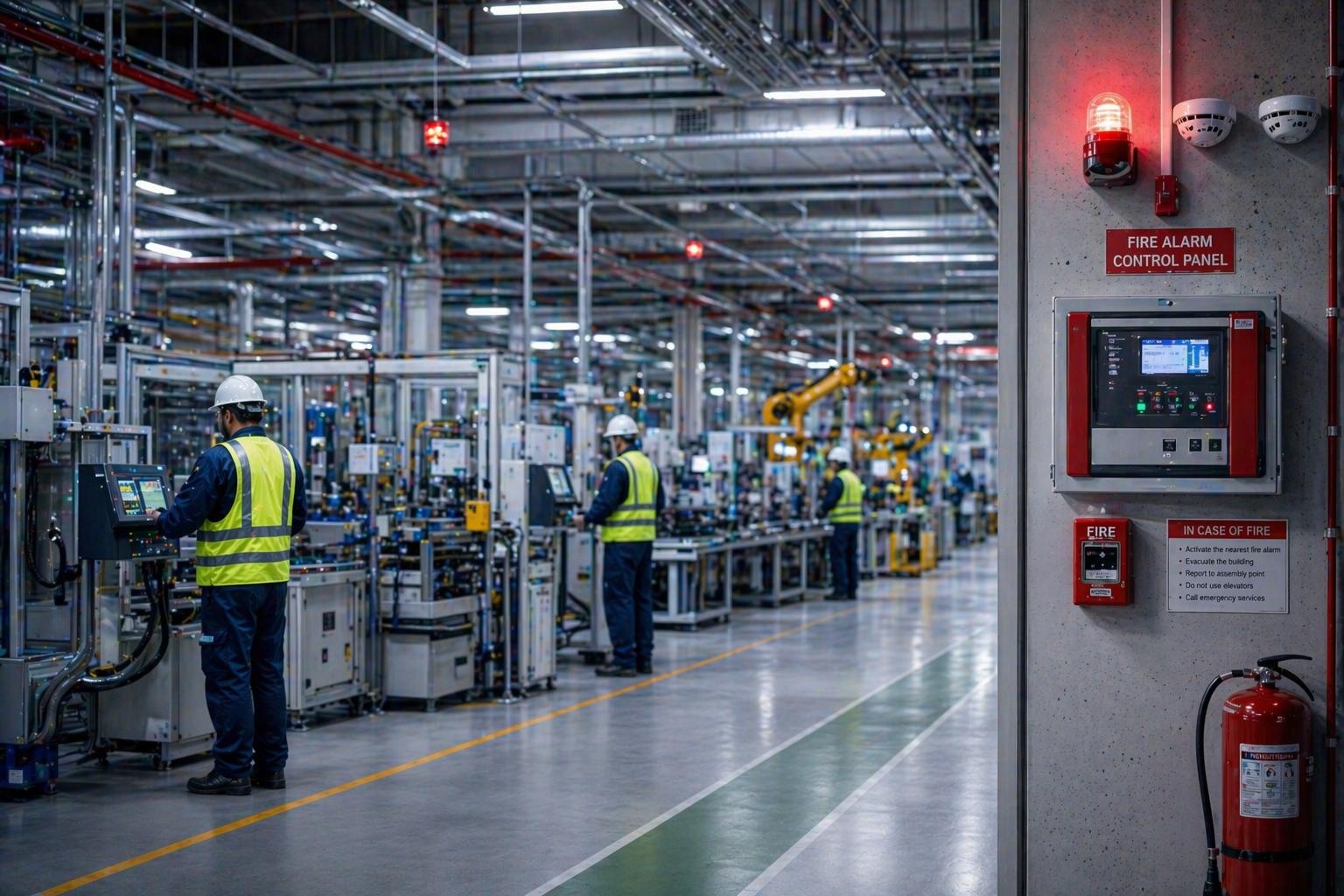
To understand whether fire safety is adequate in a factory, it is not enough to merely look at the detectors on the ceiling or the fire extinguishers in the corridors.
The real question is: Can a minor malfunction on the production line be detected before it escalates into a fire? When a fire starts, can systems react correctly, and can employees be safely evacuated?
Industrial facilities harbor diverse fire risks due to high-power electrical systems, continuously operating machinery, flammable materials, production waste, and complex logistics processes. The hazards of a metal processing plant are not the same as those of a flour mill or a textile operation.
Therefore, the most effective way to improve industrial fire safety is not to invest in a single technology, but to create an integrated protection system that links risk analysis, fire prevention, early detection, appropriate suppression, safe evacuation, and regular maintenance processes.
Why should fire safety be designed according to the facility's production processes?
The points where industrial fires can originate vary according to the facility's area of activity.
Connection problems in electrical panels, overheating motors, conveyor bearings exposed to friction, welding operations, and improper storage of flammable materials can lead to different fire scenarios.
In some sectors, the danger is not limited to fire alone. Flour, sugar, wood, plastic, and certain metal dusts can create explosive atmospheres when dispersed in the air under appropriate conditions.
The U.S. Occupational Safety and Health Administration (OSHA) specifically draws attention to the explosion hazard of combustible dusts. In addition to fuel, an ignition source, and oxygen, the dispersion of dust in the air at sufficient concentration and its presence in a confined space play a role in the occurrence of dust explosions.
Therefore, installing the same detector in every facility or applying a standard alarm project to different structures can overlook some of the real dangers.
A good fire safety design begins with understanding how the facility operates before selecting equipment.
1. First step: Identifying potential fire ignition points
Risk assessment should be conducted not only based on the factory's building plan but also on its daily production activities.
The following areas, in particular, need to be examined:
Electrical rooms and panels: Loose connections, overloading, contamination, improper protective elements, and equipment failures.
Production lines: Conveyors, motors, bearings, heating systems, and temperature increases due to friction.
Warehouses: Flammable packaging, pallets, high-rack layouts, and the fire load of materials.
Chemical storage areas: Flammable liquids, gases, incompatible chemicals, and special suppression requirements.
Dust collection systems: Combustible dust accumulation, ignition sources, and the potential for explosion propagation.
Maintenance areas: Hot work activities such as welding, cutting, and grinding.
Risk analysis should not only indicate where the danger lies. It should also assess how employees, equipment, and production continuity could be affected if an incident occurs.
For example, overheating in a conveyor motor might be seen as a minor mechanical maintenance issue. However, if the same motor is located on a production line transporting flammable materials, the consequences could be much more severe.
Therefore, priority protection areas should be determined not solely by the cost of the equipment, but by the potential impact of an incident.
2. Early fire detection: The right detector, the right environment
Early detection is crucial in fire safety. However, the success of early detection depends on the suitability of the technology used for the environmental conditions.
Smoke detectors
Smoke detectors are used to detect smoke generated in the early stages of a fire in suitable environments.
However, in areas with heavy dust, steam, or production aerosols, standard smoke detectors may generate unwanted alarms or may not be suitable for the application.
Heat detectors
Heat detectors can detect specific temperature levels or changes in temperature.
They can be a suitable alternative in some dusty environments where smoke detectors are difficult to use. However, temperature-based detection may react later than smoke detection, depending on the fire's development stage and environmental conditions.
Flame detectors
Flame detectors are designed to detect radiation emitted from flames with appropriate spectral characteristics.
They can be considered for flammable liquids and certain industrial processes. However, line of sight, ambient light sources, equipment characteristics, and the potential for false alarms must be considered in the design.
Aspirating smoke detection
Aspirating systems analyze smoke by drawing air samples from the environment through a pipe network.
They can offer advantages in specific applications where early warning is critical, or where access is difficult, or sensitive equipment is present.
However, in heavily dusty facilities, the maintenance requirements for sampling pipes and filters must be separately evaluated.
Thermal cameras
Thermal cameras can be used to monitor the surface temperatures of equipment and evaluate unusual temperature changes.
For example, a temperature difference on the outer surface of an electrical panel or abnormal heating in a conveyor bearing can provide maintenance teams with an early inspection opportunity.
However, there is an important distinction here: A thermal camera used for temperature monitoring alone does not replace a standards-compliant fire detection and alarm system.
Thermal monitoring is a supplementary application. The intended use, suitability, and integration of equipment to be used for fire alarm functions must be separately verified.
GüvenlikOnline's Fire Detectors catalog offers a starting point for examining different detection devices.
3. Giving an alarm is not enough: Fire spread must also be limited
Early detection of a fire does not automatically mean that damage will be prevented.
The fire detection system must work in conjunction with appropriate safety systems according to the type of incident and the facility's protection scenario.
Automatic sprinkler systems can help control fire growth in areas where they are appropriately designed. However, the effectiveness of these systems depends on the nature of the stored material, rack height, hazard class, water supply, and hydraulic design.
In some special volumes, gaseous suppression or other fixed extinguishing methods may be considered. However, the selection of the extinguishing agent requires engineering evaluation based on the equipment to be protected, the fire scenario, and the risks to which people may be exposed.
In special situations such as flammable metal fires, certain chemicals, and some electrical hazards, a standard extinguishing method may not be suitable.
Fire-resistant compartments, doors, and penetration details that limit the spread of fire should also not be considered independently of active suppression systems.
The goal is not only to detect the fire but also to limit its spread and protect people's safety.
4. Integration: Do systems truly communicate with each other?
In modern industrial facilities, fire safety may require the coordination of different systems.
The fire detection and alarm system can be linked with audible and visual warnings, smoke control systems, access control, building management, and process safety systems in appropriate projects.
For example, when a fire is detected in a production area, the designed safety scenario may include the following steps:
The fire control panel determines the zone from which the alarm originated.
Relevant personnel and individuals in the facility are notified with audible or visual warnings.
The appropriate evacuation scenario is activated.
Protective systems and related equipment control functions defined in the project operate.
Security and emergency teams receive information regarding the location and status of the incident.
Not all of these operations are a universally applicable recipe for every facility.
Operations such as stopping production machinery, cutting off gas flow, controlling ventilation, and releasing doors, in particular, must be designed by competent engineers to avoid creating other hazards.
Integration tests should also verify not only that devices send signals to each other, but also whether the system exhibits the expected safe behavior in scenarios such as fire, power outage, and communication failure.
5. A real industrial disaster: The Imperial Sugar explosion
One of the incidents demonstrating the importance of maintenance and risk control in industrial fire safety occurred on February 7, 2008, at the Imperial Sugar refinery in Georgia, USA.
Dust explosions and subsequent fires at the facility resulted in the deaths of 14 employees.
According to the investigation by the U.S. Chemical Safety Board (CSB), the incident was underpinned by deficiencies in design, maintenance, and housekeeping that led to the accumulation of sugar dust on production equipment and facility surfaces.
The investigation concluded that the initial explosion occurred in a confined conveyor system, which then lofted other accumulated combustible dusts in the facility, leading to secondary explosions.
The report also addressed deficiencies in evacuation plans and a lack of drills.
An important conclusion to be drawn from this incident is that safety measures should not focus solely on intervention after a fire has started.
Preventing explosive dust accumulation, detecting equipment malfunctions, and maintaining safe production conditions are fundamental parts of fire safety.
6. If maintenance and testing are not performed, the system's existence is not enough
An industrial facility may have an appropriate fire safety system during the installation phase. However, it is incorrect to assume that the system will operate with the same reliability for years.
Contamination of detectors, device failures, closed valves, disabled alarm zones, and communication problems can reduce the level of protection.
Therefore, the maintenance approach must go beyond merely repairing failures when they occur.
System managers should have access to the answers to the following questions:
When were which detectors last tested?
How quickly are faults in the fire control panel rectified?
How are systems temporarily disabled due to maintenance managed?
Is the status of critical valves and water supply in suppression systems monitored?
Are alarm notification, evacuation warning, and related integrations tested together?
Is the fire safety design re-evaluated after changes in the production line?
The scope and frequency of controls should be determined in line with relevant legislation, standards, equipment manufacturers' instructions, and the facility's risk assessment.
Regular maintenance record-keeping not only helps in providing documentation during audits but also in identifying recurring faults and weak points.
7. Which legislation applies to industrial fire safety in Turkey?
One of the fundamental regulations in Turkey is the Regulation on Fire Protection of Buildings.
The regulation contains provisions regarding fire prevention, ensuring life safety, limiting fire spread, and suppression measures during the design and use of structures.
Regarding fire detection and alarm systems, articles 74 and subsequent ones are particularly important. The regulation includes provisions for compliance with TS EN 54 standards for fire detection systems and their components.
Furthermore, it is stipulated that in industrial buildings where hazardous materials are present or processed, and in certain storage structures, an evacuation warning system must be automatically activated upon fire detection.
The Regulation on Emergency Situations in Workplaces covers the preparation of emergency plans, informing employees, assignments, and drills.
Unless special regulations for mining workplaces are reserved, emergency drills must be conducted at least once a year in other workplaces.
However, mandatory systems for a facility cannot be determined solely by looking at the building type. The size of the structure, hazard class, materials used, production processes, and specific legislative provisions must be evaluated together.
8. An actionable roadmap to enhance fire safety in factories
A comprehensive fire safety improvement can be implemented through a prioritized program.
First 30 days: Make the current situation visible
First, existing risk assessments, fire projects, maintenance records, alarm system failures, and evacuation plans should be reviewed.
Production lines, electrical rooms, chemical storage areas, and areas where combustible dust is generated should be re-evaluated in particular.
Deficiencies that pose a life threat or affect critical protection systems should be addressed immediately, without waiting until the end of the 30-day program.
30–60 days: Address priority technical deficiencies
At this stage, engineering solutions are prepared for significant gaps identified through risk assessment.
The suitability of detection points, the scope of the alarm system, suppression infrastructure, safe power shutdown scenarios, and fire compartmentalization can be examined.
The goal is not to purchase more devices, but to address deficiencies in the existing protection architecture.
60–90 days: Test scenarios and ensure continuity
Field tests are conducted for installed or improved systems.
How relevant personnel respond to alarms, how evacuation processes function, and the behavior of systems under fault conditions are evaluated.
Finally, responsibilities for maintenance, control, and training activities are assigned and converted into a traceable program.
This 90-day approach is an exemplary improvement plan; it does not supersede mandatory inspection periods or emergency response requirements defined in legislation.
9. The most common mistake in fire safety investments
One of the common mistakes in industrial security projects is evaluating the success of a system by the number of devices purchased.
However, two factories with the same number of detectors can have very different levels of fire protection.
The correct placement of detectors, their selection appropriate to actual risks, the alarm reaching relevant personnel, the functioning of the suppression infrastructure, and the maintenance of systems determine the overall protection level.
Another significant mistake is viewing fire safety as solely the responsibility of the security or technical maintenance department.
Production, maintenance, occupational health and safety, facility management, and procurement units must work based on the same risk assessment.
For example, a change in shelf placement in a warehouse can affect the design conditions of an automatic sprinkler system. The installation of a new production machine, on the other hand, can create previously non-existent hot surfaces or sources of combustible dust.
When these changes are not included in the fire safety assessment, a system initially designed appropriately may become inadequate over time.
Frequently Asked Questions about Industrial Fire Safety
Is it sufficient to use only smoke detectors in factories?
No. The detection method to be used must be determined according to the facility's risks and environmental conditions. In some areas, different technologies such as heat, flame, or aspirating smoke detection may be suitable. When necessary, multiple methods are evaluated together.
Can thermal cameras prevent fires?
Thermal cameras can help monitor unusual temperature changes in appropriate applications. However, they do not guarantee fire prevention on their own and are not an automatic alternative to verified fire detection systems.
Is an automatic suppression system mandatory in industrial facilities?
Mandatory requirements vary according to the facility's intended use, size, hazard characteristics, and relevant legislative provisions. The type and design of the suppression system must also be determined based on the risks to be protected.
How often should a fire alarm system be inspected?
A single inspection period does not apply to all equipment and test types. Relevant standards, legislative provisions, manufacturer instructions, and the facility's maintenance plan should be taken as a basis. Recording periodic inspections is important.
Why is fire safety related to production continuity?
In addition to employee safety, fire can also affect production machinery, inventory, energy infrastructure, and supply processes. Effective protection measures support both life safety and the business's recovery capability.
Conclusion: The most effective solution is facility-specific integrated protection
Fire safety in industrial facilities is not an investment completed merely by purchasing suppression equipment or installing an alarm panel.
The effective approach is to reduce the likelihood of fire, detect the hazard at the earliest possible stage, limit its spread, and ensure the safe evacuation of employees.
Its sustainability depends on regular maintenance, training, testing, and risk assessments conducted according to changing production conditions.
A well-designed fire safety system is not just one that operates during a fire, but one that can continuously manage hazards that could escalate into a fire.
Alarm panels, detectors, warning devices, and related hardware groups that can be used in industrial facilities can be reviewed in the GüvenlikOnline Fire Alarm Systems catalog. For those wishing to evaluate solutions from different manufacturers, the Velox brand catalog is another starting point.
References
T.C. Ministry of Justice — Regulation on Fire Protection of Buildings. Provisions on fire detection, evacuation, suppression, and structural safety.
Regulation on Emergency Situations in Workplaces — Consolidated text. Emergency planning, training, and drill obligations.
OSHA — Combustible Dust: An Explosion Hazard. Industrial combustible dust hazards and risky sectors.
OSHA — Hazard Communication Guidance for Combustible Dusts. Dust explosion mechanism and preventive controls.
OSHA — Hot Work Safety. Control of fire risks in welding, cutting, and other hot work activities.
U.S. Chemical Safety Board — Imperial Sugar Explosion Investigation. 2008 refinery explosion and investigation findings.