
AI-Powered Video Analytics in Mines: From Security to Predictive Maintenance
AI-powered cameras and sensors are transforming not only security in mining sites but also equipment maintenance, workflows, and operational efficiency. What problems can these systems solve, and what limitations do they encounter?
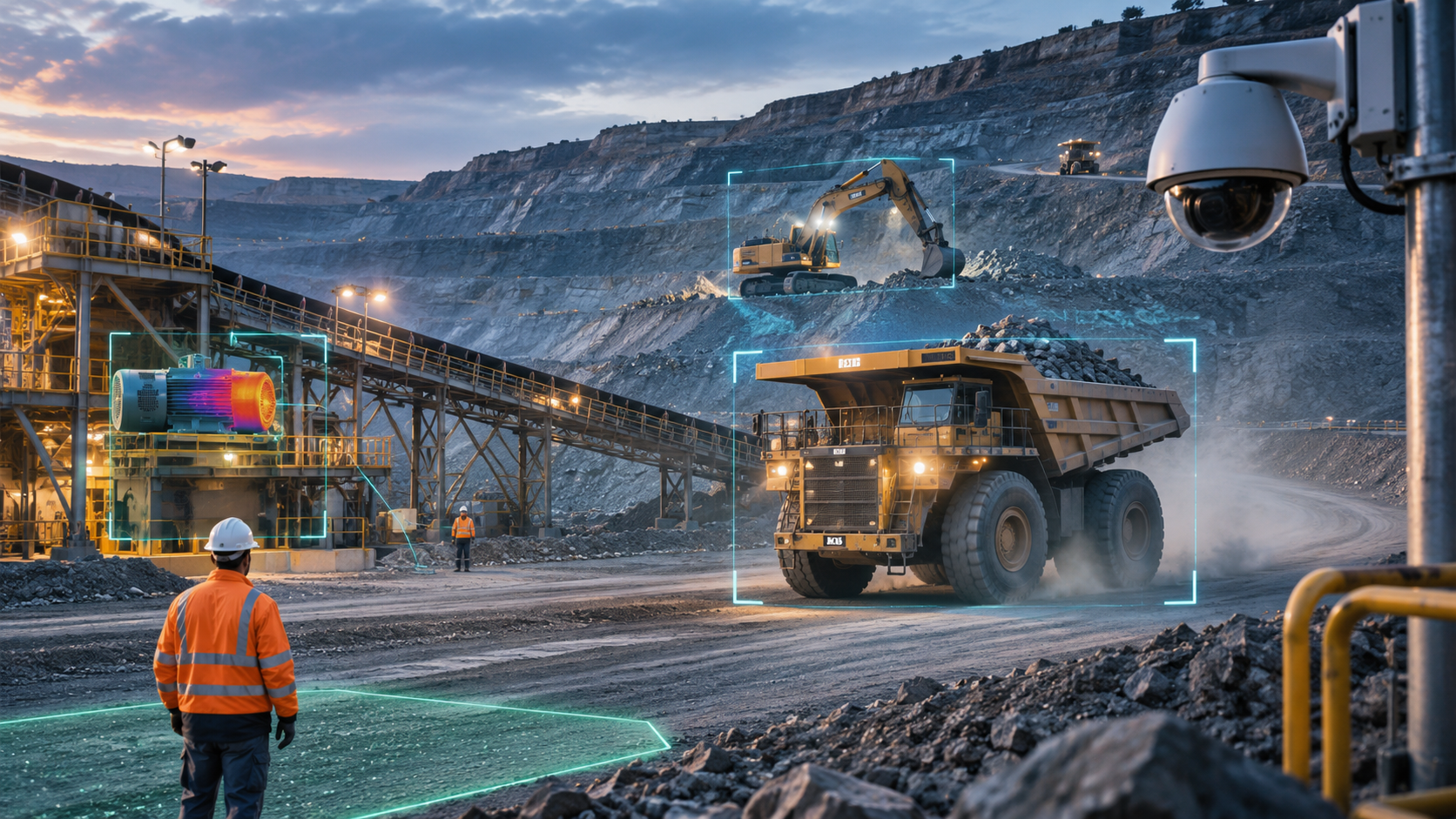
Security cameras have been used for many years in mining sites for recording and subsequent review of incidents. However, with the development of AI-powered video analytics, the role of these systems is changing. Cameras are no longer limited to just recording images; they are becoming part of systems that can detect specific risks, uncover irregularities in processes, and support operational decisions.
A technical assessment published by Axis Communications in October 2026 reveals that this transformation is gaining importance, particularly in the areas of occupational safety, equipment maintenance, and operational efficiency.
From Security Camera to Operational Data Source
Mining sites create complex operational environments with their vast areas, heavy machinery, constantly moving vehicles, and hazardous work zones.
While traditional video surveillance requires operators to monitor footage or review recordings, analytics software can help with the automatic detection of specific events.
For example, vehicle movements, unauthorized zone entries, and unusual situations on the production line can be detected from camera footage. When this information is combined with video management systems (VMS) or other operational platforms, it provides a more comprehensive site overview.
Three Key Use Cases for AI in Mines
1. Predicting Equipment Failures
The unexpected shutdown of critical equipment such as conveyors, electric motors, and transformers can disrupt production.
Thermal cameras help monitor unusual temperature changes on equipment surfaces. Appropriate analytics systems can evaluate image and sensor data to provide early warnings to maintenance teams.
This way, maintenance decisions can be supported based on the actual condition of the equipment, rather than solely relying on scheduled maintenance.
2. Enhancing Worker Safety in Hazardous Areas
Areas with heavy machinery, blasting zones, and restricted access points in mining sites pose serious safety risks.
Video analytics can generate alerts when people or vehicles enter defined areas.
The integration of these systems with IP speakers, visual warning devices, or access control systems can help operators and workers respond more quickly to dangerous situations.
3. Identifying Production Bottlenecks and Inefficiencies
AI-powered image analysis is not only used for security incidents.
Waiting times for vehicles at loading points, irregularities in conveyor lines, or congestion in operational areas can also be analyzed.
Evaluating this data over time helps businesses identify bottlenecks and improve resource utilization.
Why is Edge AI Important?
Performing some analyses directly on cameras or local devices at the site can allow critical events to be evaluated without waiting for continuous image transmission to a central server.
This approach gains importance especially in remote mining sites, where connectivity capacity is limited.
However, not all analyses can be performed on the camera. Centralized systems may be needed for long-term trend analysis, combining data from different sensors, and comprehensive operational reporting.
Challenges in Implementation
The success of AI-powered video analytics does not depend solely on selecting appropriate cameras.
Dust, vibration, humidity, and temperature changes can affect device durability. False alarms, insufficient training data, and complex system integrations can also limit the reliability of analytical results.
Another important issue is cybersecurity. Since connecting cameras, sensors, VMS, and operational control systems creates new access points, network security and authorization policies must also be designed concurrently.
Conclusion: From Surveillance to Decision Support Systems
The development of video analytics in mines indicates that physical security is increasingly integrating with operational technology.
Future value will come not just from deploying more cameras, but from correctly interpreting the data these cameras produce, correlating it with other systems, and transforming it into timely action.
AI systems do not completely replace human supervision. However, when designed correctly, they can transform into important tools that support occupational safety and operational decisions.
Source: Axis Communications, AI-powered mining analytics: Benefits, use cases and challenges (October 7, 2026).