
Philips Smart Lock Systems: Fingerprint, Facial Recognition, and Digital Door Locks
Philips smart lock systems offer door security solutions supported by fingerprint, PIN code, facial recognition, palm vein recognition, and mobile applications. We examine the DDL610, DDL720, DDL702, and DDL902 models from the Philips EasyKey and Home Access product families in terms of their technical specifications, installation compatibility, connection methods, and security criteria.
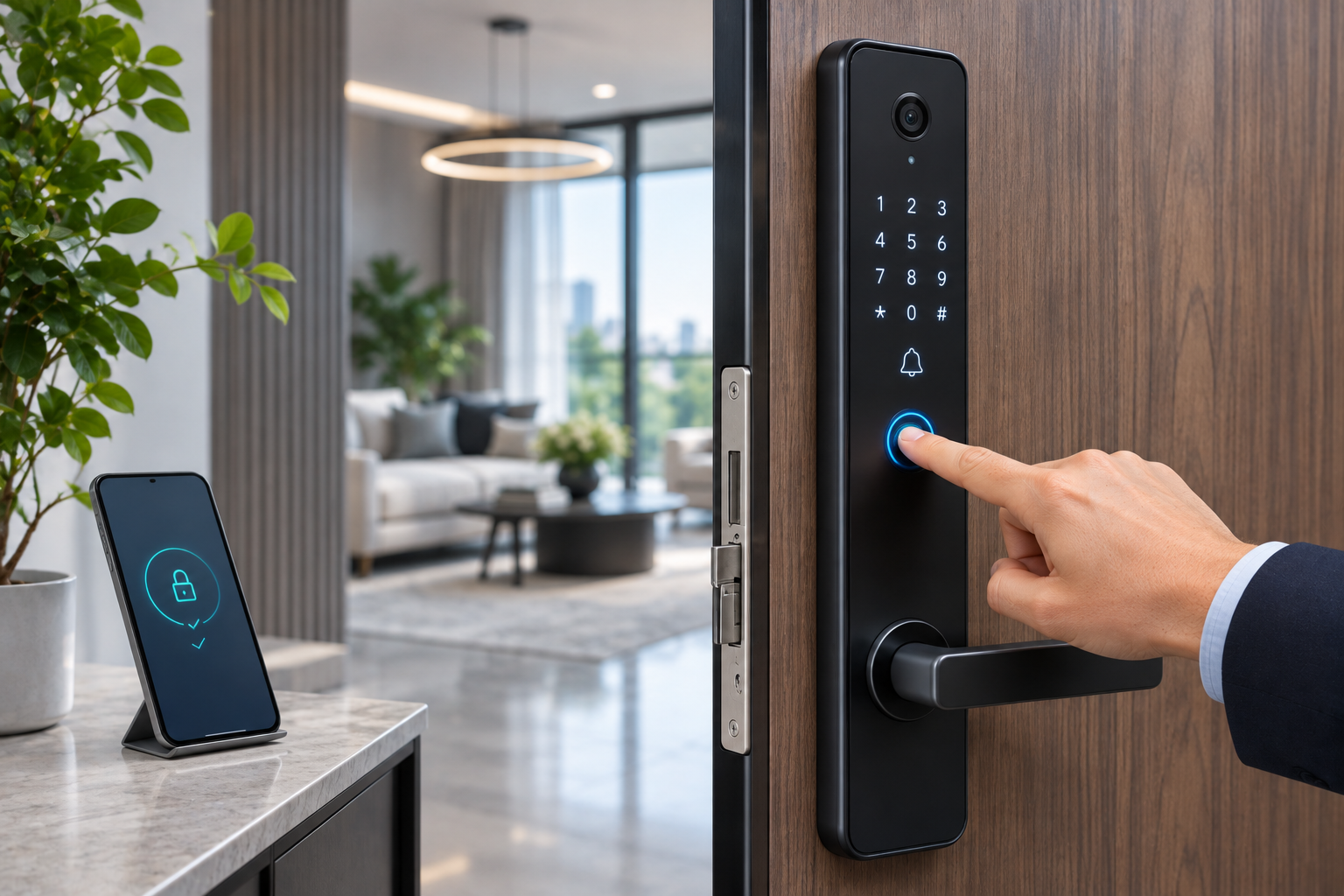
Philips smart lock systems are security solutions that combine traditional door locks with electronic authentication and digital access technologies. Models are available that provide keyless door access through various methods such as fingerprint, PIN code, electronic card, mobile application, 3D facial recognition, and palm vein recognition.
The Philips EasyKey and Philips Home Access product families offer different options, from basic electronic door locks to advanced models with integrated camera and video intercom features. These systems can be considered for residences, apartment entrances, villas, small offices, and specific commercial areas requiring controlled access.
However, when choosing the right smart lock, not only the access technology but also the mechanical structure of the door, the lock body, battery life, emergency opening method, connection security, and technical service conditions in Turkey should be examined together.
What are Philips Smart Lock Systems?
Philips branded smart locks are products that enable users to open suitable doors without relying on a traditional mechanical key and, in supported models, to electronically manage access permissions.
Philips' smart lock solutions were previously introduced under the name EasyKey, while the Philips Home Access brand has gained prominence in the current international product portfolio.
There is an important detail regarding the brand's manufacturing structure: Philips branded smart lock products are developed and marketed by Shenzhen Conex Intelligent Technology Co., Ltd. under a brand license. The Philips name and emblem are registered trademarks of Koninklijke Philips N.V.
Therefore, when evaluating the warranty conditions, technical support service, and regional product options of a Philips smart lock, the relevant manufacturer and authorized distributor information should also be checked.
Philips Home Access products are offered in different mechanical structures:
Electronic locks with door handles: Combine traditional door handles with electronic access.
Push-pull smart locks: Models that perform the door opening operation with a push-pull mechanism.
Electronic mortise lock systems: Work integrated with a suitable lock body.
Video smart locks: Integrate camera, screen, doorbell, and specific intercom functions into the lock system.
Advanced biometric locks: Offer authentication methods such as fingerprint, facial, or palm vein recognition.
The features supported by the products may vary depending on the country, model code, and hardware version.
Philips Smart Lock Models and Product Families
Philips DDL610 — Fingerprint Smart Door Lock
Philips DDL610-5HBS is one of the models that stands out with electronic access technologies integrated into the door handle.
According to the manufacturer's description, this model has five basic door opening methods:
Fingerprint.
PIN code.
Electronic key tag.
Mobile application.
Mechanical key.
The fingerprint sensor is designed for users to perform authentication while gripping the door handle.
The DDL610 also offers temporary PIN sharing, supported remote control functions, and various security notifications.
Important technical detail: The DDL610 requires a suitable gateway for remote door opening via the internet. The presence of mobile application support does not mean that remote access is provided without additional hardware in every installation.
The manufacturer also specifies an IP65 protection class for the DDL610. However, when evaluating the device's outdoor usability, the door's location, exposure to precipitation, and installation instructions should be examined separately.
Philips DDL801 — Smart Connectivity and Automatic Locking
Philips DDL801-5HBS is another product option focusing on mobile access and automatic locking features.
The basic access methods supported by the model are fingerprint, PIN, electronic key tag, mobile application, and mechanical key.
Its prominent features include:
Automatically operating electronic lock body.
Sensor-supported door opening from the inside.
Multiple authentication options.
Specific lock operations via mobile application.
Temporary access code sharing.
Supported alarm and status notifications.
The DDL801 uses a suitable gateway for remote control via the Home Access application.
In systems with automatic locking, verifying that the door is indeed properly closed by the movement of the lock bolt are different processes. The condition of the door leaf and the strike plate should be mechanically tested.
Philips DDL720-FVP — 3D Facial Recognition Smart Lock
Philips DDL720-FVP-7HWS combines biometric facial recognition and video door monitoring features.
The manufacturer states that the model uses three-dimensional facial imaging technology via a dual camera.
The system can perform automatic authentication by detecting the user's face under supported conditions.
Prominent features of the DDL720-FVP:
3D facial recognition.
Alternative access methods such as fingerprint and PIN.
Video door monitoring.
4-inch screen on the inside.
Infrared illumination for night viewing.
Detection for specific movements in front of the door.
Supported notification and viewing functions via mobile application.
These features can be used to view people in front of the door and allow authorized users keyless entry.
However, the manufacturer's stated performance of facial recognition technology should not be considered definitive security success without independent verification under different lighting and real-world usage conditions.
Philips DDL720-MVP — Palm Vein Recognition Smart Lock
Philips DDL720-MVP-17HWS is a model that uses palm vein recognition technology for contactless biometric access.
Palm vein recognition aims to perform biometric authentication by utilizing the vein pattern in a person's palm via suitable sensors.
This method offers an access alternative that does not require direct contact with a fingerprint sensor.
The following features are specified on the DDL720-MVP product page:
Contactless palm vein recognition.
Home Access mobile application.
Temporary PIN sharing.
Video door monitoring.
4-inch HD screen on the inside.
Infrared illumination to aid night vision.
Specific notifications based on motion detection.
Palm vein recognition can be an alternative for certain users who experience difficulties with fingerprint reading. However, it should not be assumed that it will provide higher accuracy for every user and in every environment.
Philips DDL902-MFVP — Facial and Palm Vein Recognition
Philips DDL902-MFVP-11HWS is one of the advanced biometric access options in the product family.
A significant feature of the model is that it offers palm vein recognition and 3D facial recognition technologies in the same lock system.
The manufacturer's product description includes:
Palm vein recognition.
3D facial recognition.
Alternative access methods such as fingerprint and PIN.
Monitoring the door surroundings with multiple cameras.
Internal and external screen components.
Video call and visitor recording functions.
Smart locking and specific alarm notifications.
Mobile application support.
The DDL902 can be considered for users who want video door communication and advanced biometric access in a single system.
However, the presence of different biometric methods in the same device does not automatically mean it has a higher security certification. The product's authentication performance, biometric data protection, and physical durability should be examined separately.
Comparison of Philips Smart Lock Models
Model | Key feature | Alternative access | Technical consideration |
|---|---|---|---|
DDL610-5HBS | Fingerprint on door handle | PIN, card/key tag, app, key | Gateway for remote opening |
DDL801-5HBS | Automatic locking, smart connectivity | Fingerprint, PIN, app, key | Gateway and door mechanism compatibility |
DDL720-FVP | 3D facial recognition, video monitoring | Fingerprint, PIN, key tag, key | Face detection and camera conditions |
DDL720-MVP | Palm vein recognition | PIN, app, key tag, key | Biometric registration and sensor conditions |
DDL902-MFVP | Face and palm vein recognition, multiple cameras | Fingerprint, PIN, and other supported methods | Advanced installation, power, and data security |
The table has been prepared based on the model features published by the manufacturer. It should not be assumed that the products are sold in Turkey with the same model codes and features.
Access Technologies Used in Philips Smart Locks
Fingerprint Recognition
In fingerprint smart locks, the user performs electronic authentication by placing their finger on the sensor.
The system compares the read data with the registered biometric information to make an access decision.
The main advantage of fingerprint recognition is that it reduces the need for a physical key or remembering a PIN.
However, sensor performance can be affected by dirty, wet, or damaged fingers. Therefore, it is important to have alternative door opening methods.
3D Facial Recognition
The 3D facial recognition technology used in certain Philips models aims to perform authentication by evaluating the geometric features of the face.
Unlike simple recognition methods based on two-dimensional images, the use of three-dimensional data can help distinguish certain spoofing attempts.
However, a system supporting 3D facial recognition does not mean it provides absolute protection against all photo, video, mask, or presentation attacks.
Such claims should be supported by relevant test methods and independent evaluation results.
Palm Vein Recognition
Palm vein recognition technology uses the vein pattern for biometric authentication.
A prominent aspect of this method is that it does not require direct sensor contact in suitable systems.
The technical difference between fingerprint and vein recognition methods is not just contact or contactless operation. The sensor technology used, data processing method, and error rates can also differ.
PIN, Electronic Key Tag, and Mechanical Key
Biometric authentication may not be suitable for all users or usage conditions.
Therefore, many Philips models offer alternative access methods such as PIN, electronic key tag, and mechanical key.
In a secure system, an alternative access method should be evaluated not only for ease of use but also for failure and emergency scenarios.
How Does the Philips Home Access Mobile Application Work?
The Philips Home Access application allows managing access operations and specific device features via phone on supported models.
Depending on the product and connection architecture, the following functions may be available:
Viewing lock status.
Creating temporary access codes.
Reviewing specific entry logs.
Receiving alarm and device status notifications.
Video door communication on supported models.
Remote lock control on suitable systems.
Mobile application support and remote door opening are not the same feature.
While some Philips smart locks require a compatible gateway for remote opening, certain models may offer different functions such as temporary PIN generation.
Furthermore, Bluetooth connectivity that works when near the door should be distinguished from remote access that works over the internet.
When evaluating the mobile access capabilities of Philips products, the phone to be used, application region, gateway, internet connection, and model compatibility should be checked together.
For general operating principles of mobile access technologies, GüvenlikOnline's article on Mobile Access Systems can be reviewed.
Philips Video Smart Locks: Camera and Door Communication
Certain models, such as Philips DDL720 and DDL902, combine electronic lock functions with camera and video communication components.
In these systems, it may be possible to view visitors in front of the door, receive doorbell calls, and communicate via the mobile application under supported conditions.
Some models also include motion detection or visitor recording functions.
However, an integrated camera smart lock should not be considered a security camera that directly replaces a professional CCTV or NVR system.
Specifically, the following features should be examined separately:
Camera resolution and field of view.
Night vision performance.
Video recording duration.
Local or cloud storage options.
Behavior in case of internet connection loss.
Protection of image and audio data.
Ability to transfer recordings to other systems.
The manufacturer's specification of camera or radar detection features does not mean that continuous 24/7 video recording is performed on every model.
Can Philips Smart Locks Be Installed on Steel Doors?
One of the most important issues when choosing a Philips smart lock in Turkey is mechanical compatibility with existing steel doors.
Some Philips models are developed for use with specific security door and mortise lock mechanisms.
However, this does not mean that every product can be directly mounted on all steel doors in Turkey.
The following features should be checked before installation:
Door thickness and material.
Dimensions of the existing lock body.
Multi-point locking structure of the lock.
Door opening direction.
Inner and outer panel mounting area.
Door handle and cylinder compatibility.
Strike plate and bolt movement.
Emergency opening method from the inside.
Especially for multi-point locking steel doors, it must be verified that the motorized mechanism works correctly with the existing lock body.
Before drilling or changing the lock body on the door, the manufacturer's installation template and the technical document of the relevant model should be examined.
Battery and Emergency Opening Security in Philips Smart Locks
Different models of Philips smart locks use battery or rechargeable battery solutions.
Battery life can vary depending on the number of daily passages, motorized lock movements, biometric sensor usage, camera activities, temperature, and network connection.
Especially in models with video door monitoring and advanced biometric functions, energy consumption may differ from locks that only operate with a PIN.
When choosing a product, the following questions need to be answered:
Is there a low battery warning?
How is the door opened when the battery runs out?
Is a mechanical key available?
Is an external emergency power connection supported?
Is user information preserved during battery replacement?
Can the door be opened from the inside without relying on electronic functions?
A mechanical key or emergency power input may not be present in the same form across all models. Therefore, the scenario of a completely depleted battery should be tested before purchase and after installation.
Advantages and Technical Limitations of Philips Smart Locks
The Philips Home Access product family offers various options by combining different access technologies on a single door and providing video communication in certain models.
Its main advantages are keyless access convenience, alternative authentication methods for different users, supported temporary access functions, and the ability to manage specific operations via mobile devices.
However, the following limitations should be considered when choosing a product:
Not all models support facial or vein recognition technology.
Some models require an additional gateway for remote control over the internet.
Application and hardware features of devices sold in different regions may vary.
Biometric authentication is not error-free for all users and environmental conditions.
Camera and video door features are not available on every model.
An electronic lock does not replace adequate mechanical door strength.
Service, warranty, spare parts, and application support in Turkey must be verified on a model and distributor basis.
Cybersecurity and Personal Data Protection in Philips Smart Locks
Smart locks are security devices that link physical access to electronic authentication. Therefore, both their mechanical and software security are important.
In systems using mobile applications, account security, device pairing, connection encryption, access permissions, and software updates should be evaluated.
The EN 303 645 V3.1.3 (2024-09) standard published by ETSI sets out fundamental requirements for the cybersecurity of consumer IoT devices.
However, the existence of this standard does not mean that all Philips smart lock models have been tested or certified according to the standard. Product-specific conformity documents should be requested separately.
KVKK in Fingerprint and Facial Recognition Systems
Methods such as fingerprint, facial recognition, and vein recognition may involve the processing of biometric data to uniquely identify or authenticate an individual under appropriate conditions.
Under Law No. 6698 on the Protection of Personal Data (KVKK), biometric data is regulated as special categories of personal data.
The Personal Data Protection Board's principle decision dated April 29, 2026, and numbered 2026/921, also contains important evaluations regarding the processing of biometric data, especially for employee attendance tracking.
Therefore, when planning to use a Philips or another biometric smart lock in businesses, the purpose of data processing, legal basis, data security, and the suitability of less intrusive methods should be examined.
The said principle decision should not be interpreted as a regulation unconditionally prohibiting all biometric door access applications. Each application should be evaluated within its own purpose and conditions.
Where Can Philips Smart Lock Systems Be Used?
Homes and Apartment Entrances
Alternative access methods such as fingerprint, PIN, and mechanical key can offer different door opening options to family members.
Villas and Detached Houses
Video door monitoring, visitor notifications, and remote access features can be evaluated in suitable models.
Offices and Small Businesses
Can be used for controlled access by authorized users and monitoring specific entry logs.
However, in businesses with a high number of personnel, central access control, user management, and time & attendance system requirements should be evaluated separately.
Short-Term Accommodation Areas
Locks that support temporary PIN generation can provide an alternative for guest access management.
However, the duration of password usage, revocation of permissions, and internet connection requirements must be verified.
Smart Home Applications
Suitable Philips models can be used together with supported smart home platforms for specific automation functions.
However, compatibility with Amazon Alexa, Google Assistant, or another ecosystem should not be generalized to all Philips locks.
To examine the relationship of smart locks with other building technologies, GüvenlikOnline's article Smart Home Systems: Security, Energy Management, and Automation Guide can be utilized.
Technical Checklist for Philips Smart Lock Selection
The following checks should be performed before purchase and installation:
Is the full product code and hardware version determined?
Are the door thickness, lock case, and opening direction compatible?
Does the product work with the existing steel door mechanism?
Which biometric or alternative access methods are supported?
Can the mobile application be used in Turkey?
Is an additional gateway required for remote door opening?
How is the door opened when the battery is completely depleted?
Has safe opening from the inside of the door been verified?
Are fire and emergency evacuation requirements met?
Is the storage and protection of biometric data explained?
Are the image recording conditions specified for models with cameras?
Has the warranty, service, and spare parts support for the product in Turkey been verified?
This list is for preliminary technical evaluation. Especially for fire doors and doors on escape routes, applicable legislation and door hardware compatibility should be evaluated separately.
Frequently Asked Questions About Philips Smart Lock Systems
Are Philips smart locks secure?
With appropriate product selection and correct installation, they can contribute to electronic access management. However, biometric recognition, mechanical durability, software security, and emergency opening features should be evaluated separately.
Do Philips smart locks work without internet?
Many models can use PIN, fingerprint, or other local authentication methods without internet. However, remote management, notifications, and some video functions may require connectivity.
Do Philips smart locks have facial recognition?
Yes. Certain models like DDL720-FVP and DDL902-MFVP offer 3D facial recognition. This feature is not available on all Philips lock models.
Are Philips smart locks compatible with steel doors?
There are models that can be installed on certain steel doors. However, a definitive compatibility decision cannot be made without checking the door thickness, existing lock body, and multi-point locking system.
What happens if the battery of a Philips smart lock runs out?
The model's supported emergency power connection, mechanical key, or other access options can be used. These functions must be verified on a model-by-model basis.
Is it possible to open Philips smart locks remotely with a phone?
It is possible on supported models. However, some products require an additional gateway for remote door opening over the internet.
Are Philips EasyKey and Philips Home Access the same brand?
EasyKey is one of the previous product brandings for Philips branded smart locks. Home Access is the brand used in the current international smart access product family. The technical compatibility of products should be evaluated based on the full model code, not just the brand name.
How to Choose the Right Model in Philips Smart Lock Systems?
The Philips Home Access product family offers various solutions, from basic fingerprint locks to models with advanced biometric authentication and video door monitoring features.
Models like DDL610 and DDL801 combine traditional electronic door access with mobile management, while the DDL720 series stands out with facial and palm vein recognition options. The DDL902-MFVP is an advanced alternative that brings together different biometric authentication and video communication functions.
However, it should not be assumed that the model with the most advanced features is the right solution for every door or user.
The correct choice should be made by evaluating physical door security, mechanical compatibility, user needs, energy continuity, cybersecurity, personal data protection, and technical service conditions together.