
How to Ensure Home Security? Home Security Systems and Necessary Precautions
How is home security ensured, and what security measures should be taken in homes? We examine security cameras, burglar alarm systems, smart locks, door-window sensors, fire and gas detectors, and smart home security solutions; along with their advantages, technical selection criteria, and practical security recommendations.
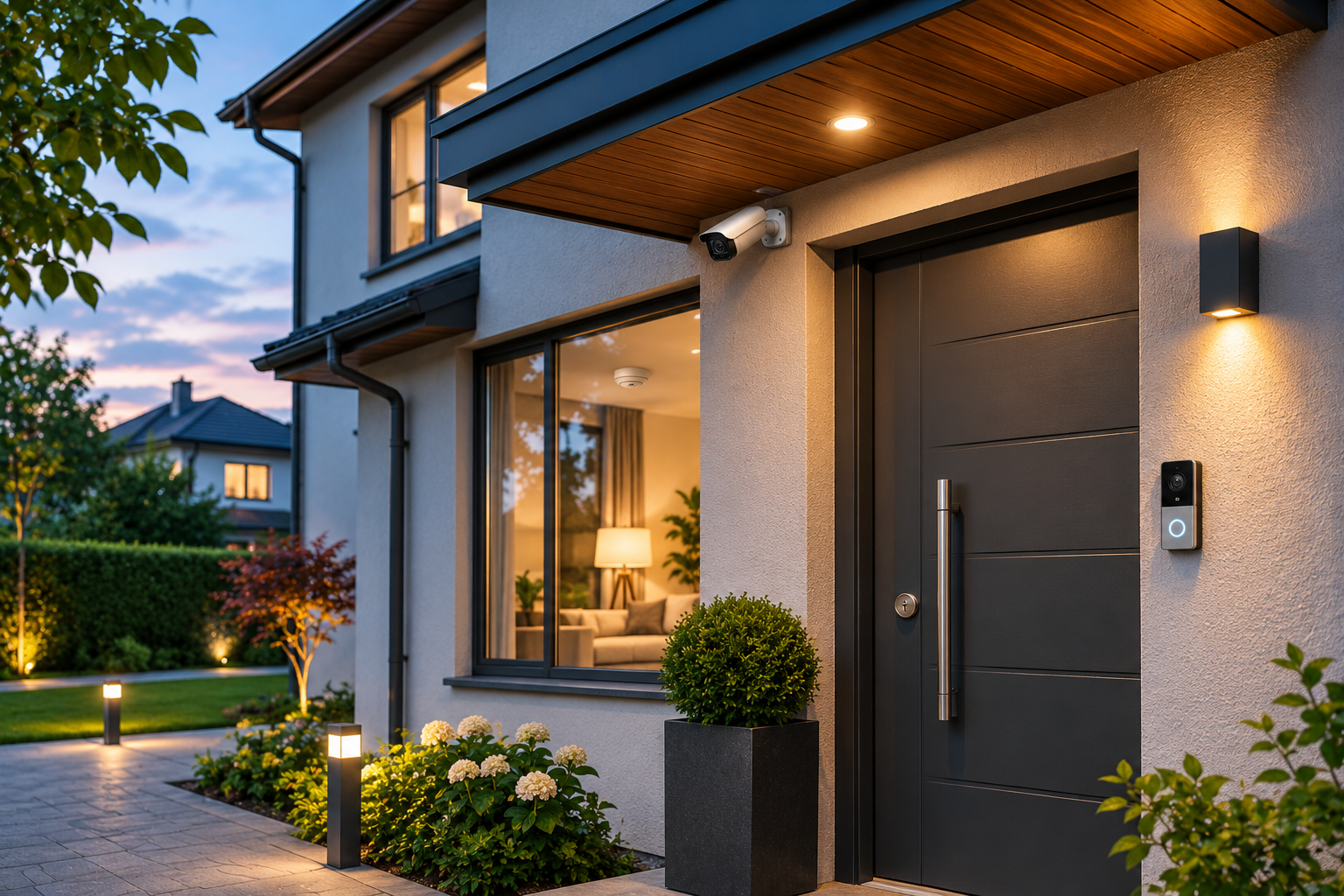
Home security is not merely about locking doors or installing a security camera. Protecting living spaces against theft, unauthorized entry, fire, gas leaks, and other potential risks requires a comprehensive evaluation of complementary security measures.
Today, thanks to IP security cameras, wireless alarm systems, smart door locks, motion sensors, and mobile applications, home security has become more accessible and manageable.
However, the advancement of security technologies does not mean that the same system will be suitable for every home.
For example, the security needs of a family living in an apartment may differ from those of a family living in a detached house. Gardens, balconies, entrance doors, basements, parking lots, and common areas can harbor different security risks.
Therefore, a successful home security system must integrate physical protection, early detection, event verification with cameras, secure notification, and appropriate response processes.
So, how is home security ensured, which security systems should be used, and how is the most suitable security solution for homes selected?
What is Home Security?
Home security is the sum of measures implemented to support the physical, electronic, and digital security of a residence and its occupants.
The main objectives of home security are:
To deter and make unauthorized entries difficult.
To detect suspicious entries and specific security events early.
To provide early warning against fire, smoke, and related gas risks.
To help inform the right people in a timely manner during security incidents.
To create appropriate video and alarm records of potential incidents.
To protect the privacy and personal data of residents.
In home security, one should not rely solely on electronic devices. Solid doors, appropriate locks, secure window hardware, and emergency plans are also crucial components of protection.
How is Home Security Ensured?
An effective home security approach relies on the combined implementation of multiple layers of protection.
1. Physical Security Measures
The security of entrance doors, windows, balcony doors, and other access points should be evaluated first.
The physical durability of the door frame, lock, hinges, and mounting elements is important.
In detached houses, garden gates, garages, terraces, and outdoor storage areas can also be included in the risk assessment.
2. Electronic Alarm and Detection
Door-window magnetic contacts, motion detectors, and other suitable sensors can detect specified events and trigger an alarm.
These systems help in the early detection of attempted unauthorized entry.
3. Video Surveillance and Event Verification with Cameras
Security cameras can provide video footage in appropriate areas and support the investigation of incidents.
However, recording video with a camera does not necessarily mean that the incident will be prevented.
4. Alarm Notification and Response
When an event is detected, a siren, mobile notification, or appropriate alarm monitoring services can be used.
It should be predetermined who the alarm will be sent to and how to act in which situations.
5. Fire and Emergency Safety
Smoke alarms, appropriate gas detectors, and evacuation plans support protection against risks different from burglar security.
The success of home security depends not only on the number of security devices but on all layers of protection working together correctly.
1. Home Security Cameras
Home security cameras are electronic security devices that enable the surveillance of specific areas in residences and their storage with appropriate recording systems.
Where Should a Home Security Camera Be Installed?
Camera locations should be determined according to security needs and privacy conditions.
Areas that can be prioritized for evaluation:
Detached house entrance door and approach area.
Garden and garage entrance.
Vehicle parking areas within appropriate private property boundaries.
Specific exterior doors and access points.
Areas necessary for surveillance for security purposes and legally permissible.
In apartments, a more careful evaluation is required for areas in front of apartments, neighbor's doors, and common areas.
The camera should not be positioned to view the interior of a neighbor's home when their apartment door opens.
Surveillance of private living areas such as bedrooms, bathrooms, and similar spaces should be avoided.
What to Consider When Choosing a Home Security Camera?
Camera resolution and lens features.
Area to be monitored and target distance.
Night vision performance.
Motion and human detection features.
SD card, NVR, or cloud recording options.
Wired or Wi-Fi connection reliability.
Mobile application security.
Manufacturer software support.
Outdoor environment protection requirements.
Personal data security.
For example, a wide-angle camera with a high megapixel value may not always provide the image detail needed at an entrance door.
Therefore, camera resolution, lens, and field of view should be evaluated together.
For more detailed technical information, GüvenlikOnline's guide titled What to Consider When Choosing a Security Camera? can be reviewed.
2. Home Alarm Systems
Home alarm systems are used to detect events occurring in designated security zones and issue warnings.
They typically consist of an alarm control panel, sensors, a siren, and communication components.
Magnetic Door and Window Contacts
Magnetic contacts, when properly installed, can detect the open/closed status of a door or window.
They are particularly used for entrance doors and other openable sections that need protection.
PIR Motion Detectors
PIR (Passive Infrared) detectors are used for motion detection by evaluating changes in infrared energy within their detection area.
However, motion detectors cannot always distinguish between humans and pets under all conditions.
In homes with pets, appropriate detector selection and installation criteria are important.
Glass Break Detectors
Glass break detectors can detect specific sound or vibration patterns based on their supported operating principle.
However, glass break detectors do not provide the same performance for all glass types and all installation conditions.
Alarm Siren and Mobile Notification
The alarm system can generate an audible warning for specific events.
In suitable systems, notifications can be sent via a mobile application.
However, internet or another communication connection may be required for phone notifications.
Alarm Monitoring Service
Some alarm systems can be connected to professional alarm monitoring centers under a subscription.
The incident verification, notification, and response procedures of this service should be evaluated separately within the scope of the contract.
Generating an alarm is not the same as security intervention at the scene of the incident.
3. Smart Lock and Secure Door Systems
Smart locks can combine traditional mechanical lock systems with electronic access methods.
Depending on the product, features may include:
Door unlocking with PIN code.
RFID card access.
Control via mobile application.
Temporary user authorization.
Specific door status notifications.
Supported automation functions.
Do Smart Locks Increase Home Security?
A suitable smart lock can simplify access management and provide alternatives to key usage.
However, using a smart lock does not automatically increase the mechanical strength of the door.
The door frame, strike plate, installation quality, and mechanical structure retain their importance.
Furthermore, how the lock will operate during a power outage or when the battery runs out, the possibility of mechanical emergency access, and evacuation safety should be evaluated.
For more information on the technical specifications of smart locks, the article What are Smart Lock Systems? How Do They Work and How Are They Chosen? can be reviewed.
4. Fire Safety and Smoke Detectors
Home security should not focus solely on preventing unauthorized entries.
Fire is one of the significant risks threatening life and property safety in residences.
AFAD's fire safety guides particularly emphasize the importance of electrical installation maintenance, smoke detectors, and evacuation planning.
Why is a Smoke Detector Necessary?
Smoke alarm devices, under appropriate design and placement conditions, can help detect fire in its early stages.
These systems are particularly important for early warning during nighttime hours.
However, not all smoke detectors operate on the same principle.
For example, residential-type standalone smoke alarm devices and detectors connected to a central fire alarm panel can create different system architectures.
Where Should a Smoke Detector Be Installed?
The placement of detectors should be determined according to manufacturer instructions, relevant standards, and the architectural features of the residence.
It is important to ensure adequate coverage for bedrooms, escape routes near sleeping areas, and circulation areas between floors.
In kitchens, bathrooms, and areas where steam is generated, detector technology and placement should be carefully chosen to mitigate the risk of false alarms.
Fire Extinguisher and Evacuation Plan
It is important to have appropriate fire extinguishing equipment at home and for residents to know how to use it safely.
Furthermore, household members should:
Know safe exit routes.
Keep exit paths clear.
Determine where to meet in case of fire.
Know emergency numbers.
Evacuate without delay when necessary.
Attempting to extinguish a fire should not take precedence over evacuation and calling for emergency assistance, especially in situations with heavy smoke or a growing fire.
5. Natural Gas, LPG, and Carbon Monoxide Safety
Gas appliances and heating equipment used in residences require separate safety evaluations.
There is an important technical distinction here.
Natural gas/LPG leak detection devices and carbon monoxide (CO) alarm devices are not designed to detect the same hazard.
Gas Leak Detectors
Appropriate gas detectors can detect specific concentration changes related to the type of flammable gas they are designed for.
The correct device and installation location should be chosen according to the properties of the gas used and manufacturer instructions.
Carbon Monoxide Detectors
Carbon monoxide is a colorless, odorless, toxic gas that can be produced during combustion processes.
CO alarm devices can provide early warning against carbon monoxide risk under appropriate placement and operating conditions.
However, a CO alarm device does not replace a natural gas leak detection device.
Basic Precautions for Gas Safety
Maintenance of gas appliances should be carried out by authorized personnel.
Chimney and ventilation conditions should be checked.
Appropriate detector technology should be selected.
Access to gas valves should not be obstructed.
Unsafe electrical and gas installation interventions should be avoided.
If a gas leak is suspected, electrical switches or devices that could create sparks should not be used; one should safely evacuate the area and contact the relevant emergency hotline.
6. Smart Home Security Systems
Smart home technologies can enable the management of different security devices through common applications.
For example, in suitable systems, an event from a door sensor can send a mobile notification to the homeowner and facilitate opening the view from the relevant camera.
Some systems may support the following features:
Viewing alarm status from the mobile application.
Door-window status notifications.
Live view from cameras.
Smart lighting scenarios.
Specific automatic arming and disarming functions.
Access permissions for different users.
However, it should not be assumed that all smart home products will work perfectly compatible with each other.
Technology names like Matter, Zigbee, Z-Wave, Wi-Fi, or Bluetooth alone do not guarantee mutual support for all security functions.
Especially for critical functions related to burglar alarms or life safety, how the general-purpose automation infrastructure behaves against potential failures should be evaluated.
7. Wired or Wireless in Home Security Systems?
Alarm and camera systems used in homes can be installed using wired or wireless communication methods.
| Criterion | Wired system | Wireless system |
|---|---|---|
| Installation | May require cable infrastructure | Less cabling in suitable locations |
| Communication | Stable connection with appropriate infrastructure | Can be affected by radio coverage and interference |
| Power | Centralized or wired power options | Batteries used in some devices |
| Expansion | Requires cable and capacity planning | Adding devices can be easy with suitable devices |
| Maintenance | Cable and connection checks | Battery, signal, and device checks |
| Security | Physical connection and network security are important | Authentication and wireless communication security are important |
This table is a general comparison. It does not indicate that wired or wireless technology alone is more secure in all applications.
For example, while wired infrastructure can be planned in advance in newly constructed residences, wireless systems can offer certain installation conveniences in existing residences.
8. Cloud Recording or Local Recording for Home Security Cameras?
Where images are stored in home security cameras is an important selection criterion.
Local Recording
Images can be stored on a microSD card, NVR, or another suitable local storage device.
In some systems, local recording can continue even if the internet connection is lost.
However, damage to or theft of the recording device can pose a risk of data loss.
Cloud Recording
Images can be transferred to the service provider's servers with a suitable internet connection.
Cloud recording can offer advantages such as remote access from outside the home or off-site data storage.
However, subscription costs, data security, internet connection, and provider service terms should be evaluated.
Which Method Should Be Preferred?
There is no single best recording method for everyone.
In some applications, local recording, in others cloud recording, or hybrid solutions combining both may be suitable.
For a detailed comparison, GüvenlikOnline's article titled Differences Between Cloud Recording and Local Recording in Home Security Cameras can be reviewed.
9. Why is Cybersecurity Important in Home Security?
Internet-connected security cameras, smart locks, and alarm systems should also be evaluated from a digital security perspective.
The physical installation of a camera in a secure location does not mean that unauthorized access to its footage cannot be gained via the internet.
The UK National Cyber Security Centre (NCSC) recommends measures such as strong passwords, up-to-date software, two-factor authentication, and disabling unnecessary remote access for smart home devices.
Key Controls for Smart Home Security
Change default user passwords.
Use strong and unique passwords.
Enable two-factor authentication in supported applications.
Follow security updates for cameras and other devices.
Evaluate devices whose manufacturer support has ended and replace them if necessary.
Limit unnecessary internet access.
Regularly check devices and user permissions on the home network.
Know who can access security recordings.
Furthermore, it is essential to test which functions of security devices continue to operate when the internet connection is lost.
The devices installed for home security must also be protected against cyberattacks.
10. Camera Usage in Apartments and Residential Complexes and KVKK
Privacy and the protection of personal data are important considerations when installing home security cameras.
The Personal Data Protection Authority (KVKK) published statements regarding the limits of security camera usage in apartments in its public announcement dated June 8, 2026.
Especially for cameras installed in common areas, the legal basis, purpose of surveillance, placement, and data security should be evaluated together.
Can a Camera Be Installed on an Apartment Door?
It is not appropriate to give a single answer to this question for all situations.
Factors such as the area where the camera will be mounted, common property conditions, individuals being viewed, and camera angle should be evaluated.
According to KVKK's statement, the privacy expectations of apartment residents should be taken into account; for example, a camera should not be positioned to view the interior of a home when the apartment door opens.
What Aspects Are Important for Home Cameras?
The camera should only view the necessary area.
Neighbors' private living areas should not be unnecessarily recorded.
Relevant management and data protection obligations for common areas should be evaluated.
Necessary illumination obligations should be fulfilled.
Unnecessary audio and biometric data processing features should be avoided.
Access to recordings should be restricted.
Recording retention periods should be determined in accordance with the processing purpose and legal requirements.
Different legal evaluations may apply to purely personal or household activities. However, if the camera systematically views neighbors, common areas, or third parties, it should not be assumed that the personal use exception automatically applies.
11. Choosing a Security System for Apartments and Detached Houses
Not every type of residence requires the same security infrastructure.
| Residence type | Priority risk areas | Solutions to consider |
|---|---|---|
| Apartment | Entrance door, window, balcony | Door security, magnetic contact, suitable alarm, video door system compliant with privacy |
| Detached house | Garden, exterior doors, garage, windows | Outdoor camera, perimeter detection, alarm, lighting, robust physical barriers |
| Villa or residence with large garden | Multiple access points, large perimeter | Zoned alarm, planned camera placement, secure network and event management |
| Summer house or long-term vacant residence | Remote status monitoring, power and communication outage | Appropriate alarm communication, remote notification, power backup, local recording |
This table compares general usage scenarios. The definitive system design should be based on the residence's architecture and risk assessment.
Especially in large residences, instead of installing numerous cameras, it may be more efficient to correctly select critical access points and plan the alarm system accordingly.
12. What to Consider When Choosing a Home Security System?
When evaluating products to purchase for home security, the following criteria should be considered:
Area to be Protected and Risks
The number of entrances, floors, windows, garden, garage, and usage pattern of the residence should be evaluated.
Alarm and Camera Integration
It should be checked how alarm sensors are correlated with camera footage.
Power and Internet Outage
The backup power features of the alarm panel and related communication components should be examined.
Some systems may include a mobile communication backup channel.
False Alarm Management
Pets, wind, open windows, or incorrect sensor placement can cause false alarms.
Detector technology and installation should be determined according to actual usage conditions.
Manufacturer Support
The warranty, software update, and technical service conditions of the devices should be examined.
Total Cost of Ownership
In addition to the device price, installation, recording subscription, alarm monitoring, battery replacement, and maintenance costs should be evaluated.
13. Most Common Mistakes Made in Home Security
Some of the common mistakes encountered in home security applications are:
Considering only camera installation sufficient for security.
Neglecting the security of doors, windows, and other physical access points.
Not checking camera angle and night vision footage.
Incorrectly positioning alarm sensors.
Not testing how the system will operate in case of an internet connection loss.
Not monitoring the battery status of smart locks and alarm systems.
Using default passwords for cameras.
Not verifying that recordings are actually stored and can be played back.
Ignoring fire and gas safety requirements.
Not considering the privacy of neighbors and family members.
A significant portion of these errors can be reduced through proper assessment, correct product selection, and regular maintenance.
Technical Checklist for Home Security
Has entrance door and window security been evaluated?
Are locks and mechanical connections appropriate?
Does the home alarm cover necessary access points?
Have door and window sensors been tested?
Is the placement of motion detectors appropriate?
Have the viewing angles of security cameras been verified?
Have night vision images been tested?
Have camera recordings been checked by playing them back?
Is the system's behavior known in case of an internet outage?
Are the emergency access and evacuation conditions for smart locks appropriate?
Have smoke alarms and necessary gas detectors been evaluated?
Has an emergency evacuation plan been created at home?
Have mobile notifications and alarm communication been tested?
Have default passwords been changed?
Have software updates and user permissions been checked?
Have privacy and KVKK conditions been evaluated for camera usage?
Has a periodic maintenance and test plan been prepared?
This checklist is for general security assessment. It does not replace a residence-specific technical survey, relevant legislation, or expert evaluation.
Frequently Asked Questions
How is home security ensured?
Home security can be supported by the combined implementation of robust doors and windows, appropriate locks, alarm sensors, security cameras, fire and gas safety measures, and regular system checks.
Is a camera or an alarm system more important for a home?
The two systems perform different tasks. An alarm system detects specific security events and generates warnings, while a camera is used for surveillance and event verification. The correct choice depends on the home's risks.
Does a home alarm system work without internet?
Some alarm systems' local detection and siren functions can work without internet. However, remote notification and management features depend on the relevant communication infrastructure.
Do home security cameras record 24/7?
Some systems record continuously, while others record only when an event or motion is detected. The product's recording method should be verified before purchase.
Is a wireless alarm system reliable?
Wireless alarm systems can be used with appropriate technology and correct installation. However, radio coverage, battery status, communication security, and environmental effects should be evaluated.
Are smart locks sufficient for home security?
Smart locks can simplify access management but do not provide complete home security on their own. Door strength, emergency evacuation, and other security layers are also important.
Do home security cameras have to be connected to the internet?
It is not mandatory for every camera. Some cameras can operate on a local network and with local storage infrastructure. Remote access and cloud features, however, require a suitable connection.
Is it legal to install a camera on an apartment door?
The legal evaluation of the installation depends on the areas being viewed, common property conditions, and personal data processing activities. Especially, viewing neighbors' private living areas and the interiors of apartments should be avoided.
Is maintenance necessary for home security systems?
Yes. Alarm sensors, camera recordings, batteries, internet connections, and software updates should be checked regularly. Maintenance intervals should be determined according to manufacturer instructions and usage conditions.
Conclusion: Effective Home Security Requires Multi-Layered Protection
Home security is not merely an application aimed at reducing the risk of theft. Protecting the life and property safety of residents, preparing for emergencies, and ensuring personal privacy are also important parts of this approach.
Security cameras, alarm systems, smart locks, smoke alarms, and other appropriate security technologies perform different functions.
However, no single technology eliminates all risks on its own.
A successful home security approach requires the integrated planning of physical protection, early detection, accurate notification, secure intervention, privacy, and regular maintenance.
Especially when choosing a security system for a home, the actual security needs of the residence should be determined before considering the number of devices or just the product price.
The best home security system is not the one with the most devices installed, but the system that provides reliable, easily manageable, and sustainable protection suitable for the home's risks.
References
KVKK – Considerations for Using Security Camera Systems in Apartments
IEC – IEC 62676-4:2025, Video Surveillance Systems Application Guide
GüvenlikOnline – What to Consider When Choosing a Security Camera?
GüvenlikOnline – Differences Between Cloud Recording and Local Recording in Home Security Cameras