
Hanwha Vision Dome Camera Models and Features: A Technical Comparison Guide
A comparison of Hanwha Vision Wisenet dome camera models. Q, X and P series; 2 MP, 4 MP, 5 MP, 6 MP and 4K options; AI analytics, IR, WDR, lenses, IP/IK ratings, PTRZ and technical selection criteria.
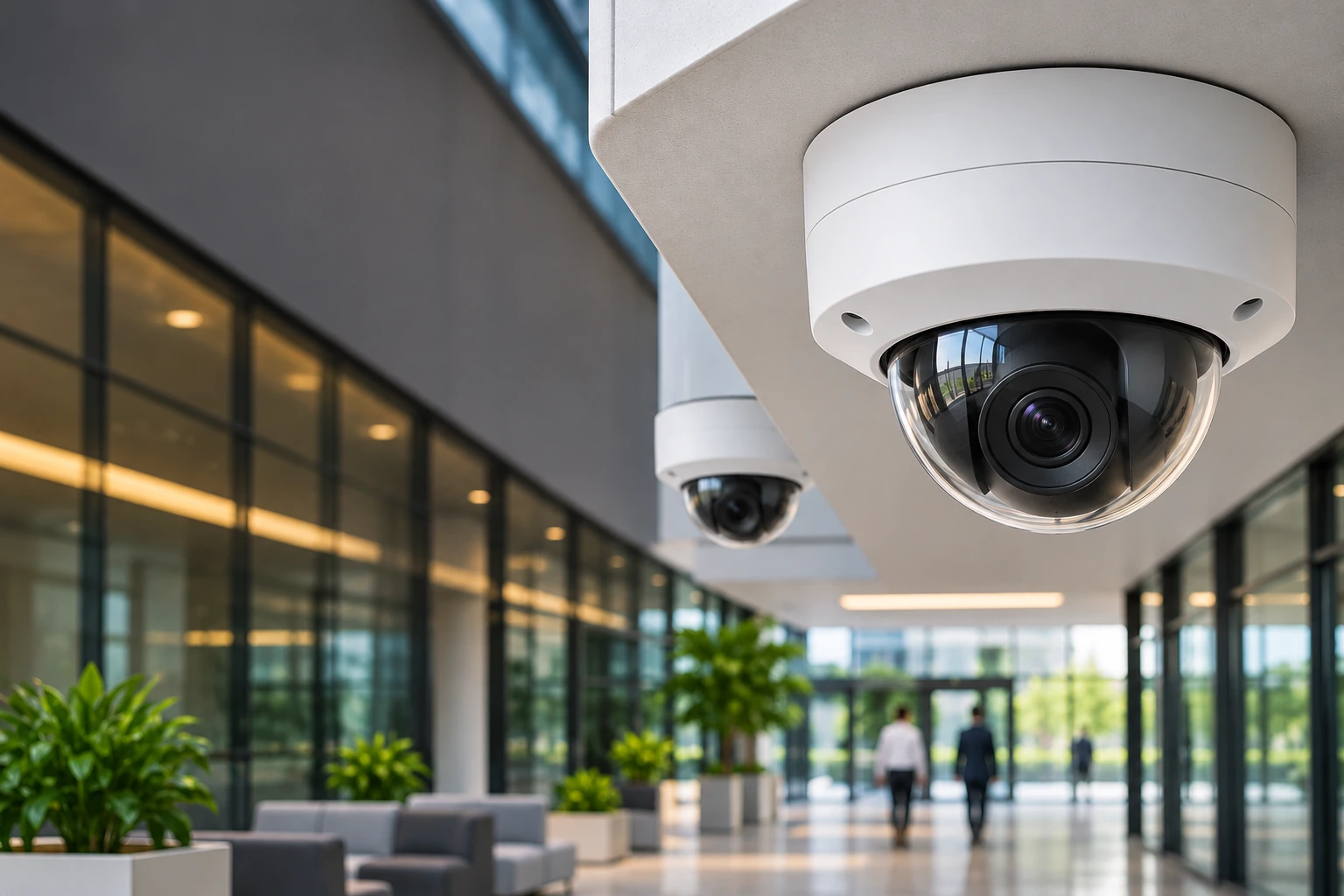
Hanwha Vision dome cameras are professional IP security cameras used for indoor and outdoor video surveillance, available with a range of resolution, lens, AI analytics and durability options. Part of the Wisenet product ecosystem, they are used to meet varied security needs in offices, shopping malls, stores, hotels, banks, educational institutions, hospitals and industrial facilities.
Hanwha Vision's dome camera portfolio includes options ranging from the economical Q series and advanced X series to the high-performance P series and next-generation modular X Plus models.
Current products stand out for features such as 2 MP, 4 MP, 5 MP, 6 MP and 4K/8 MP resolution, motorized varifocal lenses, WiseIR night imaging, WDR, AI-powered object detection, remote camera adjustment and IP/IK ratings.
However, the right dome camera should not be selected solely on the basis of megapixel count or product series. The installation environment, target distance, lens field of view, DORI/PPM requirements, night-imaging performance, recording infrastructure and video analytics features should all be assessed together.
What Is a Hanwha Vision Dome Camera?
A dome camera is a type of security camera whose imaging unit is usually housed in a dome-shaped or compact protective enclosure.
Hanwha Vision offers numerous IP dome camera models for different applications.
These can generally be classified as:
Indoor dome cameras with fixed lenses.
Dome cameras with motorized varifocal lenses.
Vandal-resistant outdoor dome cameras.
AI-powered dome cameras.
Dome cameras with IR illumination.
Dome cameras with remotely adjustable PTRZ.
Modular dome camera solutions.
These are the main categories.
A dome housing alone does not mean that a camera is suitable for outdoor use or resistant to vandalism. These properties should be verified using the relevant model's IP and IK ratings.
What Are the Hanwha Vision Dome Camera Series?
Wisenet Q Series
The Q series comprises products that can be considered for general video surveillance and cost-focused IP camera projects.
Depending on the model, it may offer a fixed lens, motorized varifocal lens, IR illumination, WDR and certain AI functions.
Example models:
QND-7082R
QNV-7082R
QND-C8023R
QNV-C9083R
The Q series is not limited to cameras offering only basic motion detection. Newer models also include AI-powered object-detection options.
Wisenet X Series
The X series is a camera family offering a broader range of features for advanced image processing, video analytics and professional field applications.
Depending on the model, it may offer:
High-resolution imaging.
Motorized varifocal lens.
WDR.
WiseIR.
AI object detection.
Smart compression.
Advanced cybersecurity.
Greater environmental durability.
These features may be available.
Example models:
XNV-8083R
XNV-9083R
XNV-C9083R
XND-A9085RV
XNV-A9016R
Wisenet P Series
The P series includes products developed for high-performance imaging and certain advanced AI applications.
Models featuring 4K resolution and AI analytics support are particularly notable.
Example models:
PNV-A9081R
PNV-A9082RZ
PND-A9081RV
However, it should not be generally assumed that every P series model is better than every product in the X series. Product generations and intended applications may differ.
Hanwha Vision Dome Camera Models Compared
The table below compares selected dome models listed in the manufacturer's official catalogs.
Model | Resolution | Key feature | Typical application |
|---|---|---|---|
QND-7082R | 4 MP | Indoor IR dome | Offices and general indoor use |
QNV-7082R | 4 MP | Vandal-resistant IR dome | Outdoor areas and shared spaces |
QND-C8023R | 5 MP | AI IR, fixed 4 mm lens | Indoor use and specific viewing angles |
QNV-C9083R | 8 MP / 4K | AI IR, motorized varifocal lens | High-resolution outdoor use |
XNV-8083R | 6 MP | AI IR vandal-resistant dome | Professional outdoor use |
XNV-9083R | 8 MP / 4K | AI IR, WiseIR, extremeWDR | High-detail surveillance |
XNV-C9083R | 8 MP / 4K | AI IR, IP66/IP67, IK10 | Harsh environmental conditions |
XND-A9085RV | 8 MP / 4K | AI IR, modular dome | Advanced indoor projects |
XNV-A9016R | 8 MP / 4K | Compact IR network dome | Compact outdoor installation |
PNV-A9081R | 8 MP / 4K | AI IR, WDR, P-Iris | Enterprise imaging |
PNV-A9082RZ | 8 MP / 4K | AI, remote PTRZ, modular design | Projects requiring remote optical/aim adjustment |
XNV-A9085RZ | 8 MP / 4K | Next-generation X Plus, remote PTRZ | Scalable enterprise projects |
Note: Models' technical specifications, firmware versions and regional availability may change. The key features shown in the table were assessed using the relevant manufacturer's product pages. Consult the current datasheet for the complete technical specification.
Hanwha Vision QND-7082R Dome Camera Features
QND-7082R is an indoor dome camera model with 4 MP resolution.
Its primary purpose is standard indoor video surveillance.
It can be considered for offices, corridors, stores and similar spaces.
Key Features
4 MP resolution.
IR night imaging.
Dome housing design.
IP-based video transmission.
Video compression options supported by the model.
When selecting this product, lens suitability for the target area is as important as resolution.
Hanwha Vision QNV-7082R Dome Camera Features
QNV-7082R is a 4 MP IR vandal-resistant dome model.
Unlike QND-7082R, it stands out for its vandal-resistant housing.
It may be considered for outdoor areas or locations at risk of physical interference.
However, the product's actual durability rating and suitability for the installation environment should be verified against the current datasheet.
Hanwha Vision QND-C8023R – 5 MP AI Dome Camera
QND-C8023R is among the indoor dome cameras featuring AI.
According to the manufacturer's current technical data:
5 MP resolution.
Imaging at up to 30 FPS.
Fixed 4 mm lens.
Approximately 80° horizontal field of view.
IR imaging.
AI-powered analytics.
Edge storage with a suitable microSD card.
These features are available.
Who Is It Suitable For?
It may be considered for indoor settings where a fixed field of view is sufficient and specific video analytics are required.
However, it should not be assumed that a fixed 4 mm lens is suitable for every store or office layout.
Hanwha Vision QNV-C9083R – 8 MP AI Dome Camera
QNV-C9083R is a 4K AI-powered IR vandal-resistant dome model.
According to the manufacturer's data:
8 MP / 4K resolution.
3.2–10.2 mm motorized varifocal lens.
120 dB WDR.
AI-powered image analytics.
IP66 protection.
IK10 mechanical impact resistance.
These features are available.
Advantages of a Motorized Varifocal Lens
The 3.2–10.2 mm lens range allows the field of view to be adjusted to project requirements.
However, selecting a narrower field of view may reduce the area covered.
When choosing between wide and narrow angles, assess the PPM required at the target distance.
Hanwha Vision XNV-8083R – 6 MP AI Dome Camera
XNV-8083R is an X series 6 MP AI-powered IR vandal-resistant dome camera.
It is designed for professional outdoor video surveillance applications.
Key features include:
6 MP imaging.
IR-assisted night surveillance.
Specific AI-based analytics.
Vandal-resistant dome housing.
Wisenet video compression and image-processing technologies.
Potential applications include facility perimeters, building entrances, parking lots and shared-space security.
Hanwha Vision XNV-9083R – 4K AI Vandal-Resistant Dome Camera
XNV-9083R is one of Hanwha Vision's high-performance 4K IP dome models.
According to the manufacturer's datasheet:
3840 × 2160 resolution.
H.264/H.265 video at up to 30 FPS.
4.4–9.3 mm motorized varifocal lens.
50 m IR imaging with WiseIR under the specified conditions.
120 dB extremeWDR.
AI-based detection of people, faces, vehicles and license-plate objects.
Virtual line, area and enter/exit analytics.
WiseNR II noise reduction.
WiseStream III compression optimization.
IP66/IP67/IP6K9K.
NEMA 4X.
IK10+ mechanical durability rating.
These features are available.
Which Projects Can Use XNV-9083R?
Shared areas in shopping malls.
Suitable surveillance zones in banks and financial institutions.
Industrial facilities.
High-security building entrances.
Open-air parking lots.
Corporate campuses.
Important: A product's ability to detect a license plate as an object does not mean it can read and recognize the plate characters under all conditions. LPR/ANPR functionality should be verified separately.
Hanwha Vision XNV-C9083R – 4K AI Dome Camera
XNV-C9083R is a 4K AI IR vandal-resistant dome model.
Key product features include:
4K resolution.
AI-powered image analytics.
120 dB extremeWDR.
IP66/IP67 protection.
NEMA 4X.
IK10 impact resistance.
This model may be considered for projects requiring high-resolution video surveillance in harsh environmental conditions.
However, it should not be assumed that XNV-9083R, despite having the same resolution, has identical lens, IR, detection and environmental features.
Hanwha Vision XND-A9085RV – 8 MP Modular Dome Camera
XND-A9085RV is an 8 MP AI IR modular dome camera model.
The modular design approach aims to make certain camera components and installation processes easier to manage.
Models of this type may be considered for installation and technical servicing in large corporate projects.
However, modularity does not mean that all camera lenses and housings are compatible with one another.
Use combinations approved by the manufacturer.
Hanwha Vision PNV-A9081R – 4K AI IR Dome Camera
PNV-A9081R is a 4K AI IR vandal-resistant dome model in the P series.
The manufacturer's specifications include:
4K imaging.
AI-powered analytics.
IR night imaging.
120 dB WDR.
P-Iris.
Image enhancement technologies such as WiseNR II.
These features are included.
What Is P-Iris?
P-Iris is a technology intended to provide more controlled management of the aperture in suitable lens and camera systems.
Under certain lighting and optical conditions, it may help improve image sharpness and exposure control.
However, the presence of P-Iris does not guarantee that the camera will deliver the same image quality under all lighting conditions.
Hanwha Vision PNV-A9082RZ – 8 MP AI PTRZ Dome
PNV-A9082RZ is an 8 MP AI vandal-resistant dome model distinguished by motorized remote adjustment and modular installation.
What Is PTRZ?
PTRZ refers to:
Pan – horizontal orientation adjustment.
Tilt – vertical orientation adjustment.
Rotate – image rotation.
Zoom – magnification or field-of-view adjustment.
functions.
What Is Remote PTRZ Used For?
On supported models, certain adjustments to the camera's orientation or field of view can be made after installation using suitable software.
This feature can make maintenance and commissioning easier, particularly at high mounting points or in projects with many cameras.
However, PTRZ and PTZ are not the same thing. PTRZ is mainly used for installation and image adjustment; it does not mean that the camera is a full-function PTZ camera that moves continuously to track targets.
Next-Generation Hanwha Vision X Plus Dome Cameras
Hanwha Vision announced its second-generation X Plus PTRZ camera family in November 2026.
The series includes 8 MP and 2 MP options.
The manufacturer's specifications include:
XNV-A9085RZ.
XNV-A9095RZ.
XNV-A6085R.
XND-A6085RV.
models.
Features of the New X Plus Series
Depending on the product and model:
8 MP or 2 MP sensor.
AI processing architecture based on dual NPUs.
Remote PTRZ.
Modular, magnetic mounting approach.
Motorized or remotely adjustable lens.
ONVIF Profile S/G/T/M support.
SUNAPI integration.
IP66/IP67/IP6K9K and NEMA 4X on outdoor models.
IK11 resistance on certain outdoor models.
IP52 and IK10 on the indoor XND-A6085RV model.
are offered.
The 2 MP models' ability to deliver up to 60 FPS in certain configurations may be useful in scenes involving fast motion.
However, using 60 FPS alone does not eliminate motion blur caused by insufficient light or long exposure.
IR Night Vision in Dome Cameras
One important feature of Hanwha Vision dome cameras is that they offer different IR night-imaging options depending on the model.
What Is WiseIR?
WiseIR is a technology that helps manage IR illumination according to the scene being viewed on compatible camera models.
One of its aims is to produce a more balanced night image at varying distances and under different reflection conditions.
However, the IR range stated in a catalogue does not show that a person can necessarily be identified at that distance.
Are IR Range and DORI Distance the Same?
No.
IR range is a technical value relating to the camera's illumination performance under specified conditions.
DORI, by contrast, concerns the level of detail of the target in the image.
For example, one should not assume that a camera with a 50-meter IR range can definitively identify a person's identity at the same distance.
WDR in Hanwha Vision Dome Cameras
WDR (Wide Dynamic Range), is a technology intended to render details more evenly when very bright and very dark areas appear in the same image.
It is particularly important for:
Glass-door entrances.
Cameras facing the sun.
Parking entrances.
Corridors with windows.
Scenes containing both indoor and outdoor areas in the same frame.
These applications.
What Does 120 dB WDR Mean?
120 dB WDR refers to the dynamic-range performance specified by the manufacturer under particular image-processing and test conditions.
However, WDR values from different manufacturers may not be directly comparable if they use different methods.
Field tests are needed to establish actual performance.
AI Features of Hanwha Vision Dome Cameras
Next-generation Hanwha Vision dome cameras may include certain AI analytics.
For example:
Human detection.
Vehicle detection.
Face-object detection.
License-plate object detection.
Virtual line crossing.
Entry to and exit from a specified area.
Area intrusion.
Loitering in a specified area.
Motion and scene-change analysis.
However, not every model offers the same analytics capabilities.
The Difference Between AI Detection and AI Recognition
A camera's ability to detect faces does not mean that it identifies a person biometrically.
Similarly, license-plate detection and license-plate character recognition are different functions.
How Should AI Analytics Performance Be Evaluated?
Target object class.
Detection distance.
Pixel density.
Camera angle.
Lighting and weather conditions.
Image-processing settings.
False-alarm rate.
Missed-event rate.
These factors should be evaluated.
IP and IK Protection in Hanwha Vision Dome Cameras
IP and IK codes are important technical parameters when selecting a dome camera.
IP Protection Rating
The IEC 60529 standard defines the degrees of protection provided by enclosures against the ingress of dust and water.
For example:
IP52.
IP66.
IP67.
IP6K9K.
different protection levels may be available.
It should also be checked which standard certifications such as IP6K9K are based on.
IK Impact Resistance
The IEC 62262 standard classifies the resistance of enclosures to mechanical impact.
Dome cameras may carry protection ratings such as IK10 or, on certain newer models, IK11.
However, a vandal-resistant camera is not physically indestructible.
Choosing a Lens for a Hanwha Vision Dome Camera
Choosing the right lens is as important as choosing the right camera model.
Fixed Lens
Lenses with a fixed focal length have a set field of view.
For example, the QND-C8023R model has a fixed 4 mm lens.
Motorized Varifocal Lens
On suitable products, motorized varifocal lenses can enable remote adjustment of the field of view.
For example, the XNV-9083R model uses a 4.4–9.3 mm lens.
Factors to Consider When Choosing a Lens
Camera mounting height.
Target distance.
Width of the area to be monitored.
DORI task.
Field of view.
Nighttime lighting conditions.
Lens optical resolution.
Choosing an excessively wide-angle lens can reduce the number of pixels occupied by the target in the image, particularly in entrance and corridor applications.
DORI and PPM in Hanwha Vision Dome Cameras
DORI is an approach used in video-surveillance systems to define the purpose of viewing.
Detection: detect.
Observation: observe.
Recognition: recognize.
Identification: identify.
PPM Calculation
PPM (Pixels Per Meter), refers to the pixel density per horizontal meter.
Hanwha Vision Dome Camera Recording Capacity
An increase in the number and resolution of cameras can affect the load on the recording system.
However, storage capacity cannot be calculated definitively from resolution alone.
An average video bit rate is needed for an accurate calculation.
WiseStream Technology
Hanwha Vision offers WiseStream compression optimization on some camera models.
Under suitable viewing conditions, this technology can help use video data more efficiently.
However, the recording savings rate may vary depending on the scene and configuration.
Therefore, actual disk-space calculations should use bit rates measured in the field rather than the maximum savings rates in manufacturer promotions.
NVR Compatibility of Hanwha Vision Dome Cameras
Hanwha Vision dome cameras can be used with compatible Wisenet NVR models.
When selecting a camera and recorder, consider:
H.264/H.265 support.
Resolution.
Maximum frame rate.
Recording bandwidth.
Video decoding capacity.
AI metadata support.
SUNAPI and ONVIF compatibility.
Camera firmware version.
PoE power requirements.
These factors should be evaluated.
Will It Work with an NVR from Another Brand?
Models that support compatible ONVIF profiles and video streams may work with recorders from other brands.
However, ONVIF support does not mean that all AI metadata or manufacturer-specific functions will be available.
Recording, live viewing, event analytics and playback of recorded footage should be tested together.
Applications of Hanwha Vision Dome Cameras
Shopping Centers
Different dome camera models can be used in common areas, corridors, entrances and other suitable surveillance zones.
Stores and Chain Retail
At checkout counters, in sales areas and at entrances, the camera lens and target detail are important.
Banks and ATM Areas
High image detail, reliable recording and access security are priorities.
Hotels
Compact or advanced dome-camera solutions can be considered for lobbies, corridors and suitable common areas.
Factories
Cameras with suitable environmental resistance should be selected for production areas, warehouses and certain outdoor locations.
Hospitals
They can be used in suitable common-area surveillance projects in hospitals. Patient privacy and data-protection requirements should also be taken into account.
Educational Institutions
Camera placement should take children's privacy and legal requirements into account.
Parking Lots
Variable lighting, vehicle movement and nighttime imaging performance are important.
Hanwha Vision Dome Camera Selection Checklist
Technical criterion | Feature to check |
|---|---|
Camera series | Q, X or P |
Resolution | 2–8 MP and relevant options |
Lens | Fixed or motorized varifocal |
Field of view | Horizontal and vertical angles |
Target distance | DORI and PPM |
IR | Actual field range |
WDR | High-contrast performance |
AI | Object and event analytics |
PTRZ | Remote-adjustment requirements |
IP protection | Indoor/outdoor suitability |
IK resistance | Risk of mechanical tampering |
PoE | Maximum power consumption |
NVR compatibility | Video, events and metadata |
Storage | Bit rate and recording duration |
Cybersecurity | Firmware, access and encryption |
Installation | Height, accessories and maintenance |
Testing | Day/night image and analytics validation |
Common Mistakes When Choosing a Hanwha Vision Dome Camera
1. Choosing a Camera Based Only on Megapixels
Pixel density at the lens and target distance matters just as much as resolution.
2. Mounting an Indoor Camera Outdoors
The enclosure’s IP rating and environmental durability must be checked.
3. Mistaking IR Range for Identification Distance
IR illumination and the level of target image detail are different criteria.
4. Confusing PTRZ with PTZ Tracking
PTRZ focuses on installation and optical direction adjustment in supported models.
5. Expecting the Same Analytics Features from Every AI Camera
Analytics depend on the product model and software version.
6. Failing to Test NVR Compatibility
An ONVIF connection does not guarantee that all functions will work.
7. Failing to Calculate PoE Power Consumption
Maximum power requirements must be taken into account, particularly when IR and other accessories are active.
8. Neglecting Camera Acceptance Testing
After installation, daytime and nighttime images, PPM, recording, events, and cybersecurity settings must be verified.
Frequently Asked Questions About Hanwha Vision Dome Cameras
What is a Hanwha Vision dome camera?
An IP security camera housed in a dome enclosure, available with a range of resolution and analytics options.
Which series include Hanwha Vision dome cameras?
Dome camera models are available across different product families, including Q, X, and P.
Do Hanwha Vision dome cameras support 4K?
Yes. There are models with 4K resolution, such as XNV-9083R, QNV-C9083R, and PNV-A9081R.
Do Hanwha Vision dome cameras support artificial intelligence?
Specific models offer AI-powered analysis of people, vehicles, and events. Analytics features are not the same across all products.
What is the difference between XNV and XND?
In Hanwha Vision product naming, XNV is generally used for outdoor vandal-resistant dome models, while XND is used for indoor dome models. Exact protection specifications should be checked for each model.
What is the difference between a dome camera and a turret camera?
In dome models, the imaging unit is usually housed inside a protective dome. Turret cameras have a different body design. The two designs can differ in terms of nighttime IR reflection, maintenance, and installation.
What is a PTRZ dome camera?
A camera type that allows pan, tilt, rotate, and zoom adjustments to be made remotely in supported models.
Are Hanwha Vision dome cameras ONVIF-compliant?
Supported models offer ONVIF compatibility. Supported profiles and features should be verified for each model.
How many meters of night vision do Hanwha Vision dome cameras provide?
IR range varies by model. For example, the manufacturer specifies a 50-meter WiseIR range for XNV-9083R.
How much do Hanwha Vision dome cameras cost?
Prices vary according to the model, resolution, lens, AI features, enclosure durability, and supply conditions. Request a model-specific quote for current pricing.
Conclusion
Hanwha Vision dome camera systems offer a wide range of products, from cost-effective IP video surveillance to advanced AI analytics and highly durable outdoor applications.
The Q series can be considered for general security applications, the X series for more comprehensive professional imaging needs, and the P series for specific high-performance imaging and AI scenarios.
In the 2026 product portfolio, X Plus modular PTRZ models offer new options for installation and maintenance through remote direction and lens adjustment.
However, the most important criterion when selecting a professional dome camera is not just resolution or camera series, but image detail at the target distance, lens selection, nighttime performance, IP/IK ratings, analytics accuracy, and NVR compatibility.
In a well-designed video surveillance system, the camera model, mounting location, and recording infrastructure must be evaluated together.