
Hanwha Vision Camera Systems, Technologies, Features, and Selection Guide
What are Hanwha Vision camera systems and how to choose them? We examine Wisenet IP cameras, Wisenet 9, P/X/Q series, AI-powered video analytics, WiseStream, NVR recording systems, and Wisenet WAVE software. A technical guide for lens, DORI/PPM, night vision, recording capacity, cybersecurity, and professional CCTV installation.
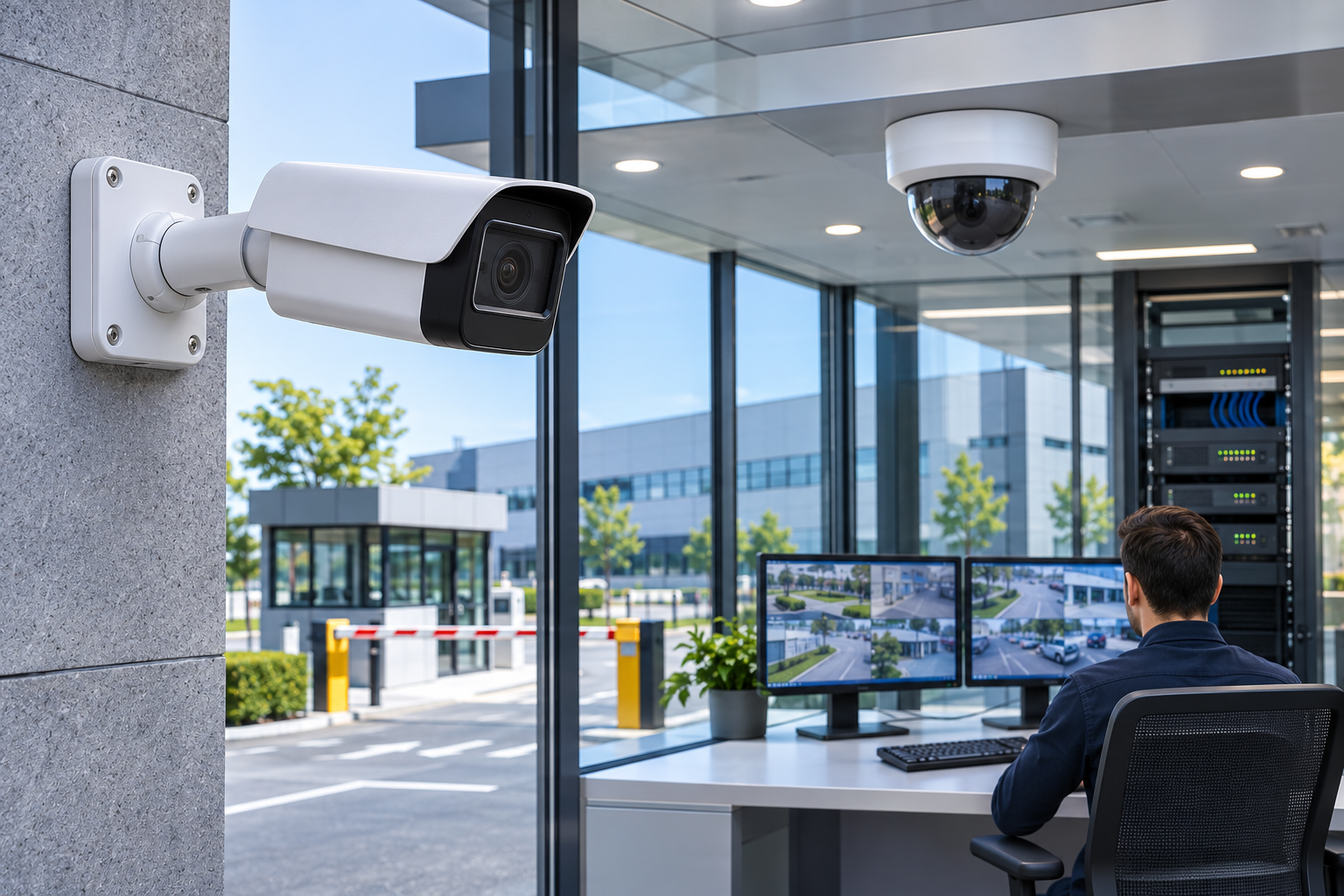
Security camera systems are used to meet various security needs, from residences to shopping malls, factories to critical infrastructure facilities. Today, the functions of these systems are not limited to merely viewing and creating recordings. Thanks to artificial intelligence, advanced image processing, and video analytics technologies, cameras can help evaluate security incidents more effectively.
Among the global manufacturers operating in this field, Hanwha Vision is a South Korea-based video security and intelligent imaging technologies company.
The manufacturer, previously operating under the name Hanwha Techwin, transitioned to the Hanwha Vision brand on March 1, 2023.
Hanwha Vision develops Wisenet camera technologies, IP cameras, NVR recording systems, video management software, and AI-powered analytics solutions.
Particularly, the Wisenet 9 processor, AI-powered object classification, WiseStream video compression, intelligent image enhancement, and Wisenet WAVE video management software are among the manufacturer's prominent technologies in professional CCTV projects.
However, not all Hanwha Vision branded cameras have the same technical specifications.
For example, a high-resolution camera, when used with the wrong lens and mounting angle, may not provide the necessary image detail at the target distance. Similarly, a model with advanced artificial intelligence analytics may not achieve the expected detection performance under unsuitable lighting or viewing conditions.
Therefore, selecting the correct Hanwha Vision camera system requires a combined evaluation of viewing purpose, camera series, lens, DORI/PPM analysis, night vision, artificial intelligence features, storage, integration, and cybersecurity requirements.
So, what are Hanwha Vision camera systems, how do Wisenet technologies work, and which Hanwha Vision solution should be preferred in professional security projects?
What are Hanwha Vision Camera Systems?
Hanwha Vision camera systems are electronic video surveillance solutions developed by Hanwha Vision, consisting of camera, recording, image processing, video analytics, and security management components.
The manufacturer's product portfolio includes:
IP network cameras.
Bullet, dome, and turret cameras.
PTZ and speed dome cameras.
Panoramic and multi-sensor cameras.
Thermal cameras.
Specially certified cameras for explosive environments.
AI-powered video analytics solutions.
NVRs and other recording devices.
Wisenet WAVE and other video management software.
Compatible cloud and central management solutions.
are available.
Hanwha Vision systems can be built with different architectures, from small-scale security applications to enterprise projects involving numerous cameras and various locations.
However, not all products may be offered in the same market or with the same configuration. Technical suitability and regional product availability should be checked on a model-specific basis.
What is the Difference Between Hanwha Vision and Wisenet?
The names Hanwha Vision and Wisenet are often used interchangeably. However, technically, they refer to different concepts.
Hanwha Vision is the name of the company that develops and markets the products.
Wisenet is Hanwha Vision's long-standing brand for video security technologies and products.
The Wisenet name is used in camera processors, video management software, and certain security products.
For example:
Wisenet 9: The next-generation system-on-chip used in camera image processing and AI analytics.
Wisenet WAVE: Video management software.
Wisenet Viewer: Software used for viewing and managing compatible recording devices.
Wisenet Mobile: Application for mobile viewing of supported systems.
Therefore, a camera being referred to by the Wisenet brand alone does not determine the generation of the processor or software used.
How Do Hanwha Vision Camera Systems Work?
In Hanwha Vision IP camera systems, images are captured by the camera sensor and digitally processed in appropriate image processing units.
The processed video can be transmitted over the network to a recording or management system.
A typical system consists of the following components:
IP security camera.
PoE or appropriate power supply.
Ethernet or fiber optic network infrastructure.
NVR recording device or video recording server.
Storage units.
Video management software.
Security operator and authorized user interfaces.
On suitable cameras, artificial intelligence analysis can be performed before the image is recorded or reaches the central software.
This approach is called Edge AI.
Analytic events generated on the camera can be transferred to the recording device or video management software via supported interfaces.
Thus, not only images but also information related to specific objects and security events can be managed.
However, an IP camera sending video does not mean that all artificial intelligence events will be supported by every NVR or VMS.
What are Hanwha Vision Camera Series?
Hanwha Vision offers camera series tailored to different performance and usage needs.
Hanwha Vision Q Series
The Q series covers more economical product options for basic video security needs.
Suitable models may include high-resolution video, basic analytics, and network camera functions.
It can be considered for small and medium-sized businesses, offices, stores, and general viewing applications.
However, it should not be assumed that the Q series supports all advanced AI functions.
Hanwha Vision X Series
The X series covers products for advanced imaging features and professional video security needs.
Suitable models in the series may include:
AI-powered object detection.
Advanced image processing.
WDR and low-light performance.
Intelligent video compression.
Advanced event analytics.
Various lens and housing options.
are available.
The second-generation X series AI cameras, introduced in 2025, have been updated with the Wisenet 9 processor.
Hanwha Vision P Series
The P series is a product group for advanced professional imaging and artificial intelligence applications.
Multi-sensor imaging, high resolution, advanced AI analytics, and specific enterprise requirements may stand out in this series.
Second-generation P series models, introduced at the end of 2025, feature innovations such as the Wisenet 9 processor, AI image enhancement, advanced optical features, and remote PTRZ adjustment in certain models.
However, these features are not present in all P series models in the same way.
Hanwha Vision T Series
The T series covers products for special purpose and harsh environment applications.
Among these products are:
Thermal cameras.
Cameras combining thermal and visible light sensors.
Special enclosures for harsh environmental conditions.
Explosion-proof cameras with appropriate certifications.
are available.
In special industrial applications, the product's certification scope, environment classification, and operating temperature must be verified separately.
Comparison of Hanwha Vision P, X, Q, and T Series
| Camera series | General positioning | Primary consideration |
|---|---|---|
| Q Series | Basic and economical IP imaging | Resolution, lens, basic analytics |
| X Series | Advanced professional CCTV | Image quality, AI, WDR, integration |
| P Series | High-end and advanced AI | Multi-sensor imaging, advanced analytics |
| T Series | Special and industrial applications | Thermal features, environmental durability, certification |
Series classification indicates a general product approach. The performance of a specific product should not be determined solely by its series name.
For example, while a suitable Q series camera might be sufficient for standard viewing needs, P or X series solutions could be considered for a project requiring advanced object analytics and multiple sensors.
What is Hanwha Vision Wisenet 9?
Wisenet 9 is the next-generation System on Chip (SoC) platform developed by Hanwha Vision, designed for AI-powered image processing and video analytics.
SoC refers to the system-on-chip approach that integrates the processor, image processing, and other related components on the same integrated platform.
One of the prominent features of Hanwha Vision's Wisenet 9 technology is its dual NPU (Neural Processing Unit) architecture.
What is the Purpose of Dual NPU Architecture?
On the Wisenet 9 platform, AI processing resources can be divided into two different core tasks:
AI-based image quality enhancement.
Object detection and advanced video analytics.
This approach helps manage processing loads by allowing image processing and analytic tasks to use independent computing resources.
Key Features of Wisenet 9
According to the manufacturer's technical descriptions, Wisenet 9:
AI-based image noise reduction.
Enhanced WDR imaging.
Detection of objects such as people and vehicles.
Extraction of object attributes.
On-camera video analytics processing.
Advanced data and bandwidth management in supported models.
has been developed to support functions such as these.
However, it should not be assumed that every camera with a Wisenet 9 processor has the same artificial intelligence applications or the same analytic capacity.
Wisenet 9 is not a standalone camera model; it is the image processing and AI platform used in suitable Hanwha Vision products.
Hanwha Vision AI-Powered Camera Technologies
Hanwha Vision utilizes deep learning-based analytics technologies in certain IP camera models.
People and Vehicle Detection
AI-powered camera algorithms attempt to detect objects such as people and vehicles within the image.
This function can provide more meaningful classification of specific events compared to traditional motion detection.
For example, in a camera installed for perimeter security, human and vehicle events can be distinguished from trees moving in the wind or other environmental movements.
However, it cannot be guaranteed that the algorithm will not generate false alarms or correctly detect every target.
Virtual Line and Zone Intrusion
On supported cameras, events such as crossing a specific line or entering a defined zone can be detected.
These features can be used for:
Factory perimeter security.
Warehouse entrances.
Unauthorized area crossings.
Vehicle entry points.
Defined security zones.
can be used.
Search by Object Attributes
Some AI cameras can generate metadata based on attributes of detected objects such as clothing color, vehicle type, or similar characteristics.
In supported video management software, this information can help in faster review of recordings.
However, object classification is not the same as definitively identifying a person's identity.
BestShot Technology
Certain Hanwha Vision AI cameras can generate representative images for detected objects.
This approach, called BestShot, aims to facilitate the use of the relevant object's image in video analysis or search processes.
Similarity Search
With appropriate software and device integrations, similar objects can be searched based on specific image characteristics.
The scope of this function depends on the relevant camera, software, add-on, and license support.
What is Hanwha Vision WiseAI?
WiseAI is Hanwha Vision's solution approach related to more advanced artificial intelligence applications that can be offered in suitable products.
Especially in Wisenet 9-based next-generation P series products, the manufacturer has introduced special AI applications for areas such as factory and security, retail, and traffic.
In certain products or suitable AI application packages:
Forklift detection.
Detection of specific dangerous behaviors.
Stopped vehicle analysis.
Pedestrian movement analysis.
Wrong-way movement.
Specific object or zone intrusion events.
functions such as these can be evaluated.
However, it should be noted that some of these features may require specific software versions, application packages, or licenses.
Especially AI applications related to occupational safety should not be considered as a substitute for necessary certified life safety systems or the company's occupational health and safety measures.
What is Hanwha Vision WiseStream?
In security camera systems, in addition to image quality, data size and storage requirements are also important.
Long-term recording by high-resolution cameras can require significant bandwidth and disk capacity.
WiseStream is Hanwha Vision's intelligent compression technology that aims to optimize video data volume based on image content.
How Does WiseStream Work?
WiseStream technology can change the compression approach based on the movement and importance level of different regions in the image.
For example:
More image detail can be preserved in areas containing important targets such as people or vehicles.
Higher compression can be applied to static areas in the background.
Data volume can be optimized depending on scene complexity.
WiseStream II and WiseStream III
There are different generations of WiseStream.
WiseStream II enhances the intelligent compression approach based on evaluating moving and static areas in the image.
WiseStream III, in suitable products, offers a more advanced compression approach that considers the image detail of targets such as people and vehicles detected by artificial intelligence.
However, using WiseStream does not guarantee a fixed storage saving in all camera scenes.
Actual savings depend on the amount of motion in the scene, resolution, frame rate, bit rate, and recording settings.
Hanwha Vision WiseNR and extremeWDR Technologies
Night viewing and challenging lighting conditions are key factors affecting image quality in CCTV systems.
What is WiseNR?
WiseNR is Hanwha Vision's technology aimed at reducing noise in images.
Advanced applications like AI-powered WiseNR II aim to reduce image noise while preserving important details, especially in low-light conditions.
However, high-level image enhancement does not replace the selection of an appropriate sensor or lens.
What is extremeWDR?
WDR (Wide Dynamic Range) helps to represent very bright and very dark areas within an image more balanced.
Hanwha Vision's extremeWDR approach encompasses advanced image processing methods aimed at providing more image detail in challenging lighting conditions.
Especially for:
Glass-fronted building entrances.
Open-closed parking transitions.
Areas with strong backlighting.
Factory gates.
Points receiving intense sunlight during the day.
it can be important.
However, the presence of WDR does not eliminate all effects of incorrect camera positioning or overexposure.
What are Hanwha Vision Camera Types?
Bullet Cameras
Bullet cameras can be used on building exteriors, warehouse entrances, open parking lots, and perimeter security points.
Depending on the model, IR illumination, AI object analysis, and motorized lenses may be available.
Dome and Vandal-Resistant Cameras
Dome cameras can be considered for store, office, corridor, and common area applications.
Some models may feature IK10 impact protection.
However, it should be remembered that a dome design alone does not imply IK10 certification.
PTZ Cameras
PTZ cameras can provide optical zoom with horizontal and vertical movement.
They can be used for operator-controlled examination of large areas or in specific automatic tracking scenarios.
However, if continuous monitoring of critical areas is required, they may need to be supplemented with fixed cameras.
Panoramic and Multi-Sensor Cameras
Panoramic cameras can help monitor large viewing areas with fewer mounting points.
In multi-sensor systems, images obtained from different directions can be collected in a single device.
However, a single multi-sensor device generating multiple video channels should be evaluated separately in terms of recording system and software licensing.
Thermal Cameras
Hanwha Vision thermal cameras can be used in certain industrial and environmental security applications.
Thermal detection is based on different physical principles than visible light imaging.
However, not all thermal cameras are suitable for precise temperature measurement or fire detection purposes.
Explosion-Proof Cameras
Certain Hanwha Vision camera models designed for explosive environments may be available.
In these applications, merely having a durable metal housing is not sufficient for the product.
The camera's compliance with the required explosive environment classification, relevant certification, and installation conditions must be verified.
Hanwha Vision NVR Recording Systems
Hanwha Vision offers NVR (Network Video Recorder) recording devices with different channel and performance specifications.
An NVR is a device used for recording, managing, and playing back video streams from IP cameras when needed.
Suitable models may include:
Multiple IP camera recording channels.
H.265/H.264 video compression.
Various resolutions.
Multiple hard drives.
Management of AI events.
RAID in certain models.
PoE camera connections.
Remote monitoring and event search.
features such as these.
However, the NVR's maximum channel count does not mean that the highest resolution and frame rate are simultaneously supported on all channels.
When selecting an NVR, total input bandwidth, recording speed, storage capacity, and analytic compatibility should be checked, in addition to the number of channels.
What is Hanwha Vision Wisenet WAVE?
Wisenet WAVE is a video management software (VMS) offered by Hanwha Vision.
It helps centralize the management of camera, recording, and event information.
In supported configurations:
Live camera monitoring.
Playback of recordings.
Searching camera and recording events.
Multi-user and authorization management.
Advanced camera integration in compatible systems.
Multi-sensor camera support.
PTZ control.
Centralized image management.
functions such as these can be used.
Difference Between Wisenet WAVE and NVR
An NVR is a dedicated hardware and software platform used for creating and managing video recordings.
Wisenet WAVE, on the other hand, is video management software that can be used with suitable servers or related devices.
These two approaches do not necessarily have to be complete alternatives to each other.
The correct structure should be chosen by evaluating the project's scale, desired integrations, recording architecture, and number of users.
Wisenet SSM and BLAZE
Hanwha Vision's video management portfolio also includes different software solutions such as Wisenet SSM and BLAZE.
The functions, supported devices, license, and server requirements of these platforms may differ from each other.
Therefore, it should not be assumed that the same software is suitable for every Hanwha Vision camera system.
How to Calculate Hanwha Vision Camera Recording Duration?
In Hanwha Vision camera systems, recording capacity should be calculated based on the number of cameras, video bit rate, recording duration, and storage infrastructure.
Example Hard Disk Calculation
Let's use the following assumptions for a CCTV system:
Number of cameras: 12.
Average video bit rate per camera: 3 Mbps.
Daily recording: 24 hours.
Storage target: 30 days.
Total video bit rate:
12 × 3 Mbps = 36 Mbps
Approximate raw video amount for 30 days:
36 Mbps × 86,400 seconds × 30 days / 8 = 11.66 TB
It can be calculated that this system would require approximately 11.7 TB of storage for theoretical video data alone.
However, actual disk requirements may vary based on the following factors:
Frame rate and video resolution.
H.265/H.264 compression settings.
WiseStream effectiveness.
Variable bit rate.
Motion intensity in the scene.
Audio recording.
Storage file system and reserved areas.
RAID or other redundancy structures.
Therefore, the calculated raw data amount should not be directly used as the definitive disk capacity selection.
The actual recording retention period must be verified separately during commissioning and operation.
What to Consider When Choosing a Hanwha Vision Camera?
In professional CCTV projects, various technical parameters need to be evaluated together for correct camera selection.
Camera Resolution and Sensor
High megapixel resolution can provide more pixels within the same field of view.
However, image detail depends on the lens, sensor, target distance, and image processing features.
Therefore, decisions should not be made based solely on the resolution value.
Lens and Field of View
Fixed, varifocal, or motorized lens options should be determined according to the width of the area to be viewed and the target distance.
DORI and PPM Analysis
PPM (Pixels Per Meter) refers to the number of pixels per meter of the horizontal field of view at a specific target distance.
Basic formula:
PPM = Horizontal image resolution / Horizontal field of view width at target distance
For example, if a camera with a horizontal resolution of 3840 pixels views an area 16 meters wide at the target distance:
3840 / 16 = 240 PPM
This calculation shows the approximate pixel density in the target area.
However, it alone does not guarantee success in facial recognition, identity verification, or license plate reading.
The IEC 62676-4:2025 standard is the current application guide for evaluating image detail in video surveillance systems.
In camera selection, the target image detail should be evaluated according to the relevant standard and actual security needs.
For more information, GüvenlikOnline's article DORI Analysis in Camera Systems can be reviewed.
Low Light and Night Vision
IR illumination, sensor sensitivity, lens aperture, and image processing features should be evaluated together.
Especially, the clarity of moving objects in night images should be checked.
Artificial Intelligence Requirements
It should be determined in advance which of the features such as human and vehicle detection, zone intrusion, people counting, or object search are necessary.
The camera with the highest AI capacity may not be necessary for all applications.
Environmental Protection
For outdoor cameras, the IP protection class should be evaluated; for physical impact risks, the IK class should be considered.
Special certifications may be required for explosive environments, high temperatures, or corrosive environmental conditions.
Network and PoE
Camera consumption, PoE standard, total switch power budget, and cable losses should be calculated.
Especially, the maximum power consumption of hardware such as IR illumination, motorized lenses, PTZ, or heaters should be taken into account.
Are Hanwha Vision Camera Systems ONVIF Compatible?
Certain Hanwha Vision IP cameras and recording devices support ONVIF standards.
ONVIF defines interfaces that facilitate the interoperability of IP-based physical security systems from different manufacturers.
However, it should not be assumed that all Hanwha Vision models are compatible with all ONVIF profiles.
For example, certain Hanwha Vision products may have:
ONVIF Profile S.
ONVIF Profile T.
ONVIF Profile G.
ONVIF Profile M.
support.
However, which of these profiles are supported depends on the product model and the relevant firmware version.
What is SUNAPI?
SUNAPI is an application programming interface used in Hanwha Vision's supported devices.
This interface can be used to access specific device functions in suitable video management or integration applications.
However, SUNAPI support does not ensure that all software from other brands automatically supports all of Hanwha Vision's special functions.
Therefore, integration tests should be performed in multi-brand projects.
Official product compatibility can be verified from the ONVIF Conformant Products database.
Cybersecurity in Hanwha Vision Camera Systems
IP camera systems communicate with computer networks, so they should also be evaluated from a cybersecurity perspective.
Hanwha Vision conducts work on security features and software security processes in its products.
For example, in certain supported products:
Secure boot mechanisms.
Device identity and certificate management.
Hardware-based security components like TPM 2.0.
Encrypted communication.
Security updates.
Authorization and user access management.
features such as these may be available.
Hanwha Vision's S-CERT unit also conducts processes for reporting and evaluating security vulnerabilities in products.
However, a specific model supporting TPM or another security feature does not mean that all Hanwha Vision products have the same certifications.
Basic Cybersecurity Measures for Cameras
Default or weak passwords should not be used.
Administrator accounts and user permissions should be restricted.
Camera and NVR firmware versions should be monitored.
The camera network should be managed with separate VLANs or appropriate network segments when necessary.
Unused services should be disabled.
Unnecessary direct internet connections should be avoided.
Secure remote access methods should be considered.
Manufacturer's security advisories should be followed.
System logs and unusual access events should be monitored.
A backup and rollback plan should be created before updates.
Cybersecurity depends not only on the camera brand or product certifications but also on how the entire system is installed and operated.
Hanwha Vision Camera Systems and KVKK
Security cameras recording images of specific or identifiable individuals may constitute a personal data processing activity.
Therefore, regardless of whether Hanwha Vision or another brand of camera is used, personal data protection obligations in Turkey must be evaluated.
In the statement published by the Personal Data Protection Authority in 2026 regarding the use of security cameras in workplaces, the purpose of camera use, proportionality, and data security requirements were particularly emphasized.
In this context:
The purpose of camera use must be clearly defined.
Unnecessary areas should not be monitored.
The privacy expectations of employees and visitors must be observed.
Cameras should not be used in private areas such as restrooms, changing rooms, and similar spaces.
An appropriate legal basis for personal data processing activity must be determined.
The necessary obligation to inform must be fulfilled.
Access to images must be restricted.
Recording retention periods must be determined according to relevant purposes and legal obligations.
Audio recording or advanced analytics that can identify individuals must be evaluated separately.
Especially, person tracking with artificial intelligence, biometric analysis, or detailed behavior examination can create personal data processing risks different from standard image recording.
The technical presence of a video analytic function on a device does not mean that this function can be legally used in every environment.
Where Are Hanwha Vision Camera Systems Used?
Factories and Industrial Facilities
They can be used for factory perimeter security, warehouse entrances, loading areas, vehicle movements, and specific critical facility points.
Suitable AI solutions can contribute to the detection of specific security incidents or operational analyses.
Shopping Malls
Different camera solutions can be considered for shopping mall parking lots, entry points, technical areas, and security-critical zones.
Stores and Retail
Along with store security and monitoring of cash register and storage areas, visitor traffic and density analyses can be performed in suitable systems.
However, standard CCTV viewing and professional people counting analytics do not have the same performance requirements.
Logistics and Warehouse Facilities
They can be used for the security of vehicle passages, loading ramps, warehouse corridors, and operational areas.
Banks and Corporate Offices
They can be considered for monitoring entry points, defined security zones, and relevant operational areas.
Residential Complexes and Residences
Suitable system designs can be used for apartment entrances, parking lots, common areas, and detached residences.
Ports and Transportation Facilities
PTZ, panoramic, or thermal cameras can be considered for wide open area monitoring, perimeter security, vehicle movements, and certain special applications.
Critical Infrastructure
In energy, infrastructure, and special industrial facilities, the product's environmental durability, cybersecurity, and relevant certification conditions must be examined separately.
Technical Comparison for Hanwha Vision Camera Selection
| Area of use | Solution to consider | Primary technical criteria |
|---|---|---|
| Home and small business | Suitable Q or other basic IP series | Resolution, recording, night vision |
| Store and office | X or suitable AI-powered models | Image, human/vehicle analysis, recording |
| Factory perimeter security | X/P series AI or suitable special camera | Target distance, false alarm, night performance |
| Large open area | Suitable combination of PTZ and fixed cameras | Coverage, optical zoom, tracking |
| Multi-directional area monitoring | Panoramic or multi-sensor camera | Field of view, pixel detail, recording channels |
| Industrial thermal monitoring | Suitable T series thermal models | Thermal features, measurement, and environmental conditions |
| Critical or special environment | Certified special purpose camera | IP/IK, temperature, explosive environment suitability |
| Multi-location facility | NVR and suitable WAVE/SSM/BLAZE architecture | Scalability, licensing, and cybersecurity |
This table compares the general usage characteristics of product series. Project requirements and manufacturer documentation should be taken as the basis for the final engineering solution and model selection.
Common Mistakes in Hanwha Vision Camera Installation
A significant portion of technical problems in professional CCTV systems can arise from incorrect project planning, installation, or commissioning practices.
Common mistakes include:
Selecting cameras based solely on megapixel value.
Failure to calculate target distance and lens.
Failure to define the viewing purpose for entry, exit, and critical points.
Failure to evaluate DORI/PPM or required image detail.
Failure to test night vision and moving image quality.
Failure to verify artificial intelligence analytics under real field conditions.
Insufficient selection of NVR input bandwidth or recording capacity.
Inadequate planning of PoE power budget and network infrastructure.
Failure to test VMS and third-party integrations.
Neglecting cybersecurity and firmware updates.
Checking recordings only through live view.
Failure to prepare periodic maintenance and commissioning reports.
To prevent these errors, it is important to conduct site surveys, technical design, proper installation, and real field tests together.
Hanwha Vision Camera System Technical Checklist
Is the purpose of the camera system defined?
Has the need for Q, X, P, or special series been evaluated?
Are camera resolution and lens features appropriate?
Have target distance and required image detail been calculated?
Have night and low-light conditions been evaluated?
Have AI functions been verified on a model-by-model basis?
Are Wisenet 9 or related processor features truly necessary?
Are WiseStream and video compression settings appropriate?
Has camera and NVR/VMS compatibility been checked?
Have network bandwidth and PoE power requirements been calculated?
Have recording capacity and retention period been verified?
If ONVIF or SUNAPI integration is required, has it been tested?
Have IP/IK and other environmental protection requirements been met?
Have camera firmware and cybersecurity checks been performed?
Have KVKK and privacy requirements been evaluated?
Have past recordings been tested by playing them back?
Has a periodic maintenance and technical support plan been created?
This list serves for general technical evaluation. It does not represent all features of a specific product or a definitive engineering design applicable to every project.
Frequently Asked Questions
What are Hanwha Vision camera systems?
Hanwha Vision camera systems are professional CCTV solutions consisting of IP cameras, NVR recording devices, video management software, and AI-powered video analytics functions in suitable products.
Which country's brand is Hanwha Vision?
Hanwha Vision is a South Korea-based manufacturer of video security technologies.
Are Hanwha Techwin and Hanwha Vision the same company?
Hanwha Techwin changed its name to Hanwha Vision on March 1, 2023. The name Hanwha Techwin may be encountered in older product documents.
What is Wisenet?
Wisenet is Hanwha Vision's brand associated with its camera technologies, processors, and video management products.
What is Wisenet 9?
Wisenet 9 is the next-generation Hanwha Vision SoC processor platform developed for AI-powered image enhancement and video analytics on cameras.
What is the difference between Hanwha Vision Q, X, and P series?
The Q series generally covers basic and economical camera solutions, the X series advanced professional imaging, and the P series high-end and advanced AI applications. Exact features should be evaluated on a model-by-model basis.
Are Hanwha Vision cameras AI-powered?
Certain models support human/vehicle detection, virtual line analysis, object classification, and other video analytic functions. It should not be assumed that all cameras have the same AI features.
What is Hanwha Vision WiseStream?
WiseStream is a compression technology that aims to optimize video bit rate by considering important regions in the image and scene conditions.
Do Hanwha Vision cameras provide color images at night?
Some models can generate color images under suitable low-light conditions. However, performance depends on the sensor, lens, illumination, and the model's image processing features.
Do Hanwha Vision cameras work without internet?
Suitable IP cameras and local recording infrastructure can operate over a local network without internet. Remote access or cloud features, however, depend on relevant connectivity requirements.
Do Hanwha Vision cameras work with other brand NVRs?
Certain cameras can work with third-party systems via ONVIF or other supported interfaces. However, full compatibility and advanced analytic functions must be verified according to the model and software version.
What factors influence Hanwha Vision camera prices?
Camera resolution, sensor, lens, AI features, housing protection, recording device, storage, software license, and technical service requirements affect the cost.
Conclusion: Correct Project Planning and Technology Selection in Hanwha Vision Camera Systems
Hanwha Vision camera systems offer solutions for various application areas, from basic video security applications to advanced AI-powered image analysis.
Wisenet camera technologies, the Wisenet 9 processor, WiseStream video compression, and management software like Wisenet WAVE are important components of the manufacturer's professional video security ecosystem.
However, the same camera series or the same artificial intelligence technology is not suitable for all projects.
The correct Hanwha Vision camera system should be built with the right camera, appropriate lens, sufficient image detail for the target, reliable recording, secure network infrastructure, and verified video analytic performance.
Especially in factory, shopping mall, warehouse, logistics facility, and corporate security projects, technical surveys, DORI/PPM analysis, camera placement planning, and post-installation commissioning tests are crucial.
The success of a professional CCTV system should be evaluated not only by the camera's brand but also by the extent to which it meets the actual security need, provides reliable recording, and ensures sustainable performance throughout operation.