
What Are Smart Lock Systems? How Do They Work and How to Choose Them?
What are smart lock systems, how do they work, and what features should be considered? We compare fingerprint, password, card, and phone-based door opening methods; Bluetooth, Wi-Fi, and Matter connectivity; door compatibility, security criteria, and emergency features. We examine the right smart lock choice for homes, offices, hotels, and businesses.
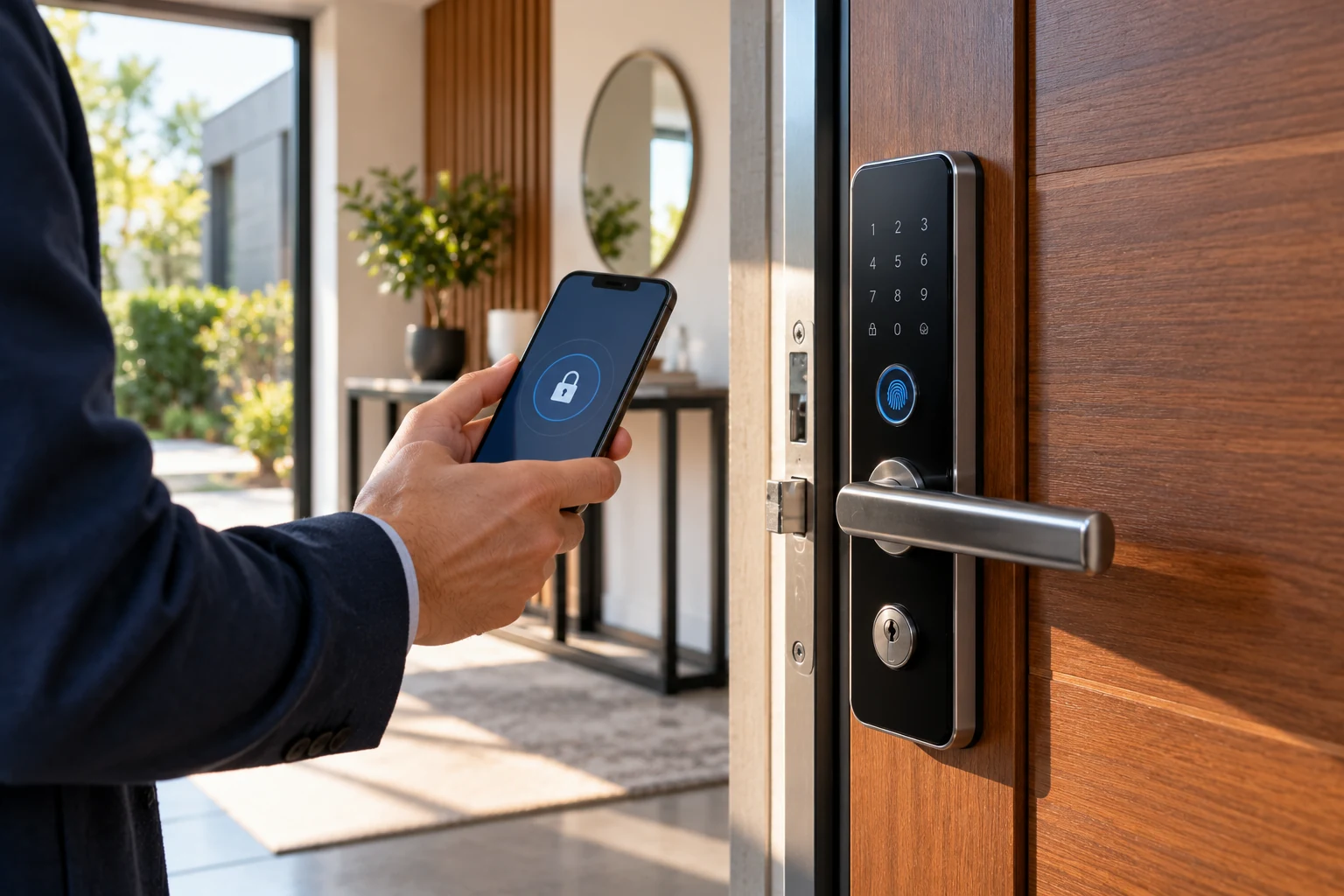
Smart lock systems are modern security solutions that combine traditional keyed door locks with electronic access control. They can enable doors to be opened using various methods such as fingerprints, PIN codes, RFID cards, mobile applications, or digital keys.
Today, smart locks are used not only in homes but also in offices, hotels, short-term rental properties, apartments, and commercial businesses.
Features such as remote access management, temporary user authorization, entry logs, and integration with smart building systems particularly distinguish electronic locks from traditional mechanical locks.
However, when choosing a smart lock, it is not enough to only look at the fingerprint reader, mobile application, or design. The mechanical structure of the door, the durability of the locking mechanism, connection security, power outage scenarios, and how the door will be opened in emergencies must all be evaluated together.
So, how do smart lock systems work, what types are available, and how should the right product be chosen?
What is a Smart Lock System?
A smart lock system is a security device that can electronically control the locking or unlocking function of a door.
While traditional mechanical locks rely on a physical key to operate the locking mechanism, smart locks can verify user identity or access authorization through electronic methods.
The main components of a smart lock system can include:
Electronic control unit.
Motorized or electromechanical locking mechanism.
PIN keypad, card reader, or biometric sensor.
Bluetooth, Wi-Fi, NFC, or other communication interfaces.
Battery or external power supply.
Authorization and user management software.
Mechanical key or emergency access mechanism in supported models.
Not all of these components are found in every product. Some smart locks only perform electronic key verification, while others use a motor to operate the existing mechanical lock.
How Do Smart Lock Systems Work?
The operating principle of smart locks fundamentally consists of three stages.
1. User Identity or Authorization Verification
The user enters a PIN, scans a fingerprint, taps a card, or sends a digital access request with their phone.
The lock system checks the relevant identity information or digital authorization according to the method used.
2. Actuation of the Locking Mechanism
When authorization is successful, the electronic control unit activates the lock's motor or the relevant electromechanical mechanism.
This moves the door's locking element into the appropriate position.
3. Door and User Status Management
Some smart locks can monitor whether the door is locked or unlocked, record user events, and send notifications to authorized individuals.
However, there is an important distinction here.
The lock being in an open or closed position is not the same as the door leaf being physically open or closed.
To monitor the actual status of the door, a door position sensor supported by the product or appropriate additional hardware may be required.
What Are the Types of Smart Locks?
Smart lock systems can be classified according to both the user verification method and the physical locking mechanism.
PIN Code Smart Locks
With PIN code smart locks, users can gain access by entering a predetermined PIN code on the keypad.
In some systems, user-specific, time-limited, or one-time passwords can be generated.
These features can be particularly useful for guest access, service personnel entries, and short-term accommodation applications.
However, the creation, transmission to the lock, and cancellation of temporary passwords do not work the same way in every product.
Especially for offline locks, how authorization synchronization occurs should be examined.
Fingerprint Smart Locks
With fingerprint locks, users can open the door using a biometric verification method.
It can be a practical solution as it provides access without carrying a key or card.
However, sensor performance can be affected by conditions such as a wet, dirty, or damaged finger.
Therefore, it is important for a fingerprint-operated lock to have alternative access methods.
How biometric data is created, where it is stored, and with what security measures it is protected should also be evaluated.
Card and RFID Smart Locks
Card-based smart locks use a suitable RFID card, key fob, or other electronic identification device.
This method can be preferred especially in hotels, offices, and certain personnel access applications.
However, not all RFID card technologies provide the same level of security.
Protecting the card against copying, securely verifying credentials, and being able to cancel a lost card are important.
Phone-Operated Smart Locks
Locks supporting mobile access can allow a phone to be used as a digital key.
Depending on connectivity and product features, the user can control the lock when approaching the door, via an application, or through remote access management.
Some models have a direct Bluetooth connection between the phone and the lock, while others require an additional gateway for remote access.
Phone support does not always mean that the door can be opened remotely via the internet.
Motorized Smart Locks
Motorized smart locks can perform the key or cylinder movement of a suitable mechanical lock with the help of an electronic motor.
Some products can be retrofitted to the interior side of an existing door lock.
In such products, the mechanical cylinder, door handle, number of lock turns, and the closing resistance of the door are important selection criteria.
Electromechanical and Centralized Access Controlled Locks
Electromechanical door locks, electric strikes, and similar solutions can be connected to centralized access control systems.
These solutions are particularly considered in commercial buildings and corporate applications.
However, they are not the same product class as residential motorized smart locks.
How the door locks, what position it assumes upon power loss, and how it operates during emergency evacuation should be examined separately.
Differences Between Bluetooth, Wi-Fi, NFC, and Matter in Smart Lock Systems
When choosing a smart lock, the communication infrastructure affects the user experience and the system's operating conditions.
| Technology | Primary use | Key selection criterion |
|---|---|---|
| Bluetooth | Close-range mobile access | Device pairing, connection security, range |
| Wi-Fi | Network connectivity and remote management | Network security, power consumption, internet dependency |
| NFC | Near-field access with compatible phone or ID device | Reader and digital key compatibility |
| Zigbee | Low-power communication with compatible gateway | Hub, network coverage, and supported functions |
| Thread | Low-power IP-based local network communication | Border router and ecosystem requirements |
| Matter | Interoperability between different smart home ecosystems | Certification, supported functions, and connectivity infrastructure |
These technologies do not operate on the same layer. Matter is an application-layer interoperability standard; it is not a direct equivalent of network technologies like Thread and Wi-Fi.
What is a Matter-Supported Smart Lock?
Matter is a smart home interoperability standard developed by the Connectivity Standards Alliance.
Some Matter-supported smart locks can be integrated into different smart home systems via compatible control platforms.
As of 2026, there are door lock products certified under Matter 1.5.
However, Matter support does not guarantee that every smart lock feature will work the same way across all platforms.
For example, fingerprint management, advanced user authorization, or manufacturer-specific event logs may still require the manufacturer's own application.
Therefore, before purchasing, not only the Matter logo but also the product's certification and the functions supported by the platform to be used should be checked.
Advantages of Smart Lock Systems
Keyless Entry Convenience
Smart locks can reduce the need for carrying physical keys for some users.
Temporary Access Permissions
In supported products, time-limited access can be defined for guests, service personnel, or short-term users.
Remote Access Management
In systems with appropriate connectivity and infrastructure, the door's lock status can be monitored, permissions managed, or remote access operations performed.
Monitoring Entry Events
In some systems, entry and lock operations performed by users can be recorded.
Smart Home and Building Integration
Smart locks can be used with video intercom, alarm, or building automation systems on supported platforms.
However, not all of these advantages are found in every product.
What to Consider When Choosing a Smart Lock?
1. Compatibility with Door and Lock Mechanism
The first factor to consider when choosing a smart lock is the device's mechanical compatibility with the existing door.
Specifically, the following features should be checked:
Door material and thickness.
Type of existing lock body.
Cylinder and key structure.
Single or multi-point locking of the door.
Door handle and strike plate.
Door opening direction.
Required installation clearances.
Ability of the product to be used on the interior or exterior side of the door.
Compatibility is also particularly important for steel doors and multi-point locking systems commonly used in Turkey.
Stating that a product is compatible with a European-type cylinder does not mean it can be seamlessly installed on every steel door.
A smart lock should not be purchased without verifying door and lock compatibility.
2. Physical Security of the Locking Mechanism
Advanced electronic features do not automatically increase the mechanical durability of the lock.
The strength of the lock body, the security of the cylinder, the door frame, and the installation workmanship should be evaluated together.
For example, the ANSI/BHMA A156.36-2020 standard covers operational, cycle, strength, security, and finish tests for auxiliary locks.
However, the scope of this standard does not include every type of smart lock.
It should be verified from manufacturer documents which mechanical or electromechanical standard the product has been tested against.
3. Battery Life and Power Outage
Battery life is an important selection criterion for battery-powered smart locks.
Battery life depends on motor power consumption, daily opening-closing cycles, connection technology, ambient temperature, and the type of battery used.
Before purchasing, the following questions should be asked:
Is the battery level notified in advance?
Which access methods can be used when the battery runs out?
Is there a mechanical key or emergency power connection?
Does local access continue during internet or power outages?
Can the battery be easily replaced by the user?
The presence of an emergency power connection does not mean that all products have the same operating behavior or mechanical key support.
4. Door Closing and Locking Detection
Some smart locks can automatically lock after a certain period.
However, this function alone does not verify that the door is physically fully closed.
In systems without a door position sensor or appropriate door-lock integration, situations such as the lock mechanism moving while the door is open may occur.
Therefore, it is important to test the automatic locking feature under real operating conditions.
5. User and Authorization Management
Managing user authorizations is a critical function, especially in offices and commercial businesses.
Depending on the features supported by the system, the following authorizations can be evaluated:
Permanent user access.
Access on specific days or times.
One-time or time-limited password.
Revocation of user authorizations.
Separation of administrator and standard user roles.
Logging of entry and access events.
It should be examined whether these functions work offline and when they are synchronized with the lock.
6. Cybersecurity and Software Updates
Smart locks are IoT devices that must be protected against unauthorized digital access.
Therefore, ease of use of the mobile application should not be the sole consideration.
Important evaluation criteria include:
Secure authentication.
User- or device-specific access credentials.
Secure communication and key management.
Additional verification for administrator accounts.
Software and security updates.
Revocation of authorization for lost phones or digital keys.
Manufacturer's vulnerability notification and support policy.
Monitoring of unauthorized access attempts.
The ETSI EN 303 645 standard sets out fundamental requirements for the cybersecurity of consumer IoT products.
However, a product using encrypted communication alone does not eliminate all cybersecurity risks.
7. Fire and Emergency Safety
One of the most important considerations when choosing a smart lock is how the door will open in emergencies.
Especially in hotels, offices, educational institutions, and commercial buildings, electronic locks must not impede evacuation safety.
The Regulation on Fire Protection of Buildings contains provisions regarding the safe and unobstructed use of escape routes.
Therefore, if an electronic lock is planned for a door on a fire escape route, the door's usage class, escape requirements, and the behavior of the locking mechanism must be evaluated.
The terms fail-safe, for automatic door opening upon power failure, and fail-secure, for remaining locked in a safe position upon power failure, are concepts encountered in the design of electric locking hardware.
However, a lock remaining locked from the outside upon power loss does not automatically mean it will not allow safe evacuation from the inside. The mechanical and electrical behavior of each product must be examined separately.
Electronic security on fire escape doors must in no way supersede mandatory evacuation safety.
Where Are Smart Lock Systems Used?
Homes and Residences
Smart locks can be used for keyless access, user authorization, and remote door status monitoring at home entrances.
Apartments and Gated Communities
They can be considered for common access areas, individual unit doors, and entry points with appropriate technical infrastructure.
However, in multi-user buildings, access and evacuation scenarios must be planned together.
Offices and Workplaces
They can be used for employee access to specific areas, visitor management, and temporary user authorizations.
In more comprehensive applications, they are evaluated in conjunction with centralized access control infrastructure.
Hotels and Accommodation Facilities
Room access, guest cards, mobile keys, and time-limited authorizations are among important areas of use.
Compatibility with the establishment's existing hotel management software, emergency access, and safe evacuation conditions are important.
Short-Term Rentals and Holiday Homes
The need for physical key handover can be reduced with temporary digital passwords.
However, it is necessary to timely revoke the authorizations of previous guests and securely manage access history.
Smart Lock Types Comparison Table
| Lock type | Key advantage | Point to consider |
|---|---|---|
| PIN code smart lock | Keyless access, temporary PIN | Password security, authorization revocation |
| Fingerprint lock | Fast biometric verification | Sensor reliability, biometric data |
| Card/RFID lock | Management of user cards | Card security and risk of copying |
| Bluetooth lock | Local mobile access | Proximity, device compatibility, and pairing |
| Wi-Fi connected lock | Remote management in supported systems | Network security and power consumption |
| Motorized cylinder lock | Addition to existing mechanism on suitable doors | Cylinder, motor power, and door compatibility |
| Central electromechanical lock | Corporate access control integration | Control system, power loss, and evacuation |
This table compares general technical specifications. It does not guarantee the performance or security superiority of specific products.
Attention to KVKK in Fingerprint Smart Locks
Personal data security is important in smart locks with biometric features.
Under Law No. 6698 on the Protection of Personal Data (KVKK), biometric data falls under the category of special categories of personal data.
The Personal Data Protection Board's principle decision dated April 29, 2026, numbered 2026/921, addresses the necessity and proportionality assessments regarding the processing of biometric data, especially for employee time tracking.
This indicates that not every access control application using fingerprints in commercial businesses can automatically be considered lawful.
Before using a biometric lock or access system in workplaces:
The purpose of processing and its legal basis must be determined.
Less intrusive alternatives such as cards or PINs must be evaluated.
Necessary data subject information must be provided.
Biometric data must be stored securely.
Risks of unauthorized access and data transfer must be examined.
Storage and deletion processes must be planned.
Storing biometric data only in template or encrypted form does not automatically remove its status as personal data.
Personal use at home and the processing of employee or customer data for commercial purposes should not be evaluated under the same legal conditions.
How Should Smart Lock Installation Be Done?
The installation of smart locks depends on the product type and the mechanical structure of the door.
The basic process for professional installation is as follows:
Door, lock body, and cylinder measurements are checked.
Compatibility of the smart lock with the existing mechanism is verified.
Necessary installation equipment and power supply are prepared.
The electronic and mechanical lock mechanism is installed according to manufacturer instructions.
User verification methods are configured.
Locking behavior is tested with the door in both open and closed positions.
Battery, connection loss, and emergency access scenarios are verified.
User authorizations, security settings, and maintenance information are handed over.
Improper installation procedures can lead to security problems, especially for steel doors, multi-point locking mechanisms, and doors requiring fire resistance.
Technical Checklist for Smart Lock Selection
Before purchasing, the following questions should be answered:
Is the lock compatible with the existing door and cylinder system?
Have mechanical durability and relevant standard documents been checked?
Which access methods are supported?
Is the mobile application and smart home platform compatible?
Is internet or an additional hub required for remote access?
How will the door be opened if the battery runs out?
Can it be verified that the door is physically closed?
Can temporary user authorizations be granted and revoked?
Are software updates and the security policy adequate?
Are emergency evacuation and fire safety conditions met?
If biometric data is used, have legal requirements been examined?
Is service, warranty, and spare parts support available?
This checklist is for technical evaluation purposes; it does not replace project-specific suitability, legal review, and installation verification.
Frequently Asked Questions
Does a smart lock work without internet?
Some smart locks can operate without an internet connection using Bluetooth, local PIN, or fingerprint verification. However, remote access or certain synchronization features may require internet and additional network hardware.
What happens if the smart lock's battery runs out?
Depending on the product's design, a mechanical key, external emergency power input, or another access method may be used. Since these features are not present in every product, they should be verified before purchase.
Are smart locks secure?
With appropriate product selection, correct installation, and secure software management, they can be an effective access control solution. However, mechanical durability, cybersecurity, and user authorization risks must be evaluated separately.
Can a smart lock be installed on a steel door?
Some models are compatible. However, a definitive decision cannot be made without checking the existing cylinder, lock body, multi-point locking mechanism, and door measurements.
Can a smart lock be opened remotely?
If there is an appropriate internet connection, gateway, and product features, remote opening may be possible. It should not be assumed that every Bluetooth-only lock can be controlled via the internet.
Is a fingerprint lock or a PIN code lock better?
Both technologies have advantages and limitations. Fingerprint provides ease of use, while PIN systems can be an alternative that does not require biometric data processing. The choice depends on the intended use and security requirements.
Is it advantageous to buy a Matter-supported smart lock?
A Matter-certified product can offer advantages in terms of interoperability among supported smart home ecosystems. However, it should also be checked which functions of the product are supported on the platform to be used.
Conclusion: The Right Smart Lock Must Provide Secure Access and Proper Integration
Smart lock systems bring new features such as electronic access management, digital keys, and remote authorization to traditional door locks.
However, the right product choice cannot be made based solely on technological features.
At the core of a reliable smart lock system are mechanical durability, door compatibility, secure authentication, access during power outages, software security, and safe evacuation in emergencies.
While ease of use and security balance are prominent in homes, user management, integration, maintenance, and regulatory requirements may gain more importance in commercial buildings.
The purpose of a successful smart lock implementation is not just to open the door keylessly, but to manage authorized access reliably, sustainably, and verifiably when needed.
To examine the development of mobile access technologies in more detail, GüvenlikOnline's article titled Mobile Access System can also be read.