
What Are Action Cameras? Features, Uses, and a Selection Guide
Action cameras are compact cameras designed to capture high-quality footage during sports, travel, underwater filming, and other dynamic activities. We examine how action cameras work, their technical features and applications, and the criteria to consider when choosing the right model.
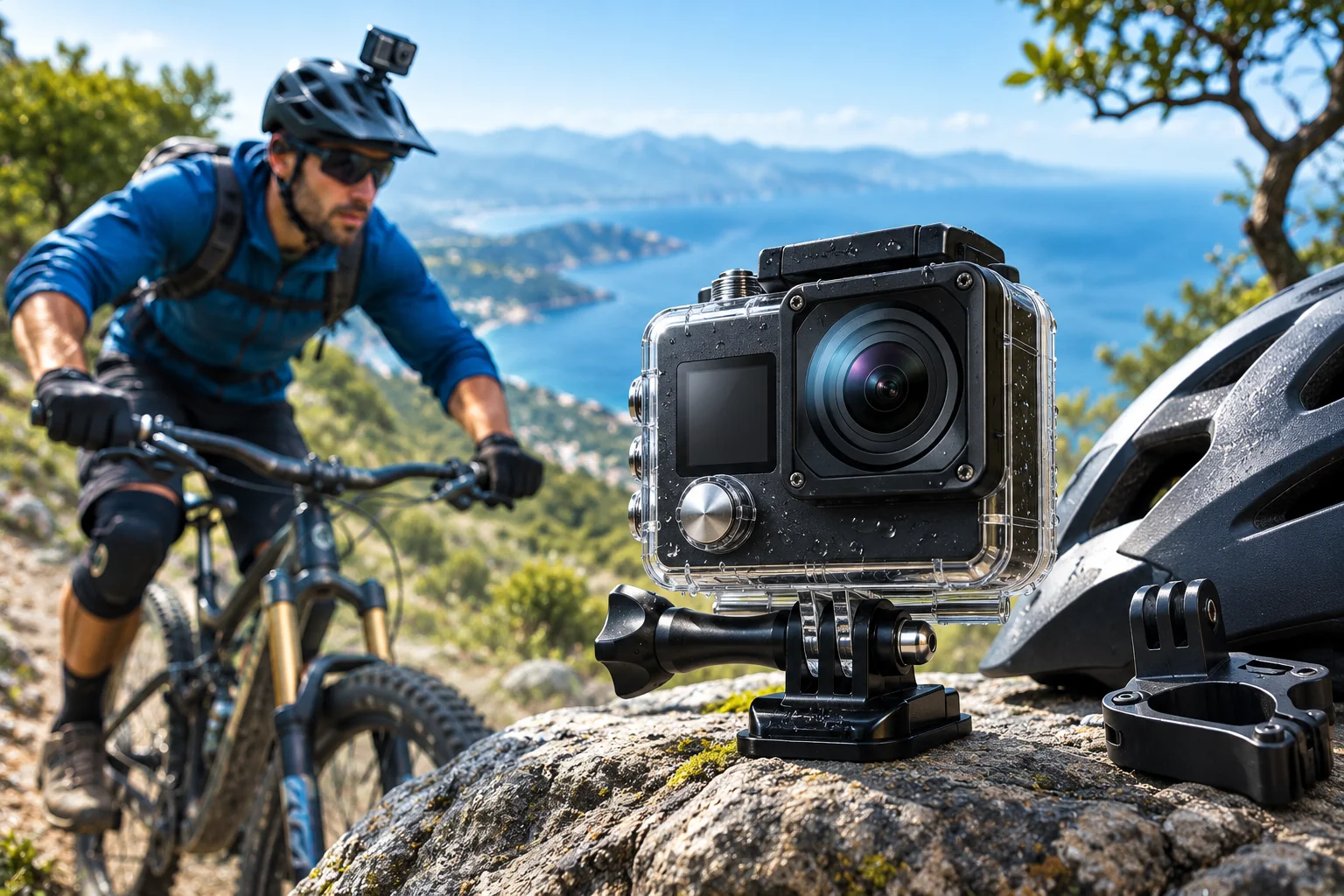
Action cameras are compact, lightweight, durable imaging devices developed to capture high-quality video and photos while on the move. Unlike traditional cameras, they can be mounted on helmets, bicycles, vehicles, chest mounts, and various other surfaces. They serve a wide range of purposes, from sports activities to professional fieldwork.
Thanks to advanced image stabilization technologies, wide-angle lenses, high-resolution video recording options, and designs built to withstand environmental conditions, action cameras have become important tools for dynamic filming.
What Is an Action Camera?
An action camera(Action Camera) is a type of portable camera designed to record video in dynamic environments, from different angles, and often without using one's hands.
These devices typically feature a wide-angle lens, electronic image stabilization, a built-in battery, and the ability to record to a memory card.
The primary purpose of action cameras is to make image recording as practical and stable as possible when the user is on the move.
For example, an action camera mounted on a cyclist’s helmet can record video from the rider’s point of view. Similarly, a camera mounted on a vehicle can produce smoother footage using image stabilization, despite vibrations while driving.
How Do Action Cameras Work?
Action cameras work by converting the light entering through the lens into electronic signals using a digital image sensor.
The basic image-processing process consists of the following stages:
Image capture: The image is conveyed to the CMOS sensor through a wide-angle lens.
Image processing: The camera’s processor handles exposure, color, noise reduction, and other image parameters.
Image stabilization: Electronic stabilization algorithms attempt to reduce shaking caused by motion.
Video compression: Images are compressed using supported video encoding formats such as H.264 or H.265/HEVC.
Recording: Video files are saved to internal storage or a microSD memory card.
Transfer: On supported models, images can be transferred to other devices via Wi-Fi, Bluetooth, or a wired connection.
The camera’s sensor size, image processor, lens characteristics, and software algorithms directly affect the quality of the resulting image.
Key Technical Features of Action Cameras
Video Resolution
Action cameras offer different resolution and frame-rate options.
Common video recording options include Full HD, 2.7K, 4K, 5.3K, and, on certain models, 8K.
Higher resolution can capture more detail in an image. However, image quality does not depend on resolution alone.
Sensor performance, optical quality, video bit rate, dynamic range, and low-light performance should also be evaluated.
FPS (Frames Per Second)
FPS indicates how many image frames the camera records per second.
Frame rate | Use case |
|---|---|
24–30 FPS | Everyday video and general filming |
50–60 FPS | Action scenes and smooth video |
100–120 FPS | Slow-motion video |
200–240 FPS | Detailed slow motion of fast movements |
High FPS recording may be possible depending on the camera model and selected resolution. Higher frame rates may also require more light, processing capacity, and storage space.
Electronic Image Stabilization (EIS)
One of the most important features of action cameras is electronic image stabilization technology.
Electronic Image Stabilization (EIS) analyzes camera movement using image sensor data and software algorithms to reduce the effects of vibration.
For example:
HyperSmooth on GoPro cameras,
RockSteady and HorizonSteady on DJI cameras,
FlowState on Insta360 cameras
are examples of manufacturer-specific image stabilization technologies.
The performance of these technologies varies according to resolution, FPS, the amount of image cropping, and filming conditions.
Wide-Angle Lens
Wide-angle lenses are common in action cameras.
This design allows the camera to capture a wider area in a single frame.
Wide-angle views are particularly advantageous for cycling, motorcycling, skiing, water sports, and first-person-perspective filming.
However, very wide-angle lenses can produce geometric distortion toward the edges. Some models offer software-based lens correction options.
Water and Dust Resistance
Although action cameras are designed for outdoor use, not all models offer the same level of environmental durability.
When assessing water resistance, check the maximum depth and duration specified by the manufacturer, the need for a protective housing, and the maintenance instructions.
For example, some models can be used without an additional housing to certain depths, while deeper dives require a special underwater protective case.
Important: Waterproofing does not mean the device is resistant to water under all conditions. Covers that are not fully closed, damaged seals, high-pressure water, or exceeding the manufacturer’s limits can damage the device.
Where Are Action Cameras Used?
Action cameras are used for more than just extreme sports.
Sports and Outdoor Activities
Mountain biking, motorcycling, skiing, snowboarding, running, diving, and hiking are common uses for action cameras.
Their lightweight construction and range of mounting accessories allow users to film without restricting their movement.
In-Vehicle and Driving Footage
Action cameras can be used to record driving footage in cars, motorcycles, and bicycles.
However, not every action camera has features such as automatic recording, parking surveillance, or event recording that are available on a continuously operating vehicle camera.
For this purpose, loop recording, power management, and high-temperature resistance should also be checked.
Underwater Imaging
Waterproof action cameras can be used for swimming, snorkeling, and scuba diving with suitable protective equipment.
Factors such as reduced light, color changes, and water pressure affect image quality in underwater filming.
For this reason, shooting modes suited to underwater use and protective housings are important.
Industrial Fieldwork
Action cameras can also be used as auxiliary recording equipment in some professional workflows.
For example:
Documenting technical service work
Recording machinery maintenance and installation processes
Producing training and instructional videos
Recording industrial equipment tests
Visual documentation of field inspections
For these applications, suitable mounting equipment, workplace safety conditions, and any required recording permissions should be taken into account.
Although action cameras can be useful in these applications, they are not direct substitutes for industrial imaging equipment specifically certified for hazardous environments.
Differences Between Action Cameras and Security Cameras
Although action cameras and CCTV security cameras can record images, they are designed for different needs.
Feature | Action Camera | CCTV Security Camera |
|---|---|---|
Primary purpose | Dynamic video filming | Security surveillance |
Usage | Portable | Usually fixed-mounted |
Recording | Mostly local storage | NVR, DVR, SD card, or server |
Power source | Battery or external power | PoE, adapter, or dedicated power supply |
Field of view | Usually wide-angle | Varies by lens and application |
Image stabilization | An important feature | Varies by model |
Continuous operation | Depends on model and conditions | Can be designed for continuous surveillance |
Analytics features | Focused on filming and editing | Event detection and security analytics |
Action cameras are not direct alternatives to CCTV systems.
For example, continuous recording, centralized video management, alarm integration, and incident review may be important for perimeter security at a factory.
Purpose-built security cameras and recording systems offer more suitable solutions for these applications.
Action cameras, meanwhile, can be considered complementary equipment for tasks such as documenting mobile operations or making short-term field recordings.
What Should You Consider When Choosing an Action Camera?
Choosing the right action camera requires looking beyond resolution or brand name alone.
1. Filming Purpose
First, determine what activities the camera will be used for.
Sports filming, underwater imaging, professional content creation, and field documentation involve different technical requirements.
2. Image Quality and Sensor
The sensor’s size, dynamic range, and low-light performance should be evaluated.
A high-resolution camera will not always produce better images, as a small sensor or inadequate lighting may limit image quality.
3. Image Stabilization
Stabilization performance is especially important in activities involving vibration, such as running, cycling, and motorcycling.
Check whether stabilization is available at the selected resolution and FPS settings.
4. Battery Life and Thermal Management
Battery life can vary according to manufacturers’ test conditions.
Resolution, high FPS, wireless connections, screen use, and ambient temperature can affect actual recording time.
For long recording sessions, removable batteries, external power support, and the device’s thermal operating limits become important.
5. Mounting and Accessory Compatibility
Accessories such as helmet mounts, handlebar mounts, chest straps, tripods, magnetic mounts, and underwater housings directly affect the user experience.
The security of the mounting mechanism is as important as the camera’s physical weight.
6. Storage and Video Format
High-resolution recordings can require significant storage space.
When choosing a memory card, consider the capacity supported by the manufacturer, the card’s speed class, and the video bit rate.
Compression technologies such as H.265/HEVC can improve storage efficiency. However, compatibility with video editing software should also be checked.
Technical Comparison of Action Camera Models
Three action cameras can be compared as examples to illustrate the technical approaches of different manufacturers.
The figures below are based on technical specifications published by the manufacturers.
Feature | GoPro HERO13 Black | DJI Osmo Action 5 Pro | Insta360 Ace Pro 2 |
|---|---|---|---|
Maximum standard video | 5.3K / 60 FPS | 4K / 120 FPS | 8K / 30 FPS |
4K high frame rate | 120 FPS | 120 FPS | 120 FPS |
Image stabilization | HyperSmooth 6.0 | RockSteady 3.0 | FlowState |
Waterproof without a housing | 10 m | 20 m | 12 m |
Battery capacity | 1900 mAh | 1950 mAh | 1800 mAh |
Primary use | Dynamic and creative filming | Sports, water and action filming | High-resolution content production |
This table is not an independent performance test that determines the relative superiority of the three models. In particular, low-light performance, actual battery life, image stabilization effectiveness and overheating behavior should be assessed through tests conducted under the same conditions.
The products’ technical specifications and usage limitations should also be checked against the manufacturers’ documentation.
Can Action Cameras Be Used for Security Purposes?
Under certain conditions, action cameras can be used to capture incidents and document activities.
However, many features preferred in professional electronic security systems may be unavailable or limited in action cameras.
These include:
Continuous, centralized recording
Power and network connectivity via PoE
NVR or VMS integration
Advanced event detection
Remote device health monitoring
Integration with alarm systems
Power and thermal management for long-term surveillance
are among them.
Therefore, if an action camera is being considered for integration into a security system, its recording architecture, connection protocols, power requirements and operational continuity should be assessed separately.
Frequently Asked Questions About Action Cameras
What is the difference between an action camera and a regular camera?
Action cameras are designed for dynamic filming, with their compact size, portable design, wide-angle lenses and image stabilization. Traditional photo and video cameras may offer larger sensors, interchangeable lenses or advanced manual controls, depending on their intended use.
Can action cameras shoot at night?
Yes. However, night-shooting performance depends on the sensor, lens, image processor and software features. Image noise may increase in low light, and electronic stabilization performance may be affected.
Can an action camera record continuously?
Some models offer long-duration or loop recording. However, battery capacity, temperature, storage space and the manufacturer’s usage limitations should be taken into account.
Can an action camera be used instead of a security camera?
It can be used for short-term or special-purpose recording. However, it is generally not suitable as a direct replacement for professional CCTV systems in applications requiring continuous surveillance, centralized recording, remote management and alarm integration.
Is a 4K action camera sufficient?
4K resolution may be sufficient for many everyday filming and content-production applications. However, image quality should be assessed not only by resolution, but also by taking into account the sensor, lens, bit rate and stabilization performance.
Conclusion
Action cameras offer portable, versatile imaging solutions for users who want to record video in dynamic environments.
High resolution alone is not a sufficient criterion when choosing the right camera. Image stabilization performance, low-light capability, battery life, waterproofing, storage support and accessory compatibility should all be assessed together.
Action cameras can also serve as auxiliary tools for documenting specific field activities in the electronic security industry. However, in applications requiring professional security surveillance, their technical differences from CCTV systems designed specifically for the intended purpose should be taken into account.